

The books sat nestled on the bottom shelf, third case back from the door on the farthest side of the library. It was 2002 and the piece of tape stuck to the wood marked “Harry Potter” only had four books to offer the reader. In this case, the reader was a tiny, curly haired girl of six years with smears on her dress and an aching desire to escape from the children’s section of her school library. Undoubtedly it was the colors that caught her twinkling blue eyes, the mesmerizing oranges and reds that made the gold letters on the spine beckon her to the books’ pages.
I checked out my first "Harry Potter" book from the library before most of my friends were reading real chapter books (you can thank my parents for instilling in me a passion for reading). At first, my mom resisted against my reading them. After all, I was only six and the books were about witches and magic; they would without a doubt give me nightmares. She returned them to the library herself, gently telling me to wait a few more years to read those big girl books. That very night if you looked into my bedroom, you would have found me beneath my covers eagerly turning the pages of "Harry Potter and the Sorcerer's Stone."
When I opened that book for the first time, I had not known what an impact the series would have on my life. The literary quality of the books improved as my ability to appreciate it grew. In the months between book releases, I would reread the previous books and discuss with my cousin what I thought would happen in the next book, anxiously waiting for the next installment to come out.
Children all over the world share similar stories about their love for J.K. Rowling’s series that took the world by storm. But of all the hundreds of series, why did Harry Potter and his wizarding world stand out so much and to so many readers?
Perhaps the magic behind the books lies in that there is no one reason why. No two fans will give you the same answer as to why the books are so dear to their hearts, myself included. However, I do have some of my own theories.
Harry was unapologetically real. He had struggles, talents, enemies and best friends. He stayed up all night studying for tests and didn’t always get perfect marks. Despite being The Boy Who Lived, he fell for girls that chose somebody else over him. There is a reason why Umbridge is arguably more hated than Lord Voldemort: she was an evil that we could relate to, that we could see ourselves.
Through Harry, we learned for the first time that popularity is not everything. He taught us the emptiness of being the one that everybody loves and the value of choosing your best friends wisely. Harry taught us that we are not supposed to go through tough times alone, that we are stronger when we admit that we need help. Despite the fact that the subject of his classes are different from ours, he dealt with forgetting to take notes and spending hours on homework only to copy from his smart best friend when he simply couldn’t take it anymore.
We fell in love with Harry’s world because, even though it was a magical one, it was one that we understood, one that we could relate to. If this was all that Harry’s world did for us, the series would still be remarkable. But what pushes Harry Potter beyond all other series is the theme that lies beneath the surface. The theme of love.
Not necessarily romantic love, not necessarily family love, but a love strong enough to sacrifice for it. Completely without our knowledge, "Harry Potter" taught us the virtue of selfless giving, of true good, and of true love. We saw it in Harry’s passion for Quidditch, which we can relate to our passions for art, music or sports. We saw it in his loyalty to his friends and his unfailing love for his family.
I grew up with Harry, Ron and Hermione. I had my first crush the same summer that Harry fell for, and was turned down by, Cho Chang. I went to my first dance around the same time Harry went to the Yule Ball. I was taking my End of Course tests the same year that Harry had to take his O.W.L.s.
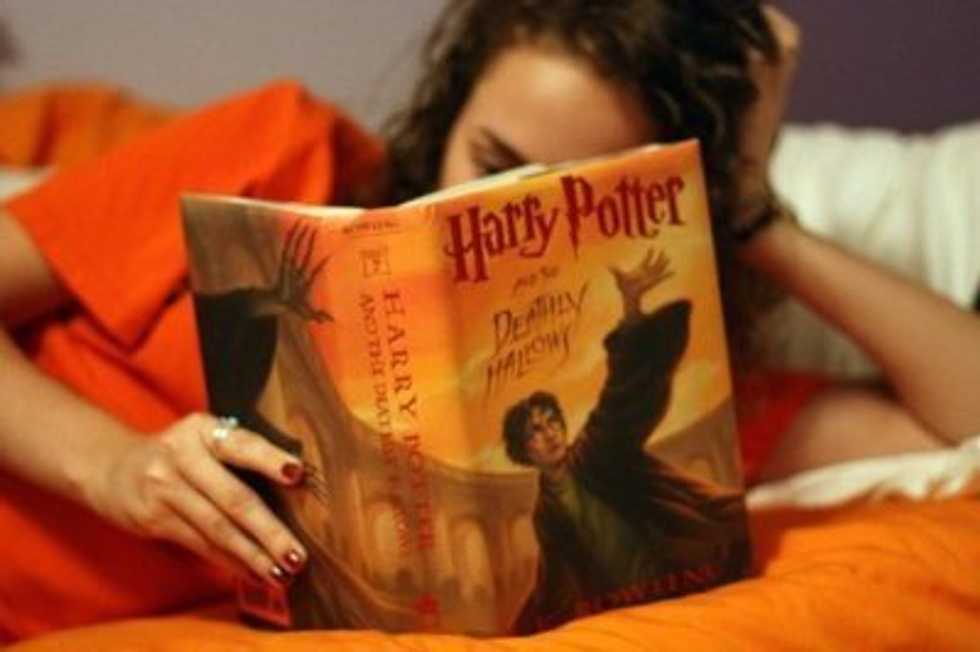
Buying the seventh and final installment of the series was bittersweet. I finished the book the day that it was released, despite trying to turn the pages more and more slowly as the chapters slipped away. I could not remember a time in my life when I had not been fervently waiting for the next book to come out.
Even now, eight years after finishing "Harry Potter and the Deathly Hallows," the series remains as dear to my heart as ever. Nestled beneath my bed in my dorm room is my hardback collection, ready as always to for me to pull out when I need to get away for just a little while.
Harry taught me that it’s okay not to be the best, it’s okay not to live up to everyone’s expectations, it’s okay to get your heart broken, and it’s okay to make mistakes. All of these things are okay, and even encouraged to some extent, so that you might grow. They’re OK, that is, as long as what you stand for is good and as long as you don’t lose sight of who you are.
















