
With every act of terror, every mass shooting, every indignant racist comment, I turn mad. Foaming at the mouth, I curse the malevolent forces that attack innocent people. I curse the traditions that generate hatred. I curse the institutions that facilitate evil acts. I chime in with hackneyed expressions like "there’s something wrong with Islam," "we need stronger gun laws" and "#blacklivesmatter." But as time passes, and history repeats itself again and again, I begin to lose hope. It’s easy give up when the forces you are at odds with are so big, so fundamental in a group of people so different from you.
What is my opinion worth? I grew up in a wealthy, suburban, predominately-white town in Connecticut. I grew up in this terror-filled world. I seldom felt like I could do anything about it. One of my first memories was Sept. 11, 2001. My kindergarten teacher could barely form a sentence. Mascara running down her face, she did her best to explain this horrific event to a group of doe-eyed 5-year-olds sitting criss-crossed on an alphabet carpet.
I was too young to understand the gravity of what happened. My father was working at his advertising firm that day; he witnessed the second tower engulfed in smoke and went through hell and back to come home amidst the chaos. I recall vividly how many adults cried that day. But there wasn't much us 5-year-olds could do. We would build towers out of blocks, and topple them down, replaying the incident over and over again. The TV screen lit up in orange. Screams and gunshots emanated from the speakers. The bad guys in the stories I was told as a kid weren't witches or ogres; they were scraggly-bearded, turban-wearing Muslims.
I grew desensitized to mass shootings. Sandy Hook Elementary School was under an hour away from my high school. My mom picked me up early from school that day and told me the news. We were struck by how close to home this tragedy was, but there was not much we teenagers could do. We wore green ribbons when we played Newtown in lacrosse. We sent letters of sympathy to the families whose lives were forever changed by this awful day. Meanwhile, on TV they would debate whether the problem was gun-laws or mental illness.
As an adult, witnessing the barbarity that is taking over Europe, and the xenophobic hostility that colors this election season in the United States, I find myself at another loss. I am not hopeless. On the contrary, I am a wishful-thinking millennial. But all my life I have been silent, watching as these problems unfold, growing more disastrous each time. This climate of fear has made its mark on the person I am today. I live with a tenuous sense of stability. I have learned to expect these harrowing events. I am at a loss now because suddenly I have influence and I don't know what to do with it.
For what it’s worth, I don't know much about what it's like living with the imminent threat of extremist groups reigning terror on my daily life. I will not be killed for speaking out – I am sheltered, my parents support me and I go to college in the United States. I am as removed as one could possibly be from the scope of this terror. And yet I have this freedom to speak out against these extremist ideas that trump our common sense. I can no longer sit-back and watch the hysteria unfold.
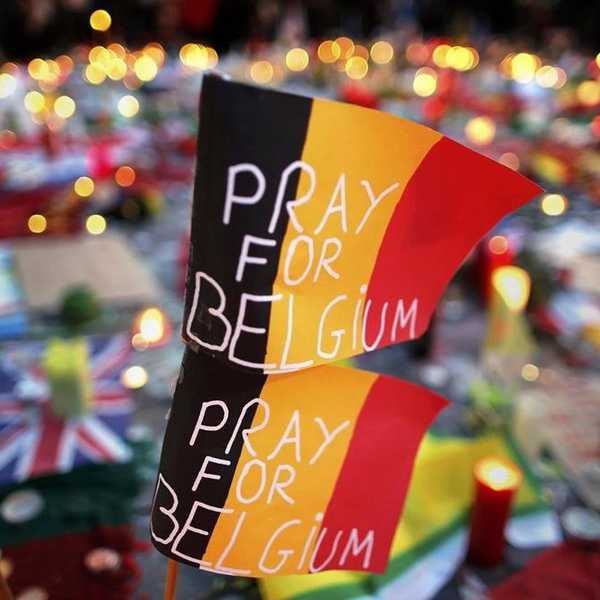
I don't see the point of re-posting a trite hashtag, changing the filter on my profile picture or sending my “prayers” to the families of the victims. Time and time again these events happen, and we conjure up some half-assed response in an effort to show solidarity, while we go about our daily lives unscathed and unbothered. We don't have the ability to feel empathy without a tangible connection to these events. I can recall Sandy Hook and 9/11 so vividly because It happened in my backyard. For others who grew up somewhere else, out of the scope these tragedies, these days are easily forgotten.
I am not sure where the locus of hatred resides — in corrupt fundamental ideals, or through repeated exposure to hatred. I’ve watched us fight hatred with hatred, and I’ve watched us do nothing. Neither works. Both paths have a snowballing effect, by avoiding the underlying issues that perpetuate this faceless evil. To make sense of this world, I have no other way to put this — we need to learn how to empathize with people who grew up in very different world. A world where the odds were against them. A world that attacked their families, and made them resentful and vindictive.
We, too, are spiteful. We have been attacked. We have grown up afraid. We have preconceived notions of who the “bad guys” are. However, we have not grown up in constant terror. We do not see friends and family killed instantly right in front of us one by one. We are not threatened with death on the basis of our personal opinions. We have no remote conception of what it must have been like to grow up on the other side. How, then, are we to respond?
The way my young and ignorant brain sees it, these dark forces we are fighting against aren't as foreign as they are portrayed. To fight terrorism we elicit terror, but claim it’s justified. When a white guy pulls out a gun and murders innocent people for no apparent reason, we call this terror by a different name — mental illness. How many more innocent white people have to die before we realize this?