

October 2010 marked the birth of a prolonged and tangled economic mess that defines Greece today. If your response to news about the current financial crisis is, “it’s all Greek to me,” you should start here.
In a simple, and I mean simple, nutshell, Greece is (and has been) between a rock and a hard place. If Greece wants both inclusion to the eurozone and access to more loans (which would drive up credit trustworthiness and help pay off debt burdens), it must conform to draconian austerity measures. (Austerity, applied to economies, means reducing government spending by huge amounts to balance the budget.) This acceptance of austerity means a deep drop in government programs and services, which would likely lead to greater poverty. This is, as the Greek Prime Minister Tsipras says, “the vicious cycle of austerity.”
As is the case with most politically charged financial disasters, there is no end to discourse and debate surrounding legislative developments and budgeting decisions. Yanis Varoufakis, the Finance Minister of Greece and a staunch adversary of austerity measures defines the situation boldly:
“A clueless political personnel in denial of the systemic nature of the crisis, is pursuing policies akin to carpet-bombing the economy of proud European nations in order to save them.”
The alternative argument (pro-austerity) goes something like this: Greece must learn the hard way to be responsible for their budgeting failures and reckless spending. Thrifty, responsible Dutch and German citizens should not have a moral obligation to pay for their careless neighbors.
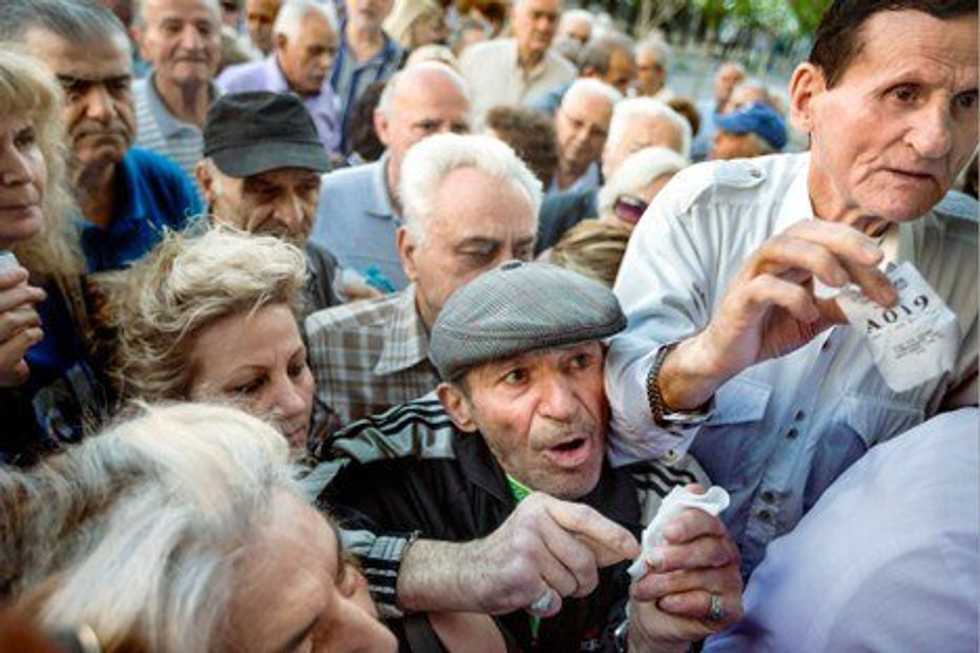
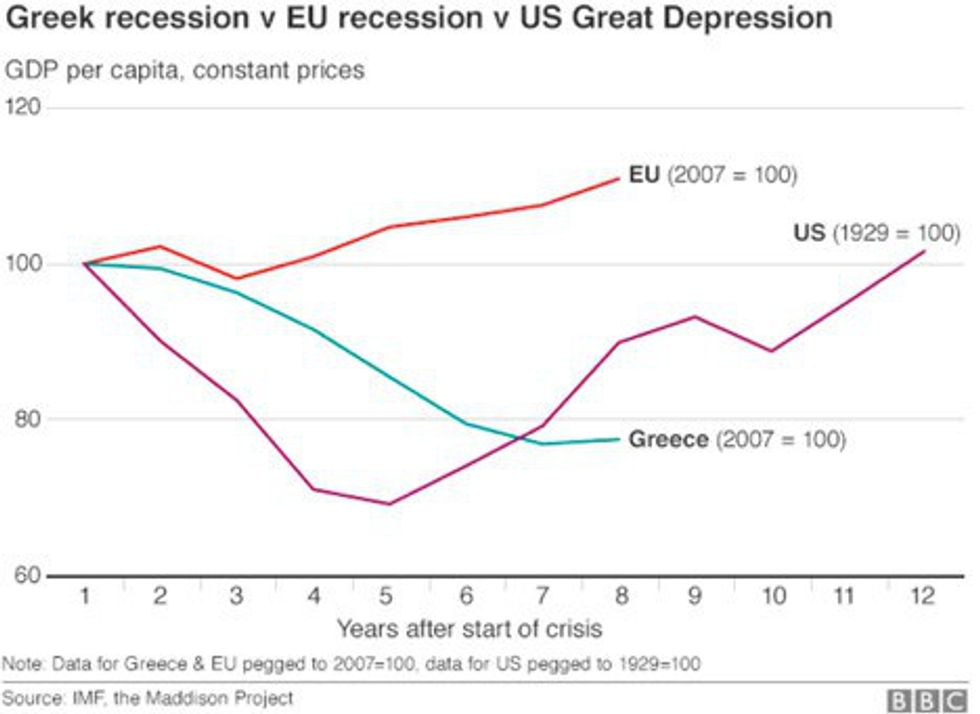
Regardless of personal opinion on the direction that Greece ought to go, there is no doubt that the Greek public, particularly the poorest class, is facing a devastatingly hard future. Greece is in a recession that has lasted much longer than America’s Great Depression, and Greece’s GDP per capita has almost dropped lower than the lowest point of the Great Depression.
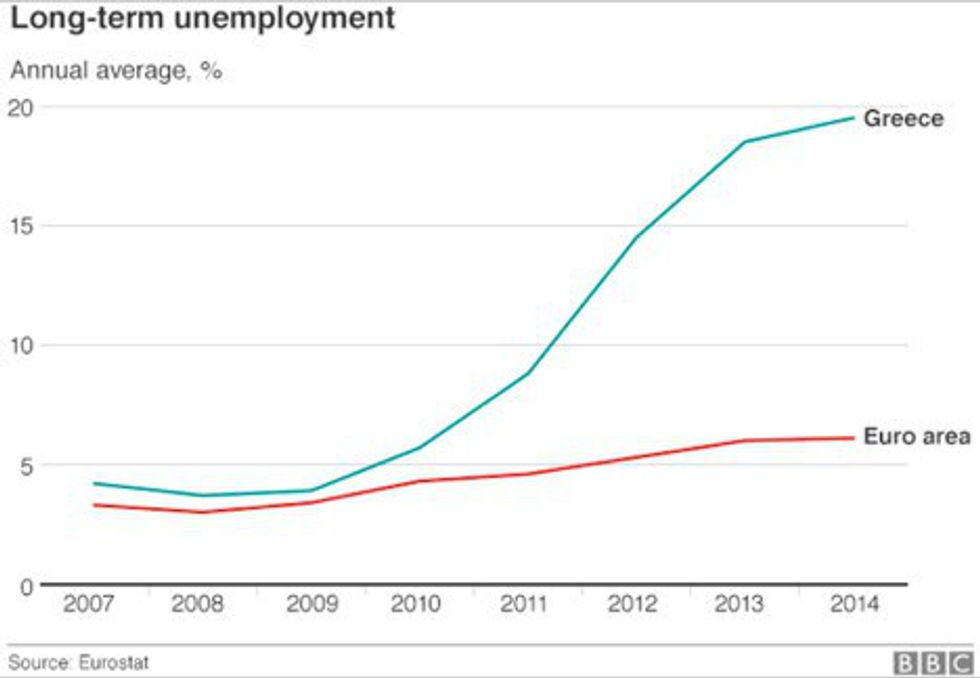
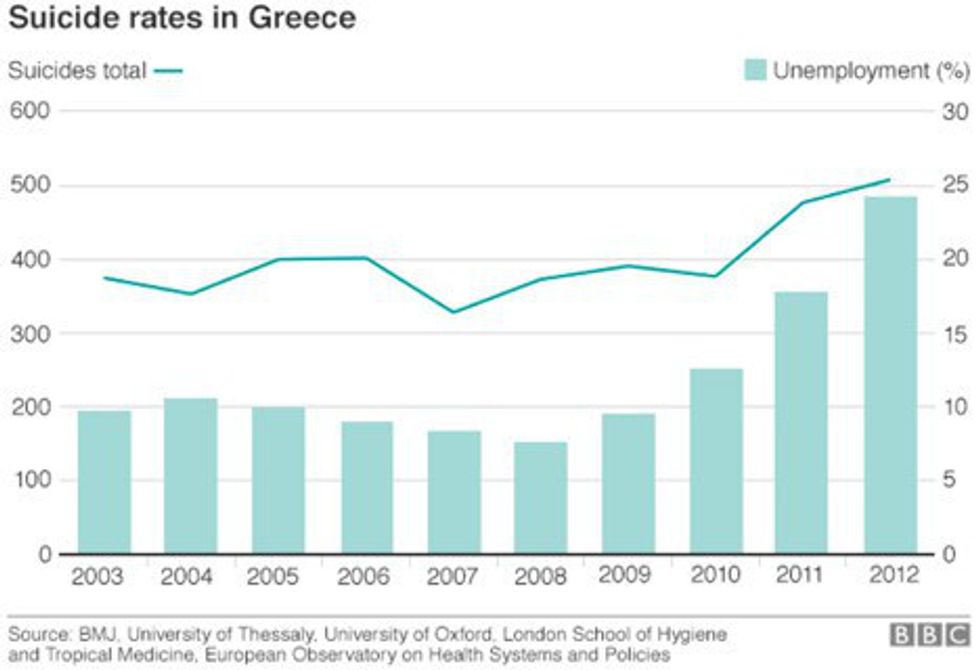
Greek citizens are facing extremely high unemployment rates, almost four times the average rate of the Eurozone countries. This exemplifies what Tsipras meant by the “vicious cycle of austerity.” As more citizens become unemployed, there exists less labor force to carry the economic burden and pay back into the system, which results in greater depression, and eventually, more unemployment. As if the labor deficit wasn’t bad enough, since 2010 over 120,000 doctors, scientists, and engineers have abandoned Greece for more opportune economic environments.
The deep surrender and despair felt by the people of Greece is reflected by rising suicide rates.
Perhaps it’s time for people to stop viewing the Greek crisis only for the leverage it has on the global economy. It’s time to consider the welfare of the Greek lives who had little to no say in the overall decisions Greece has made over the past ten years.
Our neighbors problems soon become our problems.

















