

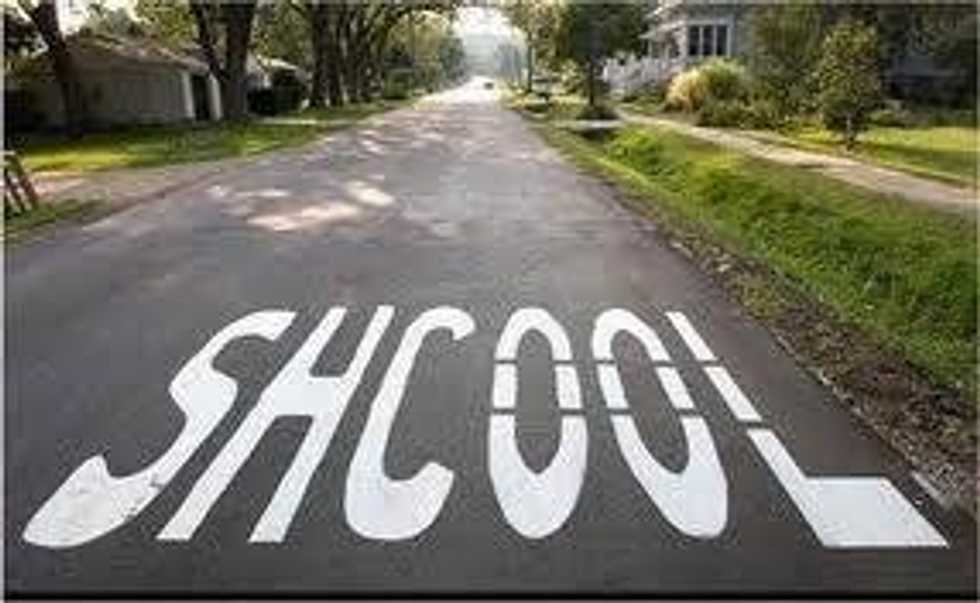
I am a Grammar Nazi. I am a Grammar Nazi... and I will admit it. Yes, it drives me absolutely insane when people make unnecessary grammar mistakes. You should have (Note: "should have" not "should of" --> contraction = should've) learned this in elementary school. Why can't we correctly use grammar in today's society? I'm not sure, but I'm aiming to change that... So if you know someone who needs a lesson, please, for the love of tacos, refer them to this article.
1. Your or You're
Your = possessive. Example: Is that your hat?
You're = contraction of "you are." Example: I heard you're going to the football game!
2. Were vs We're and Where vs Wear
Were = past tense of was. Example: You were petting the dog.
We're = contraction of "we are." Example: We're petting the dog.
Where = location. Example: Where are you going?
Wear = clothing. Example: What should I wear to go out to dinner?
3. How many Os on "to?"
To = preposition/adverb; usually used to express motion. Example: Are you going to the dining hall?
Too = also or extra. Examples: I'm going to the dining hall too. I have too many M&Ms.
Two = the number. Example: I have two (2) extra M&Ms.
4. There or Their or They're
There = location. Example: I'm going over there.
Their = possessive. Example: This is their table.
They're = contraction of "they are." Example: They're going to be mad if we sit here.
5. Apostrophe Usage.
English is weird, man I know, but please, try and use apostrophes correctly (AKA: don't make things possessive when you meant for it to be plural)
Usually, possessives get apostrophes and plurals do not. Examples: The blanket is hers. The blankets are red.
There are some exceptions. For example, it's compared to its. It's (with an apostrophe) means it is, because it's a contraction. Its (without the apostrophe) is possessive. Examples: It's a red blanket. The dog hurt its paw.
If the noun is singular, but still ends with an s, the apostrophe goes at the end. Example: I broke my glasses' frame!
If your noun is plural AND possessive, the apostrophe also comes after the s. Example: There are two dogs. Those are the dogs' toys.
Another thing: when using an apostrophe for a year, it goes before the numbers (not after) because it's being used as a type of contraction. Example: Class of '14!
Comma usage is also an issue, but this article would be a book if I tried to type out all the comma rules.
6. Then or Than
Then = next. Example: First we went to the grocery store, then we went to get ice cream.
Than = comparisons or choice. Example: I would rather have a dog than a cat.
7. Affect or Effect
Affect = verb. My mood affected the amount of fun I had at the concert.
Effect = noun. There was an effect on the amount of fun I had at the concert.
8. When to use I or me
A good way to figure this out is to take the other person out of the sentence. For example, "Bob and I went shopping." Take Bob out and you're left with, "I went shopping." That sentence makes sense, so you assembled it correctly. On the other hand, try it with, "Me and Bob went shopping." Take Bob out and it becomes,"Me went shopping." That does not make sense.
9. Semicolons
Used to adjoin two related sentences or in place of commas in a list format.
10. Lose vs. Loose
Lose = fail. Example: I don't want to lose the soccer game!
Loose = not tight. Example: My shoelace came loose.
11. You peaked in elementary school (if you don't know your grammar).
Peak = top. Example: We climbed to the peak of the mountain.
Peek = a quick look. Example: Let's peek (or take a peek, depending on whether you want a noun or a verb) at our notes before the exam starts.
Pique = provoke. Example: Lecture today piqued my interest in that topic.
In conclusion, use correct grammar.