
The difference between literature and fiction is clear. Literature is culturally and historically relevant, it’s novel, it’s expertly written with tons of metaphors, and has some kind of deep significance, but people don't necessarily have to like a book for it to fit these criteria. Fiction, however, is usually judged by how many people like it and whether or not it's a New York Times bestseller.
With fiction, there are only good books and bad books. For example, most people consider E.L. James’ Fifty Shades of Grey a bad book, but who am I to judge a middle-aged woman sitting across from me on the train reading Fifty Shades? She’s been through enough at this point in her life to justifiably pick up this book that is so hated by many people and genuinely enjoy it, because if anybody tries to argue that Fifty Shades is a bad book, he or she is simply simply stating an opinion that can easily be argued against.
A critic’s opinion of E.L. James’ controversial book series does not change the fact that over 100 million copies of the first book were sold. My point is, it doesn’t really matter whether or not some people consider a specific book good or bad; if you enjoy reading that book, then to hell with what the critics say!
To any and all authors, their readers’ opinions are the ones that matter most. I would be surprised if John Green took the judgments of the hefty amounts of people who criticize "The Fault in Our Stars" based off its movie trailer to heart. As a John Green fan and fiction lover myself, I can honestly say that "The Fault in Our Stars" is a genuinely good book.
Green’s style is easy for all ages and types of people to understand, he’s witty, he’s a genuinely intelligent person and knows a lot about random subjects besides literature and creative writing (check out his YouTube channel), he’s clearly a deep thinker, and he writes young adult novels that sell because tons of people want to read them.
If you don’t think his work is literature, then you’re obviously entitled to your own opinion—we all have reasons why we like and dislike certain books. Keep in mind that Hester Prynne’s character in The Scarlet Letter by Nathaniel Hawthorne was seen as scandalous and controversial when the novel was first published, but is now recognized as one of America’s first heroines; opinions on literature change over time, and you never know what kinds of contemporary books critics will categorize as literature twenty years from now. So, if you enjoy reading John Green’s books, don’t be afraid to tell the world why you think they’re good, because you just might be ahead of your time.
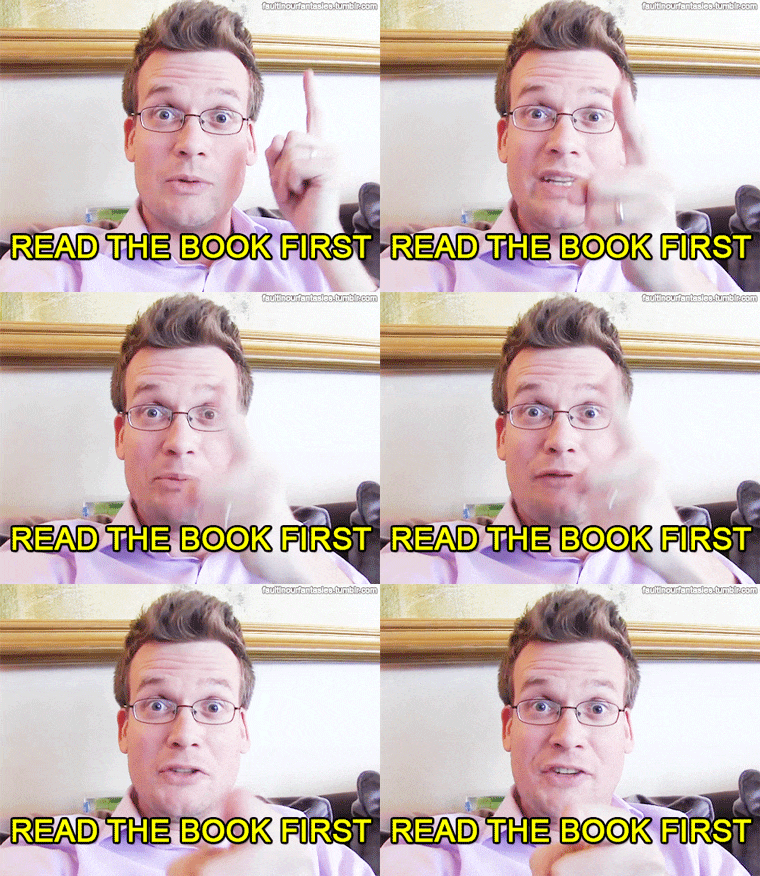
Your words can be just as effective as any well-established book critic’s words; just because somebody in the New York Times says A Book speaks for the voice of our generation and has already established itself as a literary canon and there’s never been anything like it before does not mean you have to agree. Isn’t that the purpose of the comment sections on YouTube and Facebook? Just kidding. Don’t be that guy.
Instead, write you own article explaining why you disagree with So and So and why you think A Book is the most horrendously offensive, shockingly boring, repetitive nonsense you’ve ever read in your life. Chances are, there are people out there who will agree with you, even if it’s the minority. Anyone can judge a book, but nobody should judge the reader.
It is perfectly okay to enjoy reading these so-called good books and bad books. As Katie Oldham wrote once in a Twitter post, “Ever realized how fucking surreal reading a book actually is? You stare at marked slices of tree for hours on end, hallucinating vividly,” and if one piece of sliced tree makes you hallucinate more than another, you have the right to think so without being judged.