
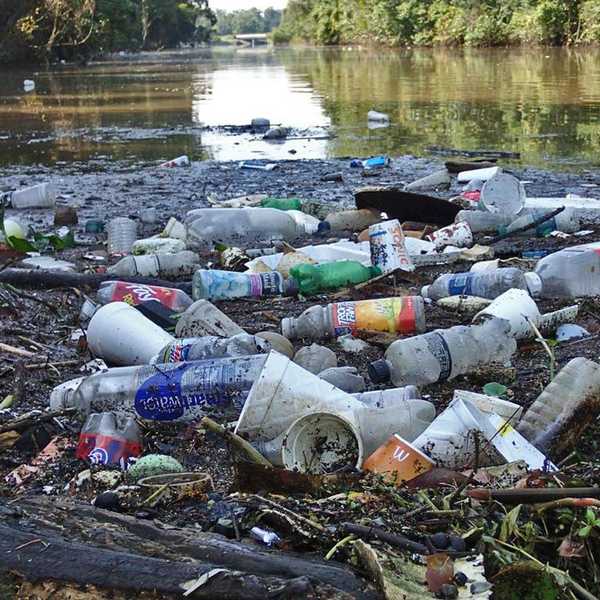


The sovereign state system and current economic institutions contribute to global ecological problems in that climate change is an international issue. This means that in order to curb growing ecological issues, world leaders must take the necessary steps to protect the environment and reduce greenhouse gas emissions, and they must do it collectively. Economic institutions come into play because unfortunately, being environmentally friendly costs money.
The United Nations has its central institutions (the ‘principal organs’) as the General Assembly, the Security Council, and as of 1972, the United Nations Environment Program. While it has been common knowledge since the 1970s that the environment is changing, and not for the better, it was also commonly thought that to protect the environment would mean to reduce economic growth, and so it lost key financial support. However, after the World Commission on Environment and Development released the Brundtland Report, they showed how ecological problems could be tackled while still allowing the economy to grow, and that the technological innovation required could even improve national economic competitiveness. This prompted the United Nations to make it a main topic at the 1992 Earth Summit. This brought possible solutions to the world’s leaders, both governmental and economic.
The Earth Summit lead to the formation of the Kyoto Protocol. This protocol set the standard that it was necessary for first-world countries to lead the way in climate change as third-world countries still need to continue developing. Under the Kyoto Protocol, only industrialized countries are required to commit to mandatory greenhouse gas reduction targets. While this eventually meant the United States backed out of the deal, it showed how sovereign states needed to make changes together to reduce environmental damage. Since then, the United States and China, the two countries with the greatest amounts of greenhouse gas emissions, have made a deal to cut their carbon emissions by 2030.
Economic institutions are also imperative in ecological protection because they have the funding for it. The World Bank’s seventh goal is to ensure environmental sustainability. They fund numerous projects around the world to protect and rehabilitate the environment, such as the National Ganga River Basin Project in India or the Sao Paulo State Sustainable Transport Project in Brazil (worldbank.org). While international organizations help play a large role in the fight to protect the environment, it is also important that independent companies promise to reduce their environmental impact as well. A huge success in this facet is the fact that General Mills, one of the food companies with the greatest amounts of carbon emissions, promised in 2005 to reduce its carbon emissions by twenty percent by 2015 according to thinkprogress.org. Large companies such as this set an example of the necessary actions needed to be taken in order to preserve this world for future generations as well as making it a better place to live in now.
The leaders of this world, both sovereign and non-governmental, need to work together in order to solve global ecological problems. A company won’t cut its carbon emissions if it means its competitors who refuse to cut emissions will get ahead of them, the same way sovereign nations won’t promise to cut their emissions if they don’t see other states promising to do the same. To save the environment that humankind has so drastically damaged together, we need to focus on fixing it together.
















