

Please note that there are spoilers in this post.
Last night, my boyfriend and I decided to go to our local cinema to see The Girl on the Train, a film that I didn't know much about, as well as not having read the best-selling book. My expectations were fairly good, as I was in the mood to see a psychological thriller, as the trailer portrays. Although the film was entertaining, there was a lot left to be desired.
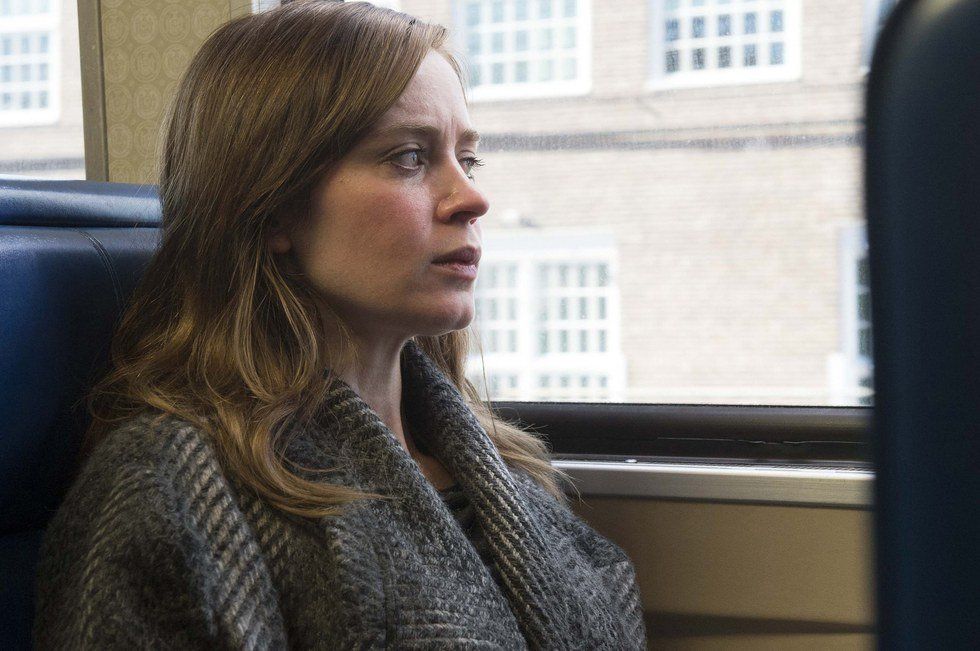
Equipped with prosecco and wine (totally legal in UK cinemas!) and stealing my boyfriend's popcorn (I'm the worst kind of girlfriend who says they want nothing but then eats more than half of her boyfriend's popcorn), I braced myself for a trip into the depths of alcoholism, voyeurism and the illusion of the American dream that infuses itself within most suburban settings, such as Ardsley-on-Hudson, the town that Rachel, played by Emily Blunt, passes by on the train every day.
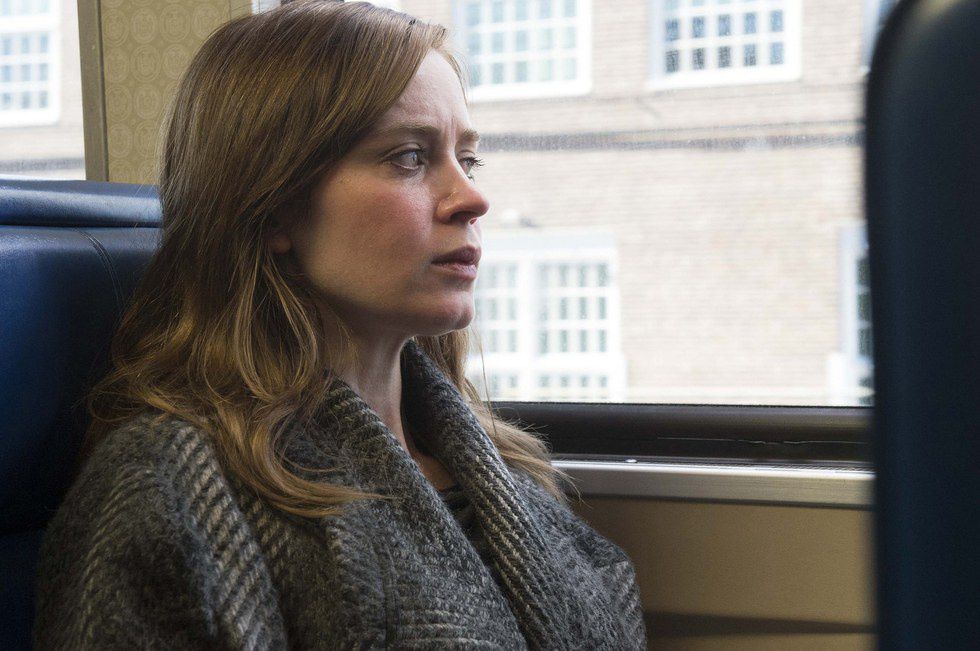
Ardsley-on-Hudson is a picturesque town not far from the metropolitan hub of Manhattan, that used to house Rachel and her husband, Tom, played by Justin Theroux, before he divorced her for a woman he had been cheating with, the blonde Anna, played by Rebecca Ferguson. Every time Rachel's train passes by her old home, she cranes her neck to try and spot the momentary bliss that she believes Tom and Anna are experiencing, along with their baby. She also fixates on a beautiful young woman, Megan, who seems incredibly in love with her muscular husband, seen by the many sex scenes Rachel witnesses on her commute. Rachel envies these people greatly, and sees herself as an outcast that has been exiled from a life of suburban matrimony and happiness.
Rachel is a drunk. The kind that sips vodka out of a clear thermos while on the train, trying to pass it off as water, but fooling no one. Emily Blunt does a great job at portraying a heartbroken, sad mess of a person, yet one the audience may identify with in their darkest moments. In one scene, she takes a video on her phone of herself and a random woman she has met in a drunken stupor in a bar, and commands the woman to scream "Fuck you" to Anna with her, with XXXXX written in the background on a mirror in lipstick; referencing an erotic email her ex-husband had sent Anna during their marriage, with the subject line "XXXXX". Rachel then proceeds to call her ex-husband repeatedly, leaving voicemails. Watching this scene made me uncomfortable, which is a good indicator of grim realism, or the idea that her drunken pettiness stems from real and deep pain, which we have all faced in times of heartbreak.
However, one thing that really distracted me was Rachel's accent. To my knowledge, Rachel is meant to be American, as she lives in America and interacts with all American characters. Yet while she speaks, an unmistakable British accent emerges. Is she suddenly British? Is Blunt simply unable to do an American accent? These questions are unanswered. The only instance where her accent is addressed is when she sees a therapist who has a hispanic accent, and after commenting on this, he tells her she has an accent as well. Yet no backstory as to her possible British heritage emerges, which makes it unclear as to why she would have a British accent in the first place. In the book, the setting is Britain rather than America, but it seems natural that if a movie were to change its setting, the accents would reflect this. This bothered me because it didn't make much sense, but also because of the nature of the setting. If Rachel had emigrated from Britain and had come to America, then she would already have a position as an outsider (from a purely simplistic account of what immigration implies). Yet the plot would be strengthened by assuming that Rachel was born an American, and grew up in this American setting of suburbia; and therefore, being exiled from a system she was always a part of would explain her total displacement a bit better.
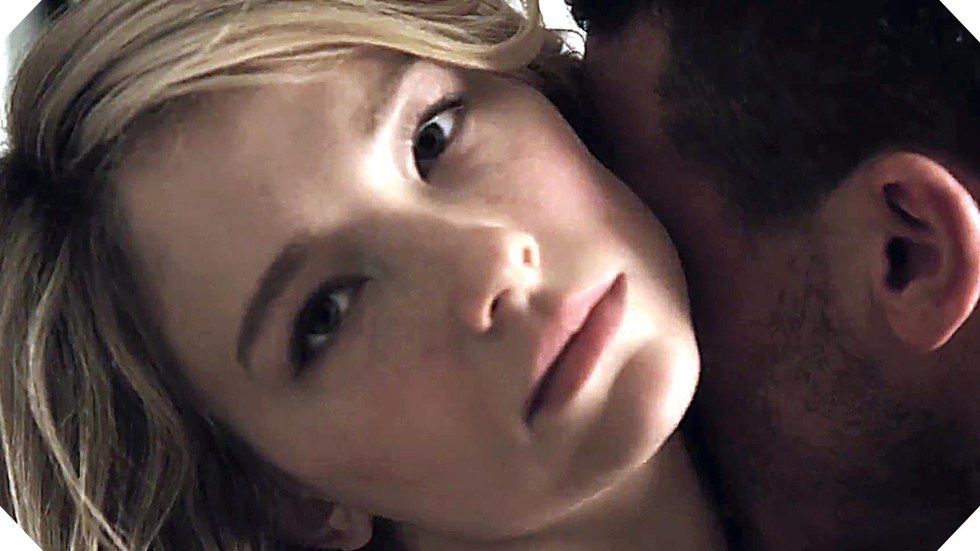
When Rachel witnesses Megan kissing another man on her porch, she becomes enraged, as she understands the pain of infidelity, but mostly because the bittersweet comfort she got from watching what she believed to be true marital bliss has been shattered. This Hitchcock sense of voyeurism is rammed home, as the line has been crossed from simply viewing and judging, to interacting with the subjects of her gaze. Rachel decides to stumble off of the train and confront Megan for ruining her marriage. She spots Megan going into a tunnel, and she begins to yell at her in a drunken rage. The rest of the occurrences are blurry, and the audience doesn't know what happens next, only that Rachel wakes up with a gash on her head and bruises on her arms. There are flashbacks that suggest that perhaps Rachel killed or harmed Megan, and she is very disturbed by this.
She becomes the main suspect in the disappearance of Megan, and her inability to remember the events following her confrontation with her causes Rachel to have a crisis of identity. This is also fortified by the knowledge the audience gains of her ex-husband always reminding her of the horrible things she did when drunk. For example, there is a flashback scene in which Megan throws a plate of devilled eggs at a wall in her husband's boss' home, greatly upsetting the boss' wife. He then tells her that because of this, he was fired from his job. This turns out to be untrue, as Rachel apologizes to the boss' wife after seeing her on the train, and the wife states that no such incident occurred, and that Rachel's ex-husband was fired for "not being able to keep it in his pants".
This is when the drunken haziness and loathing begins to unravel and Rachel deducts that it must be her husband who killed Megan and not her, as the false memories once implanted by her husband could have been implanted there again, and then she remembers seeing him at the scene of the confrontation with Megan. It turns out Megan, who was a nanny for Anna, was sleeping with Tom.
Rachel and Anna have a volatile relationship, as Rachel's presence is seen as intrusive, due to the phone calls and routine appearances at their home. Rachel even went so far as to take Anna and Tom's child from her crib and cradle it on their front lawn. It is important to note that Rachel is infertile, and her anxieties of not performing as a woman should in the suburban haven of Ardsley-on-Hudson, which Megan snidely describes as a "baby factory", have manifested into her drinking problem. But what was once a hazardous relationship turns into a story of female solidarity, as Rachel exposes her ex-husband's abuse, infidelity, and murder of Megan in front of Anna in their home. Anna concurs with Rachel, having found evidence of the affair herself prior.
A struggle ensues, and Tom begins to choke Rachel. Rachel escapes and runs out of the house and Tom follows her. She turns around and swiftly stabs him in the neck with a corkscrew she had taken from his kitchen. Anna comes to the scene of the crime and screws the corkscrew deeper into his neck. This is a somewhat lazy metaphor of the empowering repossession of her deficits, namely alcoholism, and the corkscrew as a murder weapon as a representation of that.
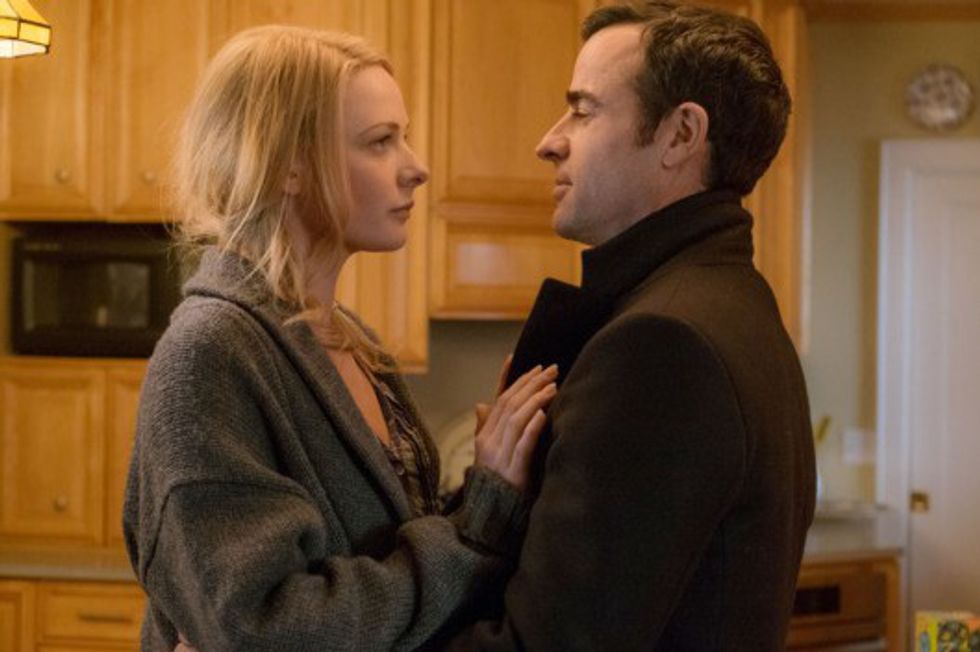
But more so than alcoholism, the main theme of anxiety that these women face is linked to childbirth, which is then linked to a greater expectation of a woman in their society. Rachel cannot conceive, and so she drinks. Anna has had a baby, yet she is unfulfilled. Megan had also had a child, but it died, and as a result, she no longer wishes to conceive. However, after becoming pregnant with Tom's baby, she is murdered by him as a result of her wanting to keep it. Without the incessant configuration of woman as child-bearer, this movie cannot exist. This begs the question as to whether these women have been brought up with more traditional values and measure their success as a woman based on their ability to be mothers; or if whether the book/movie is flawed by suggesting that a woman's value is linked to this. Either way, this is problematic, and if the audience doesn't subscribe to this narrow view of womanhood, the film does lose a lot of its impact and sympathy.
Overall, this film was a good time-pass, and did have some thrills. But the ending seemed listless and the movie wasn't really all that complex, certainly not enough to make in any sort of psychological thriller (side note: even if a character in a thriller sees a psychologist in the film, it doesn't make it a psychological thriller). Blunt, despite confusing me with her accent, did a very credible job at playing an alcoholic. The rest of the acting was average. The enjoyment of my prosecco was also deeply hindered, as the film is basically a PSA on the dangers of drinking. Don't drink too much, don't get overly-involved in other people's lives as a means of feeling important, when in doubt- use a corkscrew as a method of self-defence against a murderous ex-husband, and a British/American fusion accent will really keep people on their toes if you're into culturing some confusing mystique. These are lessons I will take away from The Girl on the Train.
















