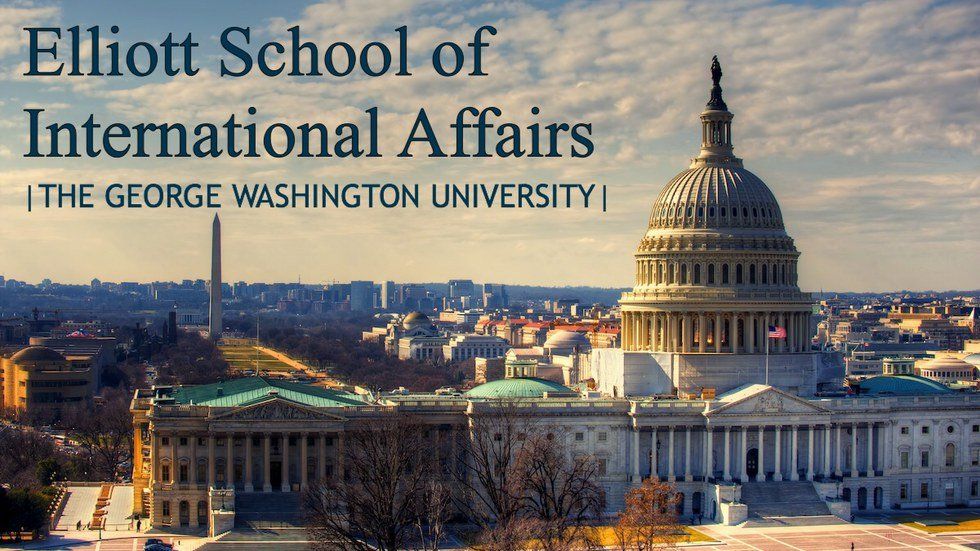
Elliott School of International Affairs at the George Washington University is the 8th best school in the United States to study foreign relations. It ranks higher than Ivy Leagues such as Brown and Dartmouth, and is close behind other highly selective schools, like Yale and Columbia.
Elliott students have the unique experience of learning in the nation's capital, regularly surrounded by the important events and people that they learn about in their classes. There are so many opportunities for International Affairs students to get involved in; however, they can often get lost in the shuffle. So, I'm making it easy for you. Here's an outline of five things in DC and at GW that every Elliott student needs to take advantage of.
1. Join the International Affairs Society
This student organization is a great starting point to get involved with politics and foreign affairs. It's a huge student organization, so you can control your involvement and commitment. Use it as a basic resource, get information about internships, important speakers, and trips to embassies through their list-serve emails. If you wish to be more involved in the club, join the Model UN team, writing for The Globe, or joining the Executive Board.

2. Pick your courses wisely.
RateMyProfessor is an amazing website, but make sure you are using it with the correct intentions. While everyone loves finding simple classes and easy professors, make sure you are also looking for professors who are passionate, well-connected and utilize the environment of DC.
For example, Professor Mark Croatti's Introduction Comparative Politics takes weekly trips to embassies and gets personalized briefings from ambassadors and policy professionals. Through one of these field trips last year I, personally, had the opportunity to speak with a British Ambassador about the British referendum from the EU. I asked him questions about how the withdrawal of the UK would affect the EU and complications that would arise. Some of these questions stumped him, and really made him think, which as a freshman was a huge accomplishment.
Another great course is Europe: International and Domestic Interactions, taught by Erwan Lagadec. In this course, students are assigned to a political agency with about four other peers. They receive a team leader who is a professional at the agency.
This semester I am assigned to the French Embassy with Gérard Araud, the French Ambassador to the United States, as my team leader. Students research the agency, work with their team leader, and debate on behalf of the organization for the entirety of the semester.
At the end of the course, the best research paper is presented to the Delegation of the European Union. The winning student is also awarded a private policy discussion at the EU.
Choosing the best courses is extremely useful and important for Elliott students. The amazing opportunities that our courses provide make it easy to network without swamping yourself in extracurriculars and internships. You can improve your GPA and connections simultaneously.
3. Intern.
We are so lucky that we attend a school with impressive job opportunities in walking distance. Something special about GW is that we don't have to wait until the summer to intern. The abundance of internships was the first thing that stood out to me when I was touring GW as a high school junior. Now as an enrolled sophomore, it is still one of the major reasons why I am in love with the school. After 3 semesters here, I’ve already had 4 internships.
GWork, the GW student, and alumni tailored job database, are all extremely useful when looking for openings. Some great aspects about GWork are that employers automatically see that you are from GW, rather than having to read through your resume to find this information. Another perk is that you can apply directly through the website.
When applying through GWork, your resumes are typically put in a smaller pool, so you don't have to worry about your application getting lost in the pile.
Another resource that I use to find internships is the Off-Campus Federal Work Study program. Most schools have Work Study jobs— employment opportunities around campus that are awarded in students’ financial aid packages to give them spending money while enrolled at the university.
What I love about GW is that this system can be used for internships too (as long as they are registered with the Center of Civic Engagement and Public Service). I’ve interned at Conservation International and the Peace Corps through this program. Here’s the list of all of the registered agencies for off campus federal work study: http://serve.gwu.edu/campus-federal-work-study.
READ YOUR EMAILS. International Affairs Society, Elliott, and other clubs send out emails almost daily with tons of information on special events on campus and internship openings. These emails are long, but definitely worth reading. I’ve seen openings at the White House and Government Departments.
Finally, use the student body to find internships. Ask your friends and peers where they have interned in the past, and be on the lookout for anyone passing down their internship. If you know you want to intern somewhere, talk to random people about your goals. Chances are they know someone who interns or works there who can give you advice or even a recommendation.
You can usually get paid or earn course credit. I promise it's not as bad as The Devil Wears Prada.

4. Research your interests.
If you know you are interested in diplomacy, constantly look up events at embassies and diplomatic forums: they always have events like open tours, food festivals, and galas. Going to these are a great way to get experience and more knowledge on embassies, and you will most likely meet others who are interested and well connected.
If you know you are interested in politics, schedule a tour of the White House or Capitol building. You have to contact your Senator to do this and while this sounds tedious, it gives you great experience speaking with political officials, and you’ll get to see an inside view of the locations that you talk about in class and in the news.
Here is a website that cumulates a few events around DC: https://thingstododc.com/events/embassy-culture/
5. Talk to your professors.
Many of Elliott’s professors are well-connected in DC and well versed on important topics. For example, the Dean of the Elliott School is an Ambassador himself. Talk to your professors, find out their professional backgrounds, and discuss with them your own passions and goals. These are professors who want you to succeed and want you to make a difference in the world. They are not here to give you a bad grade, they are here to make you a better student and integrate you into the domain of International Affairs. They are a great, free resource. Use them to immerse yourself.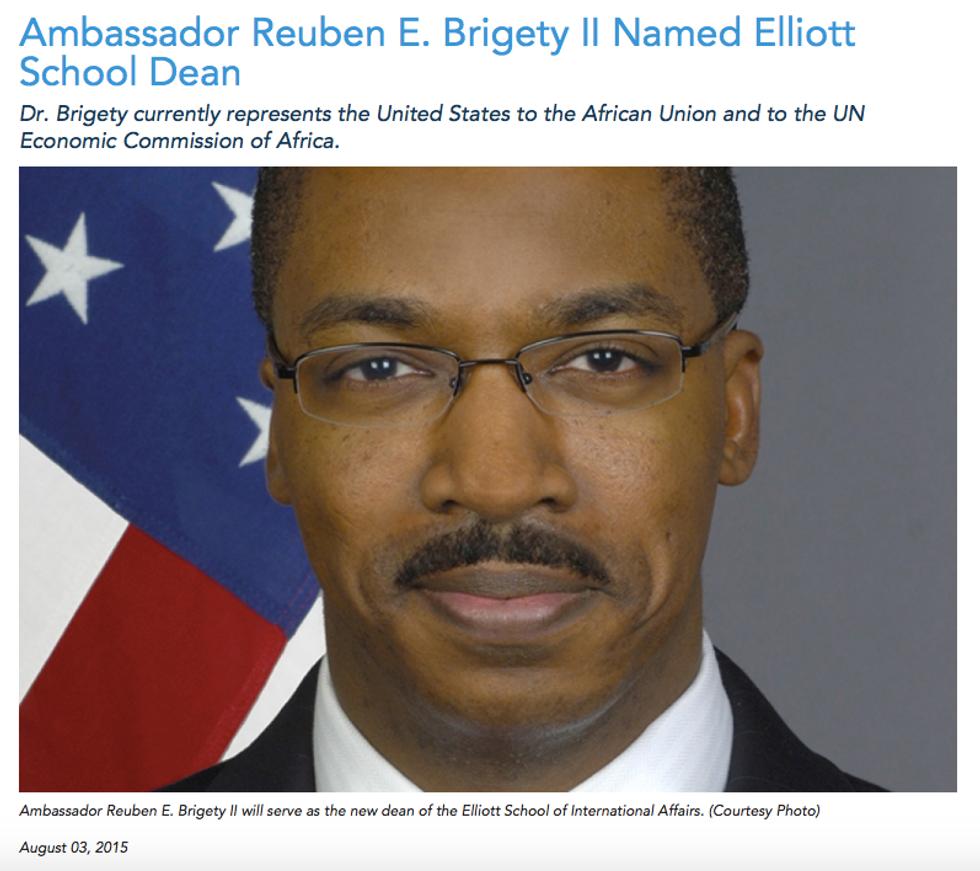
6. Get Involved In Extracurriculars
With amazing courses and internship opportunities, it can be easy to forget about all of the great clubs and extracurriculars that GW offers. Programs like Alt Breaks can give you great fundraising, volunteer, and abroad experience. Join a club related to your minor to take your passions to the next level. If you don't know what club to choose GW Democrats and GW Republicans are a great place to start as we're the most politically active student body in the nation.