
With the recent release of Zara's new clothing line, Ungendered, the fashion industry seems to be transitioning more and more into the concept of genderless clothing. Although many view this as a new, revolutionary subject, it is actually not very new at all.
The idea of gender fluidity has been sweeping the nation and is becoming more popularized than ever. From celebrities to people at the mall, everyone seems to be transitioning into being less of one gender and more of none, a mixture — agender. According to Nonbinary.org, Agender is "an identity under the nonbinary and transgender umbrella terms. Agender individuals find that they have no gender identity, although some define this more as having a gender identity that is neutral."
Now, not everyone that prefers unisex fashion considers themselves agender or gender fluid. And not everyone that prefers the term agender likes unisex, genderless clothing. However, both seem to have arisen at the same time and are very popular subjects globally. Coincidence? Maybe so.
But is this topic so new? Or just new to the 21st century?
The concept of genderless clothing started during the Chinese Communist Party circa 1949. During this time, the Soviet Union had a strong hold on China's economics, industry, art, education and culture. From this time until the late 1950s, Chinese women's fashion focused greatly on the pantsuit. Traditionally, this pantsuit type of ensemble was worn to show political allegiance, importance and other subjects geared towards a higher class. However, this does not shy away from the strange similarity the pantsuit had with men's fashion at the time. The pair also goes hand in hand with the almost "old" concept of uniforms.
The 21st-century society, better known as Generation Z, seems to be focusing mainly on breaking down the gender stereotypes and walls previously put up by generations before. This generation views gender and sexuality as a more complex topic because it vastly affects an individual's identity.
Brands like 1.61, based in New York, and 69, based in LA, are just a few of the many helping to break down the walls of gender-based clothing. The push to genderless clothing is even shown in these brands' slogans (e.g. "Utilitarian. Uniform. Unisex.") and choices of descriptive words, like "non-gender, non-demographic."
With fashion evolving faster than ever, most brands are starting to realize restricting themselves to focusing on one gender clothing will eventually be, if it isn't already, hopeless. Especially when the world calls for more and more progression into this gender neutral society.
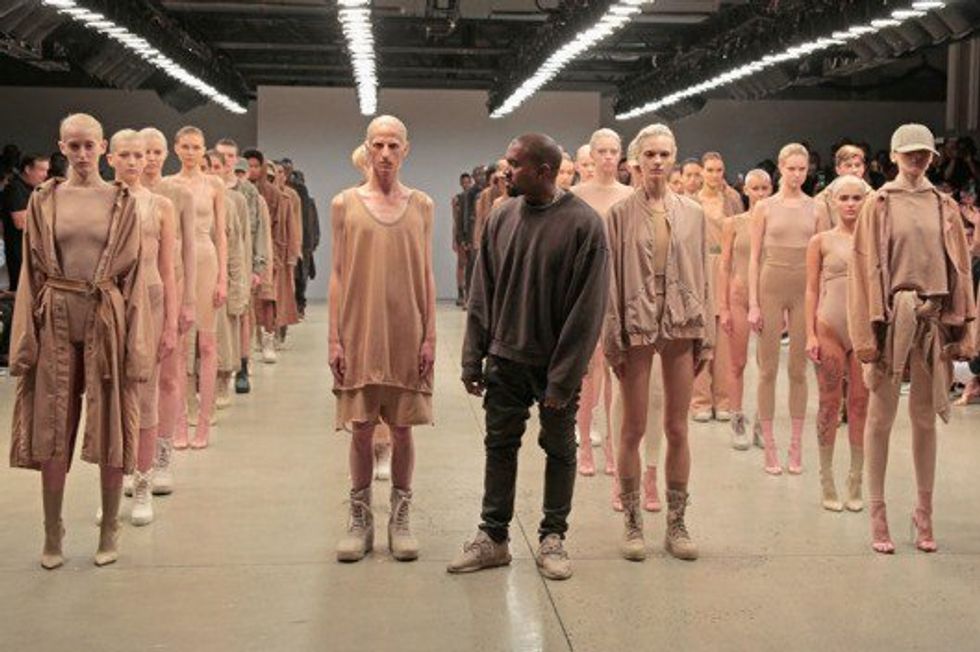
Now ask yourself, am I on board with this changing concept? Is it fashion or is it a uniform? And does this new line of fashion really break down the stereotypes? That, I'm not sure of. But I would like to see where it leads in the future. And I wouldn't mind seeing Kanye West in a Givenchy skirt again.

















