It is fortunate that many of us were told from a young age that we were going to go to college. Older generations, namely baby boomers, tend to see college as what it is intended to be: a place where you can further your education, which will lead to a better job, more financial stability, and in turn, a better life for the children they worked so hard to raise. Much of this is true. A college degree looks better than a high school diploma and increases your chances of getting hired to a position that pays above minimum wage. Sometimes, you can even get a job in the field you studied doing what you love. That’s the dream after college, but, as thousands of new stories over the past five years have pointed out, this is not always the reality.
In some cases, students feel dissatisfied with what they studied in college. And this makes a lot of sense. Essentially, our society asks 17- and 18-year-old graduating high schoolers what they want to do for the rest of their life. After being told what to do for the past 14 years of their life in a very structured school system, this can be a really difficult decision. Most students have not yet been able to explore ideas outside of the classroom, nor have they lived on their own. This can also prove to be a problem when students do move to a college for the first time right out of high school. University life can be overwhelming. There are many distractions, and many freshmen who have not experienced creating their own schedule can fall into all the other things college culture has to offer besides classes. For some students, taking a gap year might offer some perspective on the world and some time to grow up.
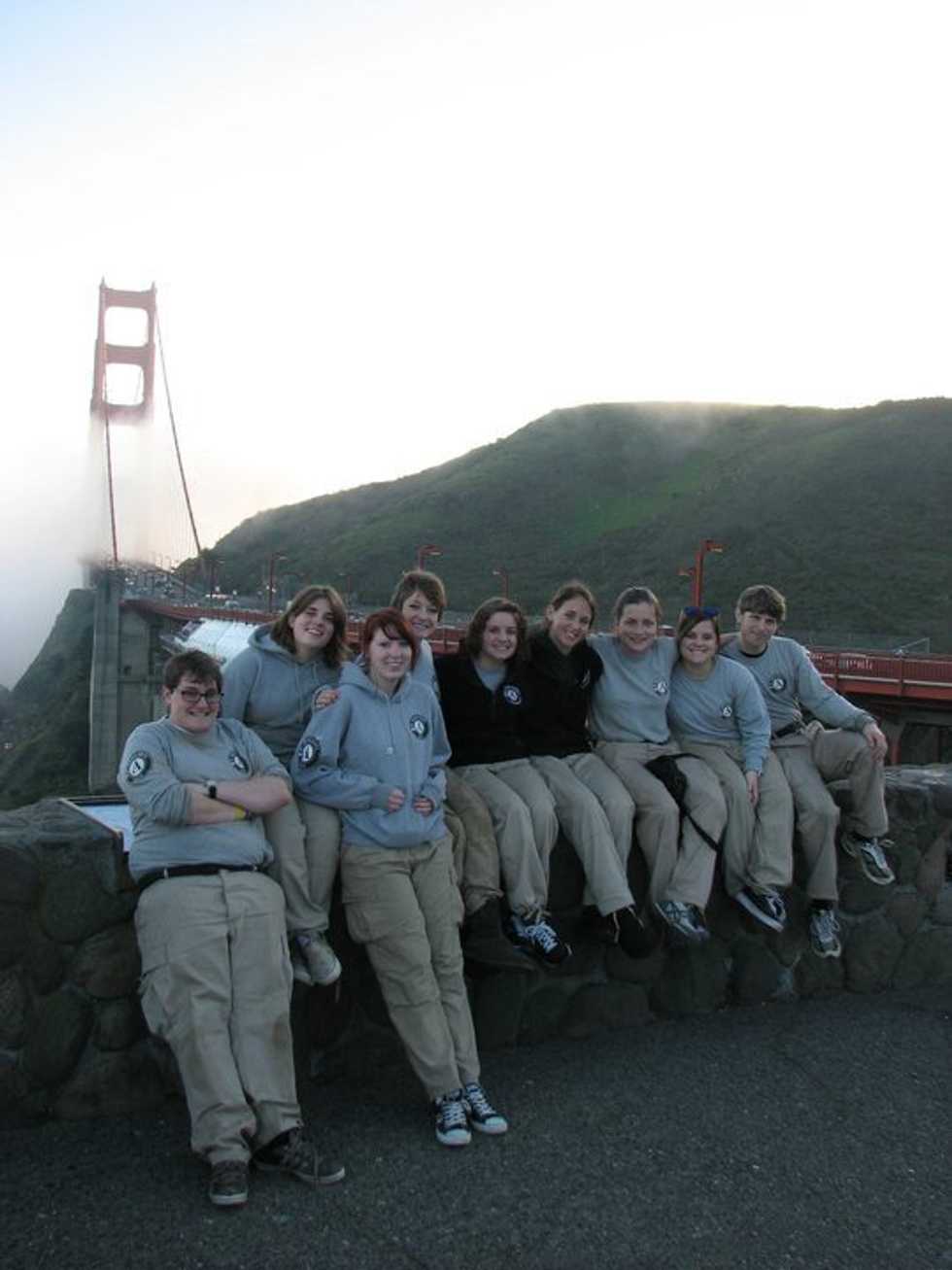
I’m going to stop here and just say that I’m a little biased. I took not one, but two years off after high school graduation. Instead of buying books and moving into a dorm just a few hours away from home, I got onto a plane for the first time and flew out to the West Coast to start my time with the National Civilian Community Corps. The National Civilian Community Corps is a 10-month national service program that allowed me to travel around the West Coast of the United States and work with various non-profit and government agencies. This, more than anything else in my life, has defined and created who I am today. When legislators from both parties enacted the AmeriCorps NCCC program in 1992, its concept derived from the Civilian Conservation Corps of the 1930s. Instead of focusing exclusively on building or conservation projects, NCCC gives 18- to 24-year-olds a chance to do four different projects over the year. Projects vary greatly in type and location. Every six to eight weeks, each team packs up and moves to another project. There are five campuses across the country and each campus covers a specific region of the United States.
In two years of doing the program, I went to a dozen states with a great group of strangers who quickly became family. I tutored children in Pomona, California, made new trails in the mountains around Seattle, built houses with the non-profit St. Bernard Project in New Orleans, Louisiana, and did construction work with the Thibodaux, Louisiana chapter of Habitat for Humanity. During my second year, I chopped wood and did maintenance for a retreat center in the mountain town of Angeles Oaks, California. I designed a children’s garden at a summer camp in Camp Meeker, California. I did a series of trail building projects and white water rafted with the Bureau of Land Management and I saw the devastation that a category five tornado caused in Joplin and St. Louis, Missouri. Each project taught me a new skill set, challenged me in a new way, and demanded that I learn how to work with my own strengths and weaknesses. In my off time, I saw national parks, went to Disneyland, explored the towns we lived in and learned about their struggles and potential. It was a beautiful experience, and one that I can’t recommend enough.
The workload can be really demanding. Usually, corps members work over 40 hours, and they are expected to find other volunteer opportunities within the community on the days they don’t work. I think this demanding schedule—and the structure of it—got me ready for the workload expected during college. It also taught me how to balance a job with a social life.
NCCC is not the only option for a gap year. There are hundreds of AmeriCorps programs with more defined projects and more permanent locations. There are also other volunteer programs. Some of these programs even have international options.
I’m not saying that a gap year is for everyone, but I know that it helped me feel focused when I came into college. As long as you keep yourself busy, I think a gap year can be a helpful break from the fourteen years of schooling we experience, and it gives you a chance to learn about yourself before making any major decisions about what career field you want to go into.
For more information about NCCC, including the application process and campuses, go to www.americorps.gov