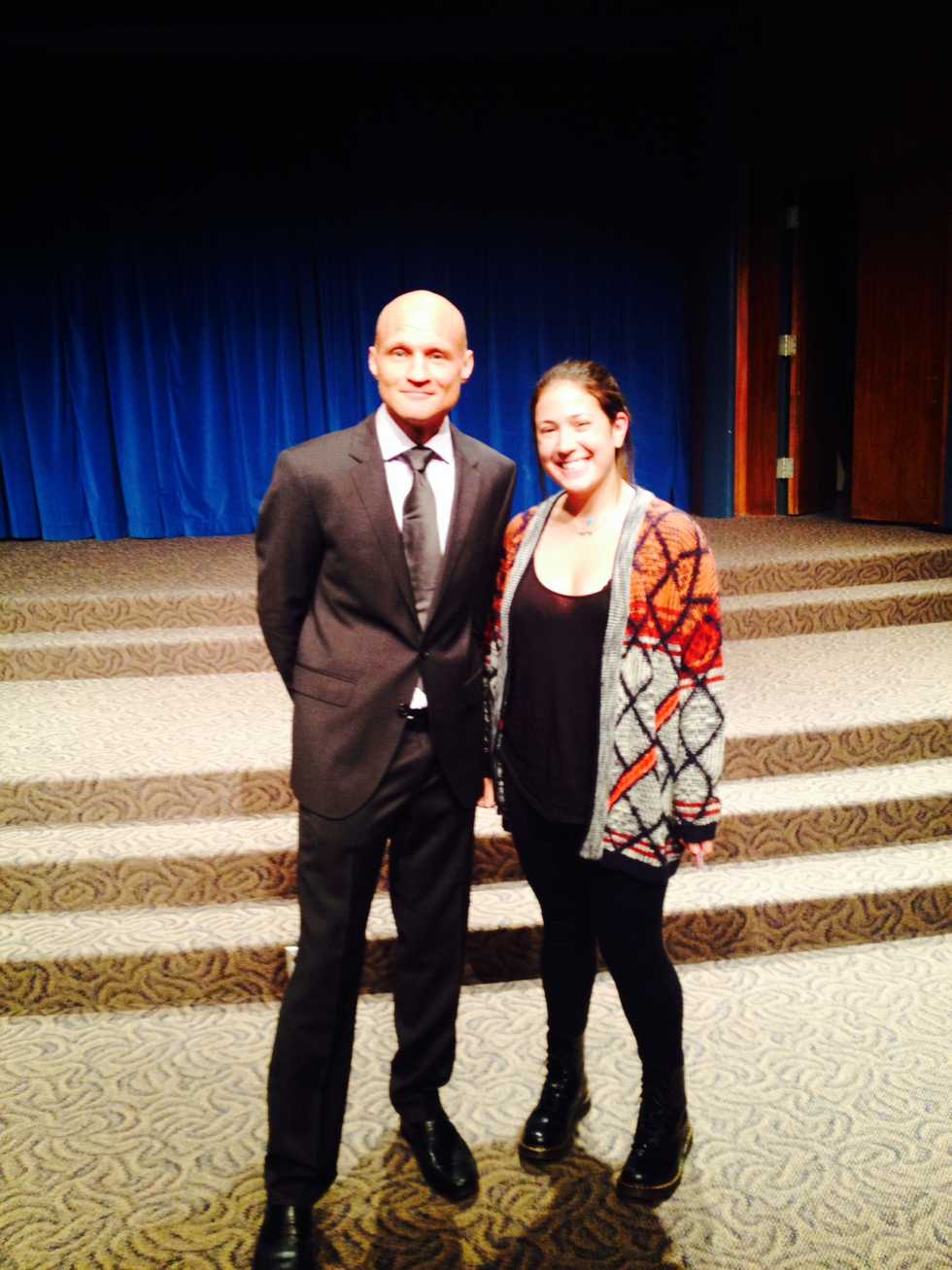
The Whittenberger Auditorium boomed with laughter Wednesday night as Scott Dikkers, editor-in-chief of The Onion, spoke in front of an excited audience comprised of IU’s student and faculty body. People of all shapes, sizes and personalities attended the lecture, but one thing they had in common was a mutual interest in satire.
“Who’s interested in journalism?” Scott Dikkers asked the crowd. “I don’t know jack shit about journalism. I’m just some guy.”
If by “just some guy” Mr. Dikkers meant that he is an incredibly successful entrepreneur, then yeah, he’s “just some guy." The associate editor began his lecture by giving a personal background to explain how his satirical newspaper became the global news empire that it is today. By revealing his road to success and experiences, he said he hoped to help the audience avoid making the stupid mistakes that he made.

Dikkers began his story by describing the atmosphere he was raised in as a child. He grew up in Madison, Wisc. and was raised by a pair of farmers. In third grade he decided he wanted to take his own life because he couldn’t stand living with “Midwestern baptists” and being born into a family without humor. When holding his breath for as long as he could failed to kill him, only the “bleak prospects in life remained."
Fortunately for the young Dikkers, he happened upon Mad Magazine, which inspired him to turn to humor as an outlet for his teen angst. He realized that if he could make the bullies laugh, then they wouldn’t want to beat him up. In addition to using humor as a protective shield against his high school tormentors, the idea that he could make fun of literally anything sparked his desire to create a comic strip.
After receiving an immense amount of rejection from his comic strip submissions, teenage Dikkers finally caught his big break. His comic was printed without pay and was described as “barely inadequate to print." Contrary to that newspaper’s description, Dikkers's work became so well known that it led him into the hands of the very two people he would collaborate with to create The Onion.
“You can’t go wrong naming a product after a food item," Dikkers said, explaining the title of his satirical newspaper. It also cleverly got its name because like an onion, you have to peel back the layers of a newspaper to get the facts about a story.
Dikkers got his prestigious job as editor after the early stages of the third release of the paper. Before he intervened, the owners of the newspaper, Tim and Chris, supposedly planned on mooning the camera and using the photograph for the front page with the title, “Fuck You Readers, We Quit."
After six months of being editor, the pair sold Dikkers the newspaper for $3,000.
“I didn’t search high and low for my A-player writers, I mostly searched low," said Dikkers.
Dikkers described the staff that submitted weekly articles to the up-and-coming paper as comprised of low-lives who were “bitter, smart, had no prospects in life and had a lot to say”. He explained that these writers had a lot of emotional trauma to compensate for, and becoming funny was the way to do it.
“Being funny was a way to get back at dad," Dikkers said jokingly. "Pathetic - he’s never coming back."
Dikkers said he cultivated a culture among his writers by treating them like entrepreneurs. He let his writers work for free for a while, and then once they had enough practice and produced outstanding pieces, he paid them.
“It probably breaks every labor law and I should go to jail," Dikkers admitted.
His tactic worked. though, because the culture he created was a writing culture built on dedication. By giving his writers the reigns and allowing them to type away without the added pressures of a tough boss, his employees exceeded his expectations and eventually became better writers than Dikkers himself.
After avoiding various and hilarious legal troubles, The Onion eventually rebranded itself and became a real satirical newspaper with sections. The strictly online newspaper went viral and attracted so much attention that sometimes foreign countries actually thought the satirical articles were factual. In 2012, North Korea took The Onion so seriously that they reprinted its article in their own newspaper deeming Supreme Leader Kim Jong Un as “Sexiest Man Alive."
“It was like getting a blow job from 500 angels”, Dikkers said.
The satirical writer did more than just make his audience slap their knees with glee and gasp for air with his stories; he imparted his five principles of creative leadership onto them.
“I thought I was going to just learn about comedy writing," said audience member Kevin Tognetti. “Instead I learned not to take myself so seriously."
Scott Dikker's Tips for Success:
1. Live your mission. Do what you want to do, and forget about the money.
2. Invest your time first and money second. Asking your parents for a loan won't help you pursue your dreams, but taking the time to work on your project will. Money isn't the answer. Money doesn't have brains.
3. Be prepared to scrap and bootstrap. Prepare yourself for failure, because statistically speaking, 9 out of 10 businesses fail.
4. Trust your people. Most people hate their bosses because they tell them what to do, but The Onion didn't.
"When you trust people, that's how they grow," Dikkers said. "But if they're horrible, fire them and replace them with someone better."
5. Don't work hard, don't work smart - work right. There's a recipe to follow, and if you follow those directions and do what other people did to succeed, then you will too.
“I learned about how to succeed in life while still doing what you love," said attendee Samantha Yaros. "Scott taught me that you don’t always need the biggest check for success."