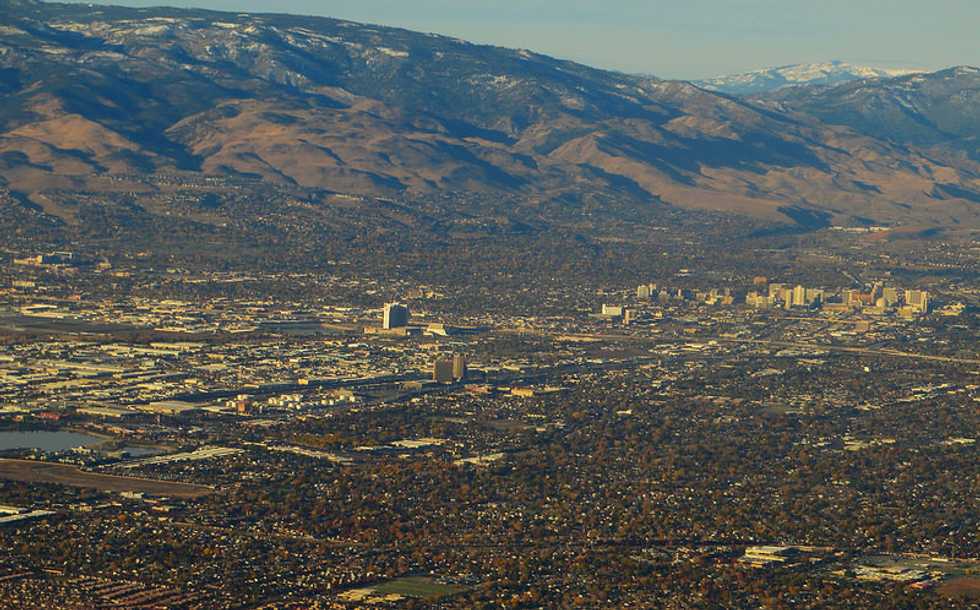
It’s quite literally a right of passage when you’re a Vegas kid, going to school in Reno. The roughly seven-hour drive from one city to another can be extremely long and boring, since the majority of time you look out the window you’re looking at dirt, rocks and mountains. Then if you look to your left, more dirt.
But there are those stops and towns that you become familiar with even after just making the drive one time. Each one helping you gauge just how much more desert landscape you have to endure before finally reaching your destination. How much do we know about these places, though? We just stop or drive through them thinking there’s not much going on. While that may be kind of true, these places have stories to them, too.
Beatty
“Gateway to Death Valley” they say on their site, but I know it as the first right turn you make of the very few on your way to Reno from Las Vegas.
About 120 miles from Las Vegas, there are approximately 1,000 people who call Beatty home. Most of them are employed by the Nevada Test Site, according to the town website. What’s more of a surprise is that Beatty is actually what the U.S. Census Bureau calls a “census designated place.” Which really just means Beatty resembles a city, but isn’t incorporated and doesn't have any form of official government.
That’s right, there’s no official government in Beatty. There are just five elected board members who are liaisons between the town and the Nye County Commission, the people who actually govern Beatty. In fact, all the towns along the drive are considered CDPs or unincorporated.
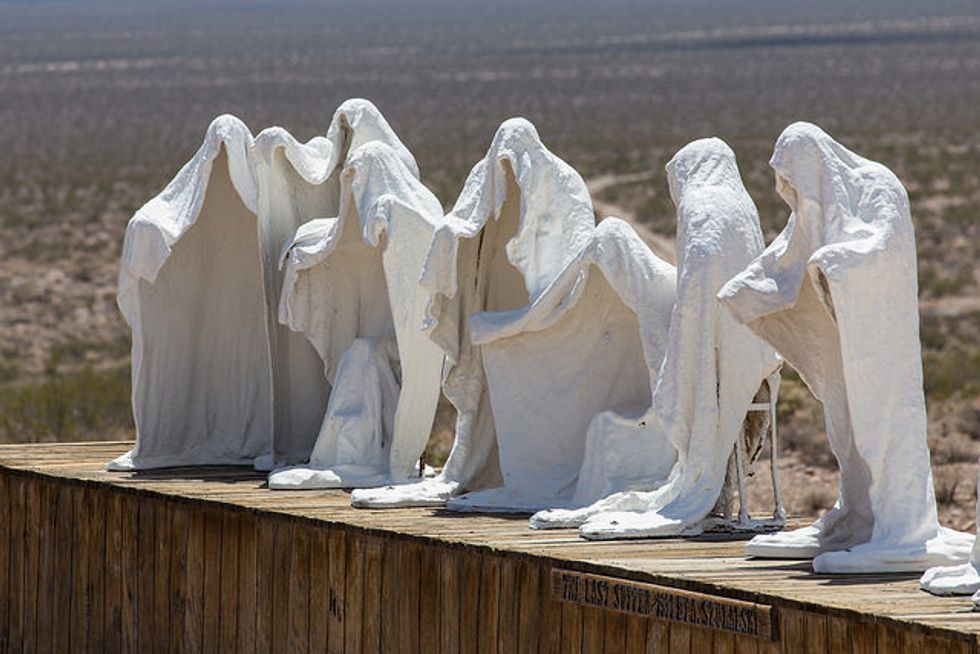
Besides the classic Death Valley Nut and Candy Co. we’ve all stopped at to use the bathroom or buy snacks, Beatty boasts the fact it’s seven miles from Death Valley and four miles from the ghost town Rhyolite. And on the way to Rhyolite, look off to the side and see the Goldwell Open Air Museuem. AKA, the creepy white statues in the middle of the desert.
Goldfield
The ghost town we all know about on the trip around the state.
At its peak, the population was once the largest in Nevada with about 20,000 people. Today, there are just 268 according the U.S. Census Bureau.
Goldfield was founded in 1902 and as far as mining in Nevada went, this place was prime. The mines there produced more than $86 million from 1903 to 1940.
It’s impressive given that in 1923, a moonshine still explosion destroyed most of the town. Few buildings survived, but among those, the famous Goldfield Hotel was left standing.
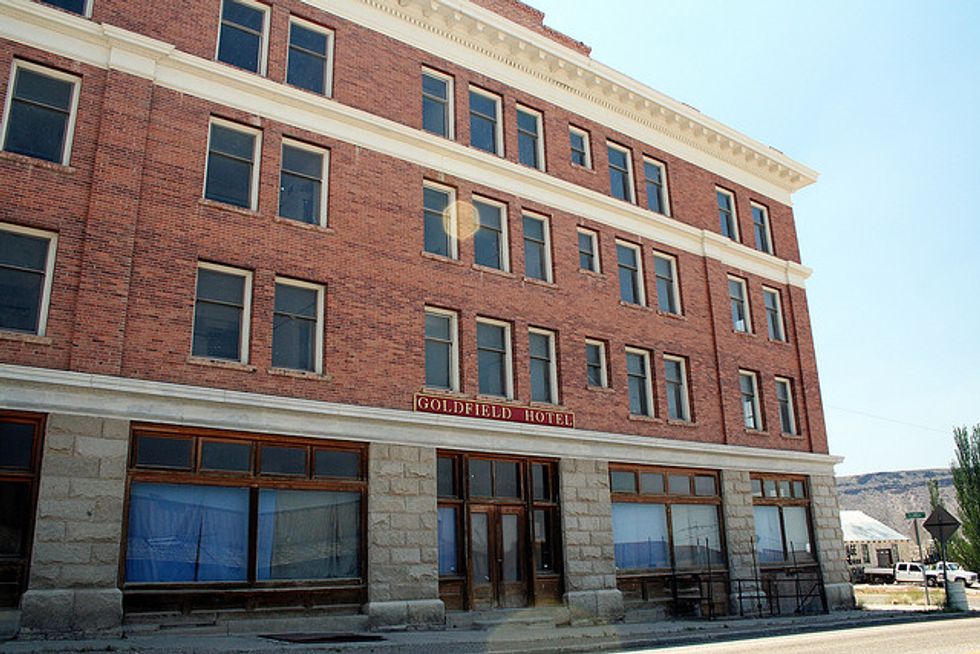
You know, the one everyone thinks about daring each other to go explore despite the no trespassing signs because it’s supposedly haunted.
So haunted in fact, the team from Ghost Adventures visited the hotel three different times over the last 11 years to investigate paranormal activity there.
Tonopah
It’s the town I can’t wait to get to because being in Tonopah means being halfway done with the trip and that’s a beautiful thing.
Tonopah is also listed as a CDP, but it was once named the number one place for stargazing by USA Today. So for some reason, if you think it’s safe to be out in Tonopah in the middle of the night, maybe looking up at the sky wouldn’t be a bad idea.
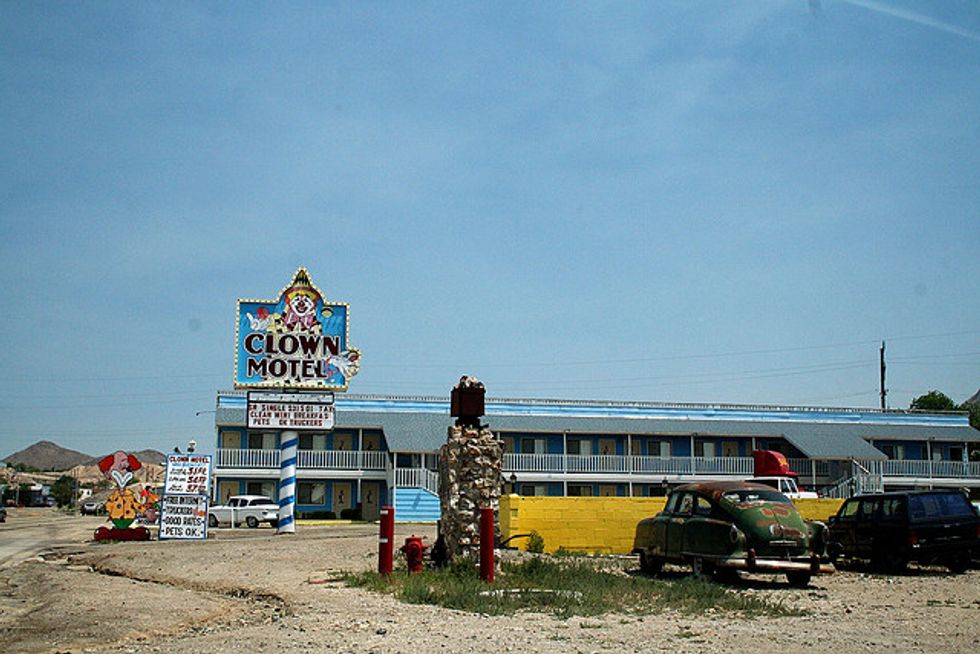
And while I’m sure we’ve all stopped to refuel and get some food from either Subway, Burger King or the gas station that connects the two, I don’t know of anyone that’s voluntarily stayed at the Clown Motel.
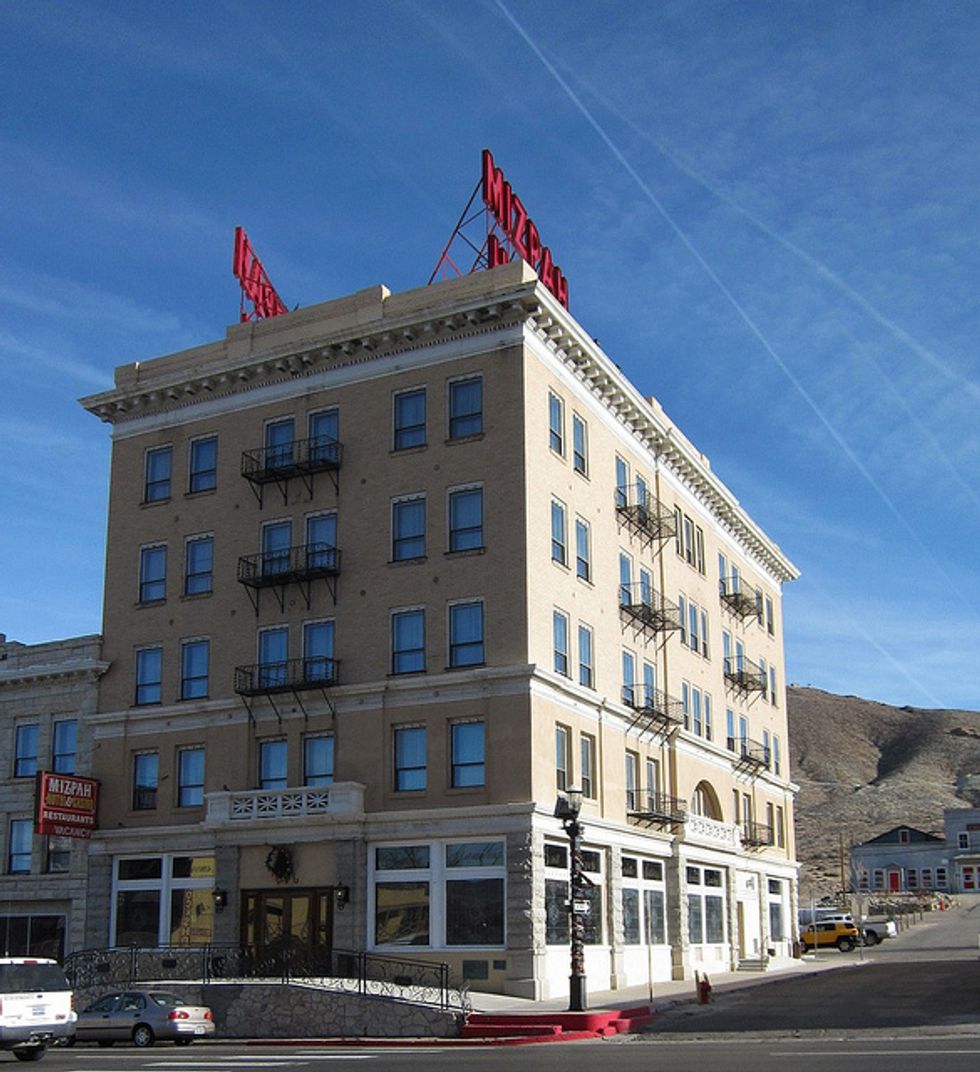
But the Mizpah Hotel is something else.
Reopened in 2011, it’s a part of the Historic Hotels of America and up until 1929 it was the tallest building in Nevada (it’s only five stories). The hotel is supposedly home to the ghost of the “Lady in Red.” There are two versions of her story but in either one, she ends violently murdered by a significant other. The dismal fate of the Lady in Red, and accounts of her presence by guests at the Mizpah, made it so the hotel was also featured on Ghost Adventures.
Hawthorne
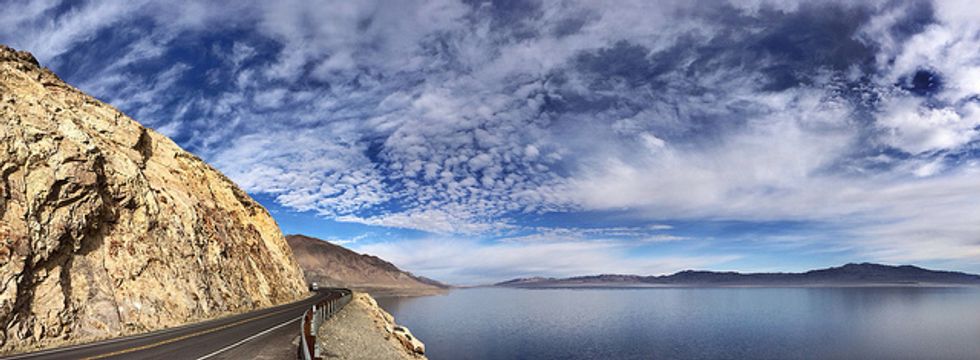
The last little town before you hit the bigger little town of Fallon. Honestly there’s not much to say about Hawthorne. It’s got your lodging and McDonald’s and Walker Laker nearby. Now, I’ve never personally seen anyone in Walker Lake splashing around or on boats, but apparently you can do that there. The blue water breaking up the monotonous desert surroundings is also an appreciated change on the drive.
But there's the Hawthorne Army Depot. It’s had a couple of different names and purposes, but it started as a place to store ammunition after a disaster occurred at a depot in New Jersey. After investigating the explosion, Congress recommended a new depot be established on the West Coast and so the Hawthorne Naval Ammunition Depot was built. Later, when the United States entered WWII, the depot became a major place to not only store weapons, but demilitarize them, repackage them, re-purpose them, or whatever need be.
Currently, the Hawthorne Army Depot is being used by reserve Marines to conduct annual training exercises.
And that’s it. Once you hit Fallon, no matter what you thought of it before, once you’ve driven through these little towns, Fallon brings you back to civilization. Then, from there, you’re just about an hour away from the University of Nevada in the Biggest Little City. It might be the longest hour because it’s the last, but you just drove through the desert for six hours, it’s not that bad, right?