

For decades, book-to-movie or book-to-show adaptations have been a great way to pull all kinds of audiences together. Book lovers rejoice at seeing their favorite stories projected on the big screen, and those who don't often get a chance to read these books are able to experience the story on a more flexible schedule. It's clear that these adaptations, like all movies or shows, take massive amounts of time and effort to produce, but I'm here to tell you that you can write your own adaptation by following these 10 simple steps.
1. Don’t explain too much.
2. Forget about character descriptions.

You know that significant trait one of the characters has, which is mentioned frequently in the books and has a massive role in defining who they are? Yeah, you can just toss that. Start from scratch. Ignore that disfiguring scar, or the physical aspects that remind others of their dead parents. That doesn’t work on screen.
3. In fact, just forget about characterization all together.
Villains don’t need complex backstories. That side character doesn’t matter at all. They’re just there for comic relief. We don’t have time to develop all these stories, we only have enough time to slap something on the main character to appeal to the larger audience. Who cares if the author spent all this time fleshing out their characters? You’re writing the script, you can do whatever you want.
4. Cut out important scenes and replace them with something totally nonsensical.

This process is key. You need to take creative licensing into your own hands, but don’t waste your energy on rearranging the story to incorporate the new scene. Just throw it in there and call it a day: You have to get the movie out for summer, after all.
5. Ignore racial diversity.

If a character’s race is not directly specified in the book with food-based qualifiers such as “dark mocha skin” or “almond-shaped eyes,” they’re probably white. No need to use your creative license too much and present main characters as racially diverse. There are definitely not enough white people in the media yet.
6. Replace all teenagers with 25+ year old actors.
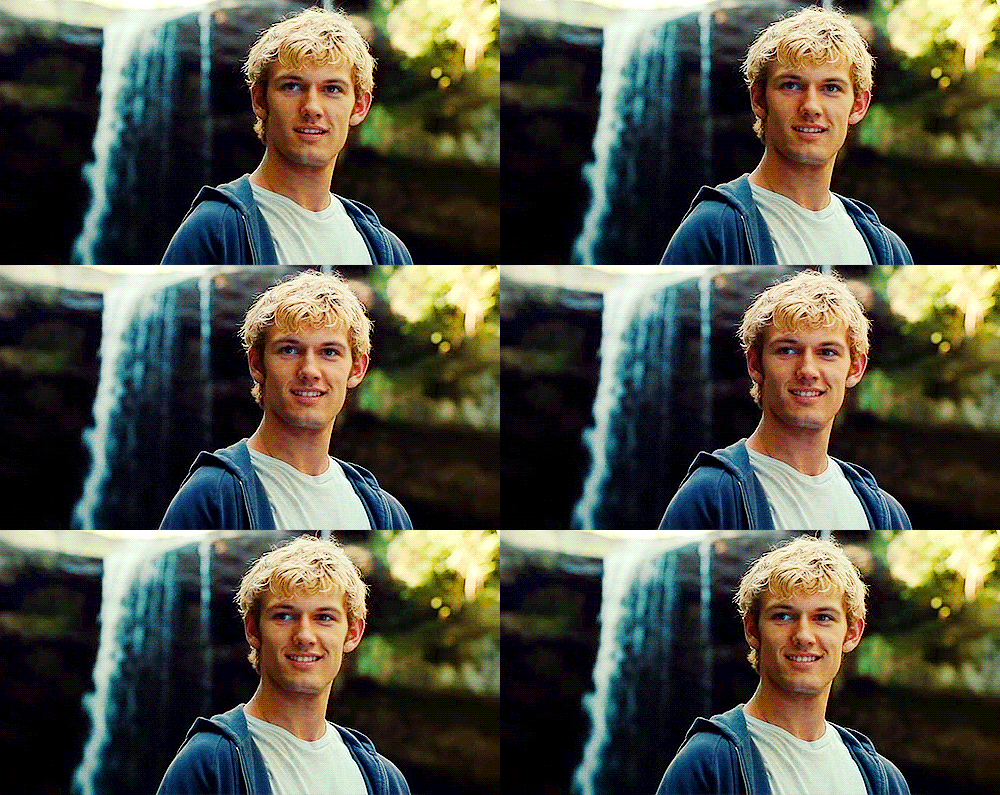
All of the high schoolers we know are pimply and awkward and going through puberty. We don’t want to show that on screen. So instead, it’s better to just get fully-developed men and women to play their parts. Growing kids have no use for self-esteem, and it’ll be totally easier to sexualize them if they’re older in real life. You can also dress them in “hip” clothes and turn their dialogue into something straight out of the '90s if you’re really into it.
7. Add some LGBT characters and kill them.
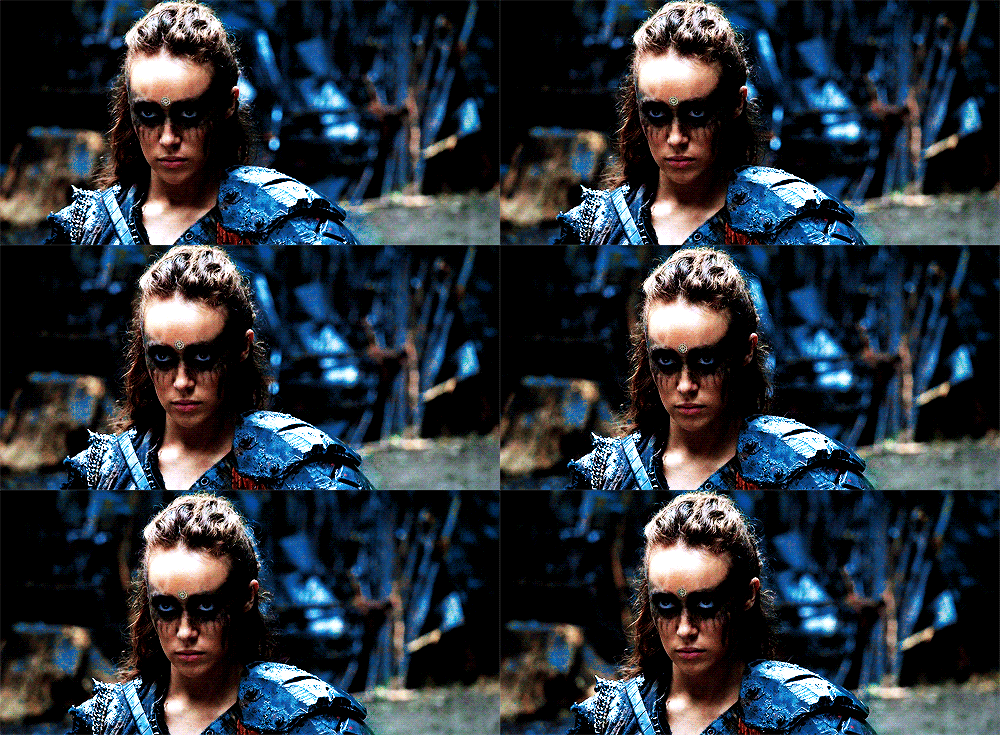
You know what a great story needs? People who identify with parts of the LGBT community. I don’t know why the author didn’t put them there in the first place. But just to be safe, we’re going to add some and then murder them senselessly for dramatic effect.
8. Even better, add new characters altogether.

Especially if they make love triangles! There’s no way we can have a male main character without a side chick to make out with. Get her in there, stat, before people start believing that life can still be amazing without a romantic partner to share it with!
9. Make sure the female characters don’t outshine the males.
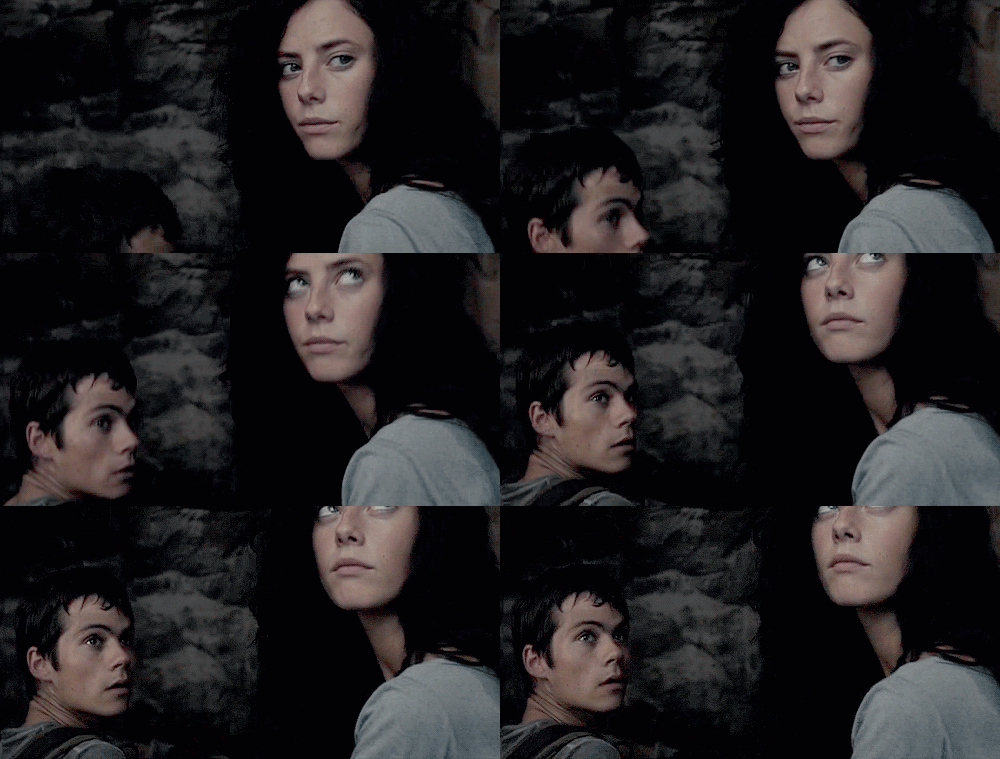
The author of this book wrote an amazing female character who can be considered strong, independent and just as relevant to the plot as the male characters. Obviously, they didn’t know what they were doing. Girls are only here to revolve around men, and the Bechdel test isn’t a real thing anyway. Go ahead and strip her down to a meaningless, two-dimensional side character without any other job than to bend her life around the male characters’ needs.
10. Change the ending.

Just change it. The book ending didn’t have enough explosions or graphic nudity. If there hasn't been a heterosexual coupling yet, you better stick one on there before the credits start rolling. All you really need to do is put, “Based on the book by” somewhere in there and you’re golden.

















