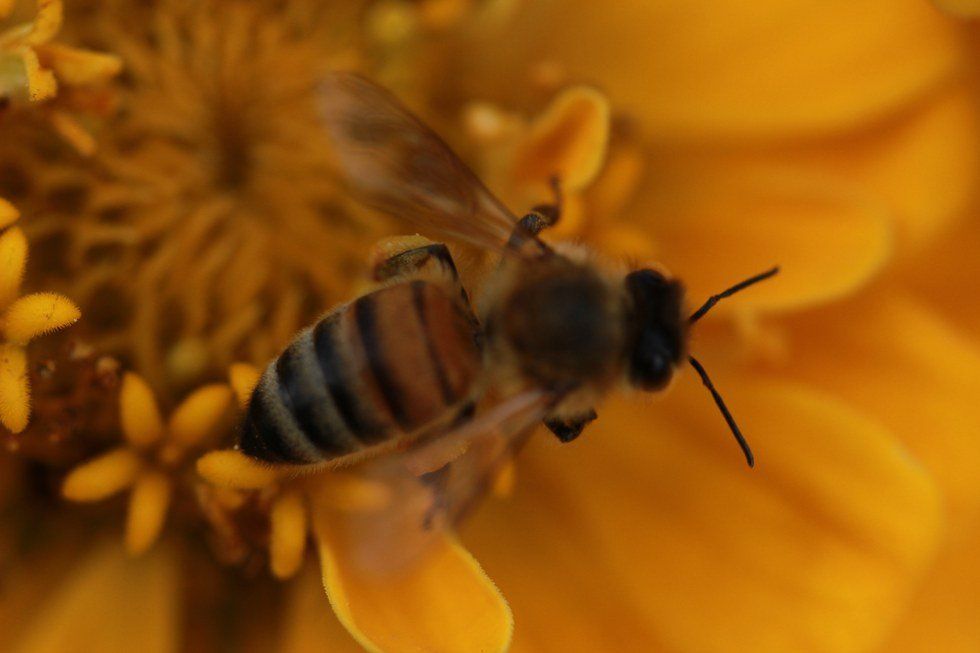
If you don’t know that our world’s pollinators are at risk, then you must have been living under a rock for quite some time. If that’s the case, thank you for rejoining society! And if nobody has told you yet, the bees are dying.
If you take away bees, you don’t just take away honey. Take away the bees and you take away apples, oranges, lemons, limes, broccoli, onions, blueberries, cherries, cranberries, cucumbers, cantaloupe, carrots, avocados, and almonds. The list goes on. If bees were to become extinct, so would our agricultural system as we know it. As the food supply dwindles, demand grows and the price of fresh produce skyrockets. This would make it even harder for low-income families to access healthy food, successfully encouraging the expansion of food deserts.

Colony collapse disorder was first brought to light by David Hackenberg in November of 2006. An odd phenomenon, CCD is characterized by a sudden evacuation of bees. One day you may have a perfectly healthy hive, the next, your hive could be empty except for the queen and her babies. As a species, the bee’s main goal is to protect and strengthen the hive. What kind of stress could cause them to go against these instincts?
The long answer: climate change, pesticides, and habitat loss all contribute to this complicated issue. The short answer—humans are causing CCD in bees.
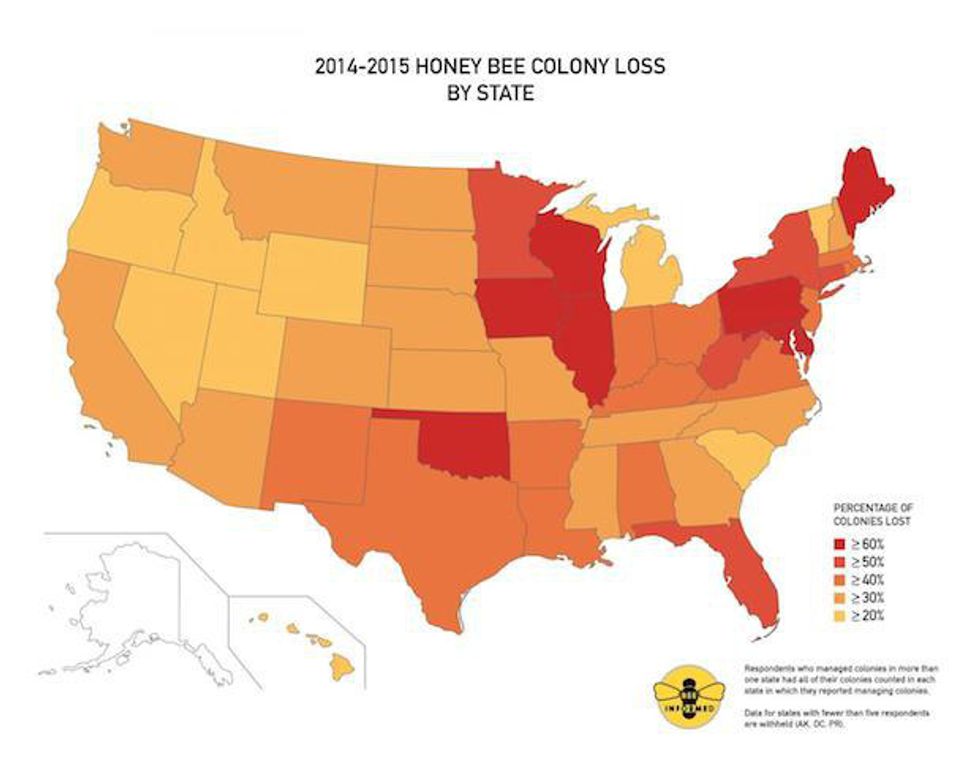
We pump about 2 million pounds of carbon dioxide into the air every second. This heats the planet and drastically changes weather patterns globally. When the climate changes, species die. Bees are no exception to this rule of nature.
The monocultures of the farming industry create a lack of biodiversity. Modern farms usually specialize in just one crop. This way of industrially growing food is not sustainable. But farmers attempt to manipulate nature and make this process sustainable through the use of chemicals.
We coat our crops with harmful pesticides that damage the bee’s immune and nervous systems, making it susceptible to mites and viruses, and affecting the animal across generations. Studies have shown that exposure to these chemicals inhibit motor functions of the bee.
Additionally, the bee’s natural habitat is in danger. Instead of diverse ecosystems filled with various flowers, plants, insects, and animals, we have patches of grass in front of our houses. Our lawns may look nice and offer a relaxing place to sit on a summer day, but they take away biologically important structures.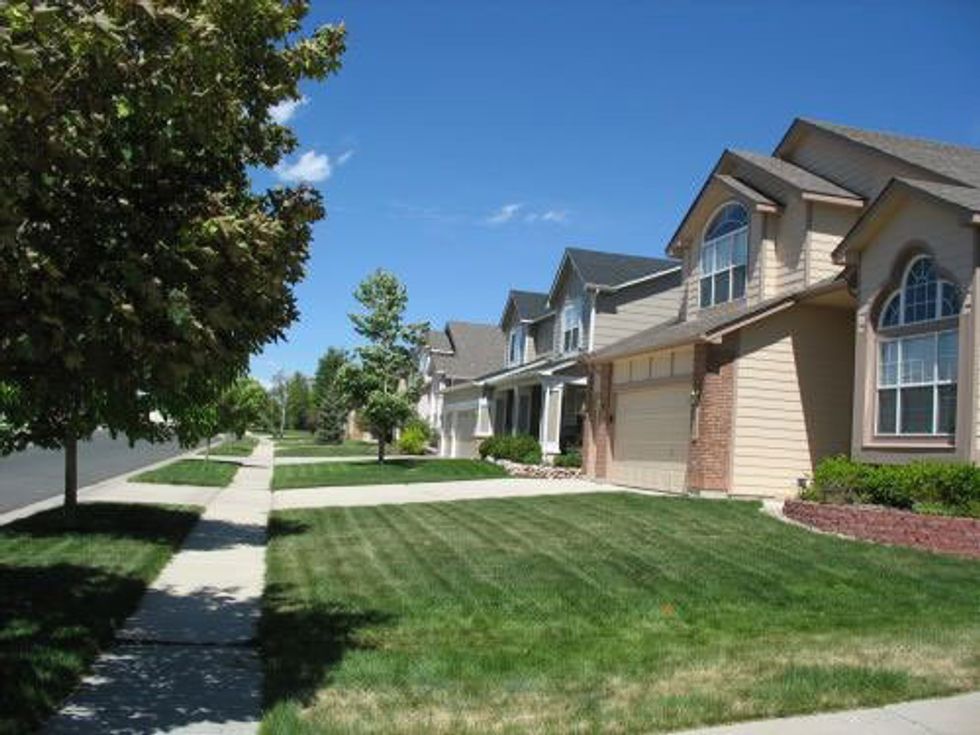
These problems are not going to fix themselves. And, unfortunately, bees are just one of thousands of creatures that we have threatened. It may seem like common sense, but we have to reverse these effects while we still can. Support locally and organically grown food. Or, better yet, grow your own food. Uproot your grass and plant a bee-friendly garden. It’s been ten years since David Hackenberg first addressed this issue. Ten years later, the bees are still dying.