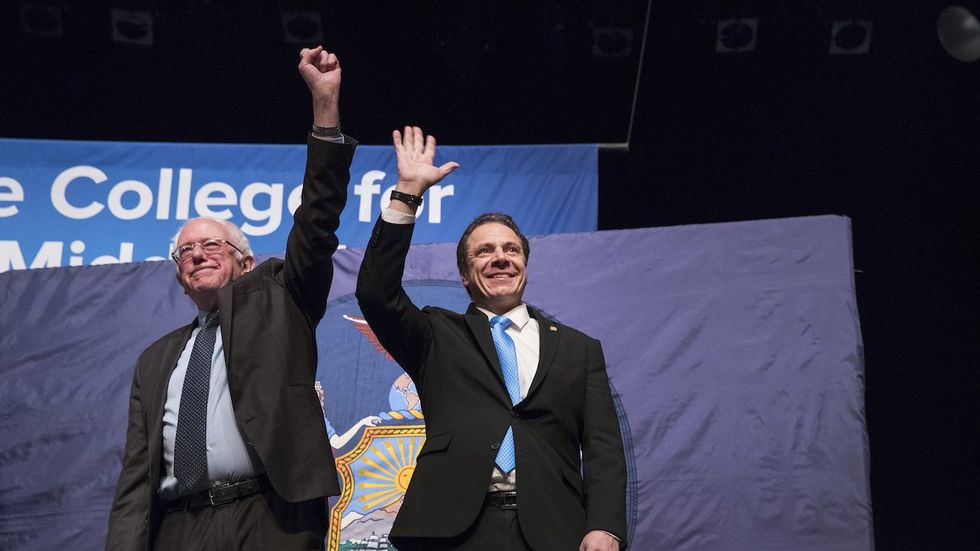
While everyone on Twitter celebrated free tuition in New York for SUNY and CUNY schools, I joined the celebration. Today, a high school diploma is no longer enough. In order to acquire a higher position in a job, a bachelor's degree is needed. Free tuition should be available for those who desire to pursue higher education. But the Excelsior Scholarship comes with fine print that many have not looked into.
The Excelsior Scholarship will begin in Fall 2017. New Yorkers making $100,000 annually will qualify. It will increase to $125,000 in 2019. 75.7% of students are eligible statewide. The Excelsior Scholarship is aimed to help middle-class New York families, which means anyone who is making $45,000 to $125,000 annually will be eligible.
But, here are some things you might not know.
In order to receive the Excelsior Scholarship, you must be a New York State resident. You must take a minimum of 12 credits per semester and a total of 30 credits per year also known as being a full-time student. You must work in the state of New York, for however many years you received the scholarship for, or it will become a loan. For example, let´s say I was eligible and I received the scholarship for three years. I must work in New York for three years. You can receive up to $5,500 from the Excelsior Scholarship, minus any amounts received from TAP, the Pell Grant, or any other scholarships. You must graduate from high school and immediately enroll into college. Those who have taken breaks will not be eligible.
So, in the end, who will this help?
Students who intended to enroll in college after high school but are not eligible for programs like Educational Opportunity Program or Higher Education Opportunity Program because their parents are a part of the middle-class.
This will not help part-time students who make up the majority of the CUNY student population. This will not help students who decide to take a break from school in order to gather themselves financially. It only covers tuition so students do not receive help with room and board, books, or other living expenses. This does not tackle our issue of accessibility. Studies show that 40% of low-income students accepted into college in the spring do not show up to classes in fall. Many do not show up because of daunting financial aid packages and loans they're not familiar with. While EOP and HEOP exists, schools hold a limited amount of seats because of lack of state support and they are lucky if they receive support from the university itself.
While the Excelsior Scholarship will be able to help many people I know. I hope that one day we tackle the larger issue at hand in the state of New York. If we want more low-income students to appear in colleges in fall, we need to change our education system. It begins with elementary and middle schools. Without a strong foundation, students are more likely to have to take remedial classes in college. In high schools, we should have conversations about college readiness and the importance of choosing the right college for you. Increase the number of college counselors available in public high schools so that students get an equal amount of attention and guidance. We should teach about financial literacy so that students will be able to understand their financial aid packages.
Governor Cuomo said, "There is no child who will go to sleep tonight and say, I have great dreams, but I don't believe I'll be able to get a college education because my parent can't afford it."
Yes, even after the Excelsior Scholarship, there will be students who won't be able to afford to be a full-time student. There will be students who are not lucky enough to get into EOP or HEOP programs. There will be students who cannot afford their university's health insurance or room and board even after Excelsior. There will be students who cannot afford books. But hey we have free tuition, right?