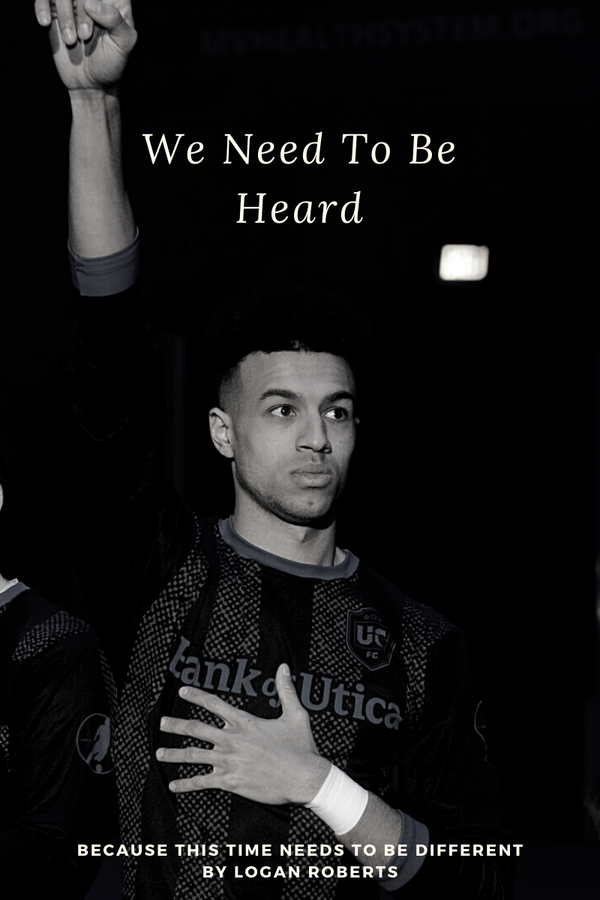
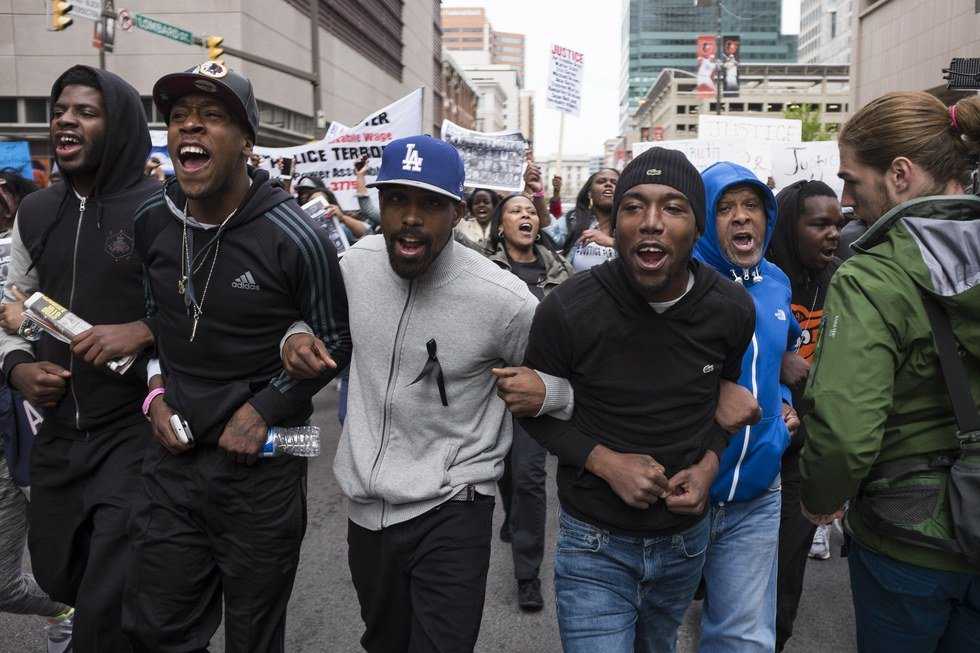
One year ago last week, Freddie Gray died in the custody of Baltimore police, launching Baltimore into riots and unrest. In the year since, the media has overflowed with allegations of race-induced police brutality around the country. The #BlackLivesMatter movement has provided a voice to many African-Americans that otherwise felt unheard by the national audience.
So naturally, when I heard that my church was hosting a panel discussion on the #BlackLivesMatter movement, I was curious. My church is located in an almost entirely African-American area of Dayton, and my brothers and sisters there reflect that demographic. I was curious to know more about their thoughts on racism, prejudice, profiling, and systematic inequality, so I got some of my white, middle-class friends and went to the panel discussion.
And guess what? I learned something. A lot of things, actually. I want to highlight two things in particular: the existence of injustice and the fallacy of profiling.
First, I was reminded that racial injustice still exists in America. If you disagree with that, I'd encourage you to have some conversations with the people that have experienced it. It's easy to deny some abstract politically-charged concept, but it's impossible to argue against the stories of real people. It's pretty easy to explain away a news story, but it's much harder to ignore what my pastor experienced last week, what my Sunday School teacher went through last year, or what my buddy is dealing with today. #BlackLivesMatter is a huge movement, not because people just want something to yell about (though some might), but because thousands of people identify with the feeling that their life doesn't seem to matter in some areas of American society. Hundreds of years of injustice cannot be amended in a few decades by a national law alone, and the fallout from those wicked times still plagues the lives of many.
Maybe I'm too much of a problem-solver sometimes, but I can't just talk about injustice and not take action. What can be done to address these issues? I'll come back to that in a second.
The second thing I learned is that people can't be put in boxes. Just because it seems logical for someone to fit a stereotype, preconceived notion, or profile doesn't mean that he or she will. That seems elementary, like something I should have learned by now, but I do that so often: assume things about a person just because of a superficial criterion.
This all hit me as I sat in the panel discussion and realized that the majority of the people I was talking to had no idea about the #BlackLivesMatter movement, Freddie Gray, or some of the big news stories of the past year. I assumed that because of the color of their skin they at least knew about the movement, its leaders, and its voice in public media. I assumed that the black college students present would have participated in the rallies and die-ins on campus, but that was also not the case. In fact, they expressed some confusion as to why they were expected to do so.
Thus, it's important to recognize that every story is different, everyone has a history, and no one can be assumed to feel a certain way just because of the color of their skin. For every person remembering Freddie Gray there's someone who has never heard of him. Like I said before though, that's elementary. The really tough question is, what do we do about it?
The starting point to answer to that question is the same as the answer to the question about injustices. If I hope to break down the systematic evils of American society and I want to stop profiling and judging those around me, then one place to start is this: honest conversations.
I am currently reading the autobiography of Malcolm X, known for his associations with the Civil Rights movement, the Nation of Islam, and the Black Panthers. Although I disagree with his conclusions of black supremacy, violent protest, and the Islamic faith, I am drinking deeply from his observations, one of which deals with this idea of honest conversations:
"Raw, naked truth exchanged between the black man and the white man is what a whole lot more of is needed in this country - to clear the air of the racial mirages, clichés, and lies that this country's very atmosphere has been filled with for four hundred years."
Malcolm X's statement speaks to the necessity of exchanging information between people in order to really understand the argument at hand. Unfortunately, he allowed hate-filled philosophies to provide context for that exchange, so often people ended up just yelling at each other instead of actually fixing things.
By contrast, the panel discussion at my church was helpful because it provided a safe environment for these honest conversations. In that Christian environment, we had the freedom say anything we felt without being judged for it. We could ask each other hard questions and get answers that were the "raw, naked truth," not nuanced and fluffy like some of the answers I see on TV. We were able teach one another in total freedom and actually understand each story and emotion present (at least, as much as possible in a couple hours).
The kinds of conversations that Malcolm X advocated were one-sided and hate-filled, and although close, that's not the answer. Hate is what we see today on the news as self-centered people of all colors seek to prove themselves right and attack everyone else. Instead, having those conversations in the context of Christian churches is absolutely necessary to foster the love that is necessary to deal with such hard issues. Where else is there love strong enough to overcome the battlements of racism and prejudice? Only through Christ can two people learn to love each other with the love He has for all of us.
"Above all, keep loving one another earnestly, since love covers a multitude of sins." (I Peter 4:8 ESV)