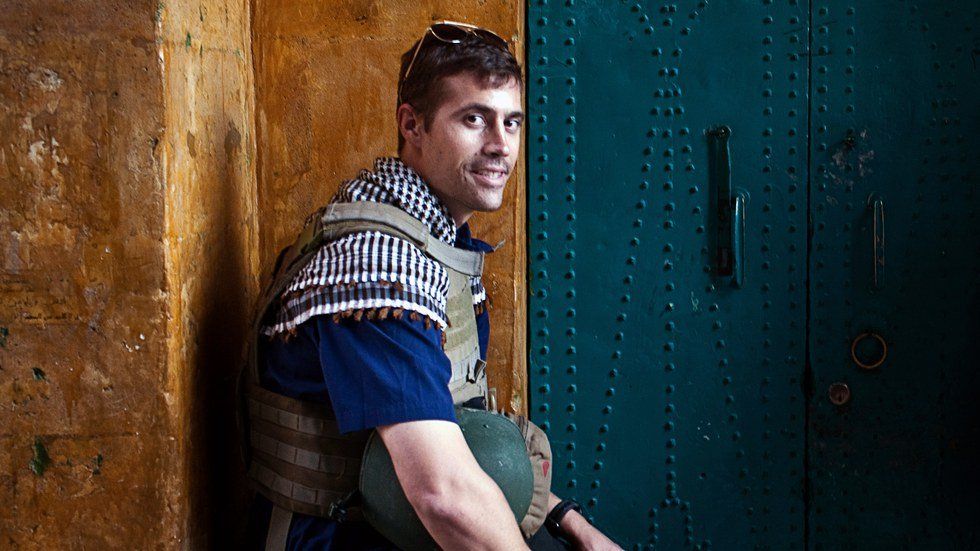
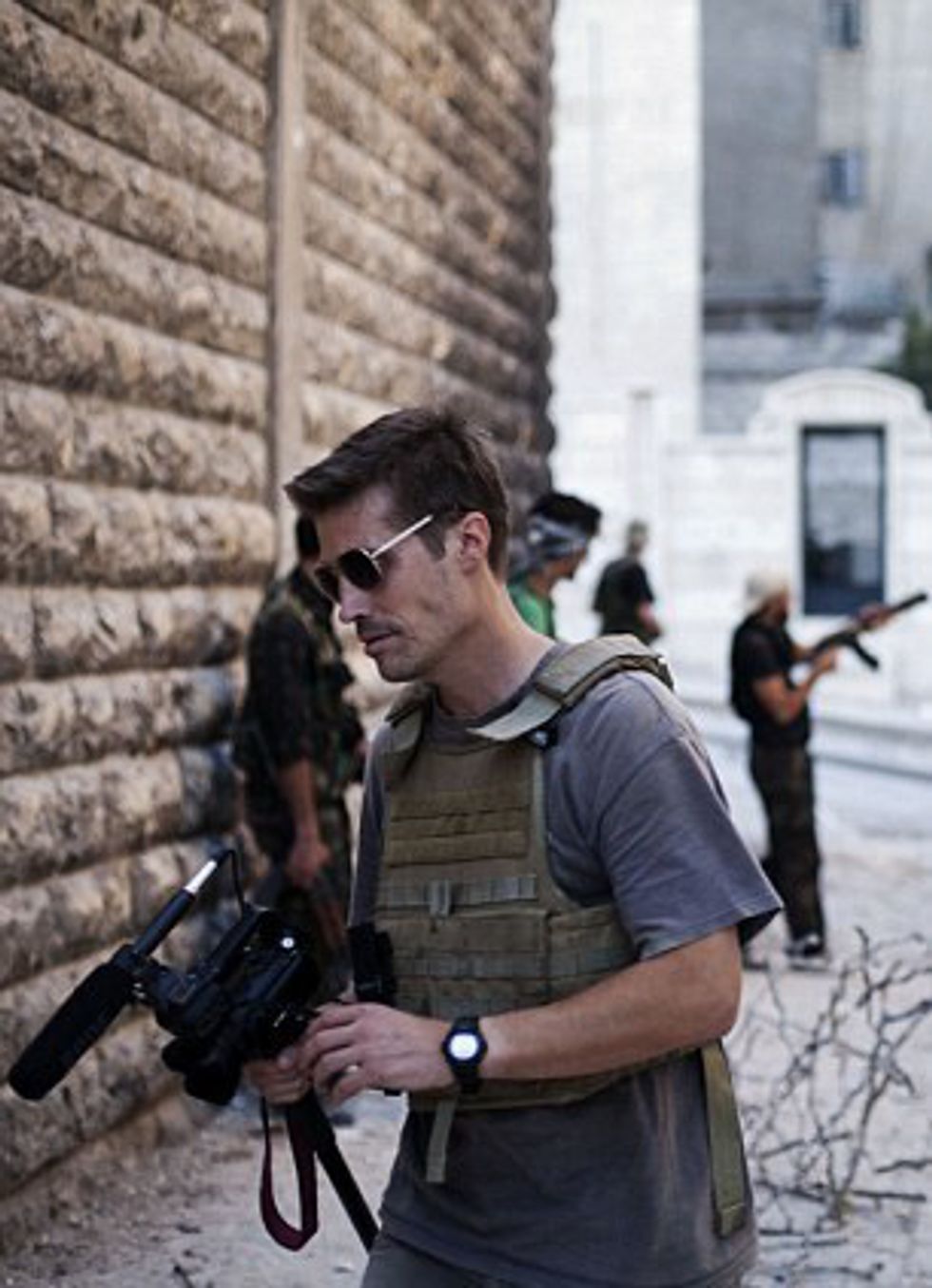
I was sitting in my kitchen Sunday night when my mom called me into the living room. She told me 60 Minutes was on and they were talking about the hostage policy and mentioned James Foley. I immediately sat down, listening intently to the details of what these families go through. I was horrified by the lack of involvement the U.S. government has in situations like these, and thought about how these families must feel. Images of James Foley appeared and I immediately felt tears forming. I began to cry silently, as I thought about his fear, faith, and thoughts in his final moments. I felt a pull on my heart and pain in my soul knowing that someone from my community, a brother in my faith, was taken away from us. The show then moved onto their next topic, and images of those murdered disappeared. I was left feeling angry and confused as to why these journalists were not brought home.
A few days later at work, I was listening to the TED Radio Hour, one I listened to quite often. The beginning of the episode talks about empathy and why humans struggle to have that for strangers. It is said that humans are wired to act and participate in tribes, and as society evolved those tribes became smaller to what we know as our families. When I think of our tribes today, I like to think of a circle around my family and slowly expanding it. The circle starts small around my parents and brother and expands to those on my road. To make it larger, the circle can go around my community, my state, and on a large scale, my country. In the case of James Foley, I think of my tribe as my community. Those within this tribe feel empathy toward one of their own, one who never came home. As we feel sorrow and loss for James, thousands lack this perspective.
A lot of people say that James, along with other journalists kept hostage, brought it upon themselves. They knew they were entering a war zone filled with terrorists and still went, only to be taken. What those people don’t understand is that there are citizens in those countries who are unable to have their voices heard. What was and still is going on in the Middle East is an issue that must be addressed. If people like James do not go into those countries, how will others’ voices and cries be heard? Without them, we will never know the truth about their living conditions, their fear, and their loss. Understanding that fact and acting upon it takes bravery and faith. By doing this, those in the U.S. are able to have a better understanding of what life is like on the other end of the planet so we can help them. I can say with confidence that thousands of us would not like to go into war zones. Yet these journalists, knowing the risks, still go into them so that they can help others, bring home the truth, and also deliver hope.
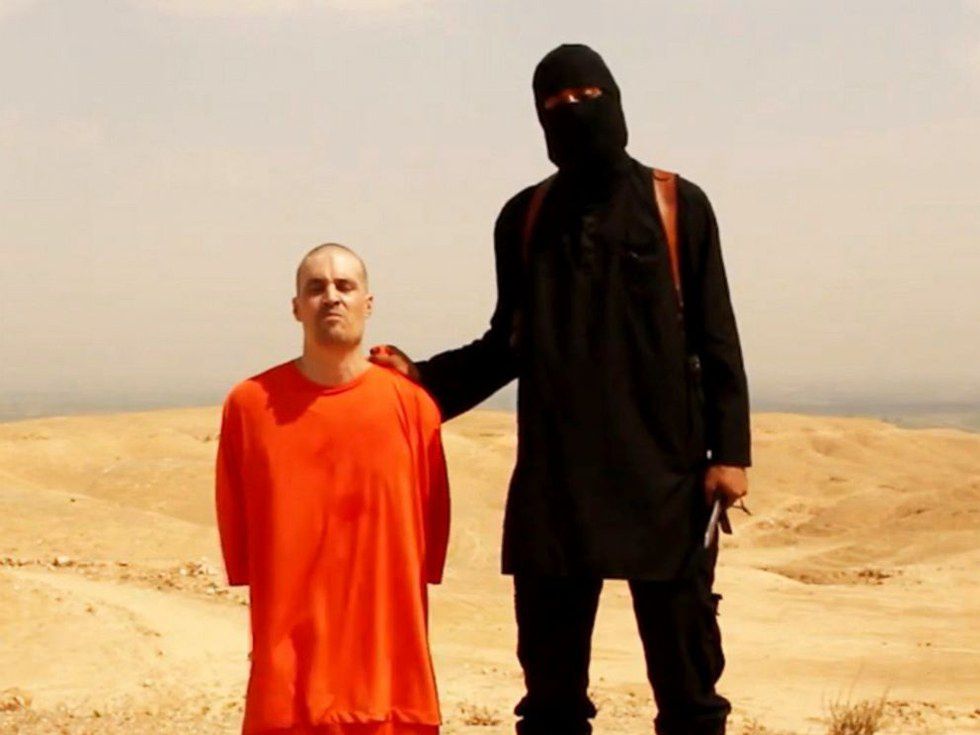
In the episode of 60 Minutes, it was said that the reason the U.S. government does not pay ransom for American hostages is because they don’t want to do business with terrorists. The money given to these people for our citizens would only go toward terrorist attacks and support their horrific actions. I try to see through this perspective and understand it, but I find it difficult knowing that Americans are being tortured and murdered. I feel that this, along with people’s lack of empathy, is why journalists are not coming home. If the person being tortured was from your tribe, the situation would be different. The “they brought it upon themselves” would become “please bring them home.” These people are not just journalists, but children, brothers and sisters, friends, coworkers, and human beings. Throughout history Americans have stood together and supported one another, and in times such as these I think it’s important we do just that. Although the government still refuses to pay ransom, there are changes in this particular department. Now, there is more communication about where the hostages are and better ways to get them out without paying terrorists. We have new technology to bring our Americans home, sooner rather than later.
It’s important that we expand our small circle that contains our tribe so that we are including our country. Even though we have differences, we are all Americans who believe each and every one of us should be safe. We are all in one tribe, wanting the same end result. By doing so, I hope that more empathy can be given to the families whose children are kept across the globe and for those fighting for our freedom. I hope we have a better understanding of why journalists put themselves in war zones, and commend them rather than criticize. James Foley is an example for all of us that no matter the circumstances, faith, love, and hope can get us through anything and our small, communal circles can become global.