

In less than a year, our country will have a new president. If you're at least 18, you can have a say in who that president will be... but how do you choose where to cast your vote? Unfortunately, the campaigning process is a drama-seeking media circus that often distracts from the most important parts of a candidate's platform, so it gets hard to distinguish fact from fiction. This is the first election I'll be participating in, and I already feel overwhelmed. I want to vote for the right candidate, but I just don't know how to do that. So, I compiled a lost of things that you (and I) can do to be less stressed about choosing the candidate we really believe in!
*By the way - you don't need to be a poly sci major to understand or appreciate these points!
1. Research the candidates
You'd be surprised at the amount of information you can get about a candidate by simply going on their website. For example, on Bernie Sanders' website, there is a list of hot topic issues, each with his official statement on the matter. If that's not quick information, I don't know what is. You don't want to spend hours researching a candidate and their political views? You don't have to. Simply go on, their campaign website and get to know what they stand for. It takes 10 minutes, tops. If you're interested in the candidate's opinion on a particular matter, I would recommend OnTheIssues, which summarizes politician's views on matters like abortion, gender equality, gun laws, etc. It's super easy, and very informative.
2. Make sure you're registered to vote
We're a democracy, meaning that (theoretically) every person in this country who is above 18 and meets various voting qualifications should be able to vote. Obviously, there's a lot of injustice in the voting system, and large groups of disenfranchised people, but's that a conversation for another day. If you are eligible and able, you should be registered to vote. The easiest way to register is probably online if your state has that service available. You answer some general questions about yourself, and then your registration card should be mailed to within a week or two. Alternatively, if you're feeling brave, you could always hit up your local DMV or election office. Be forewarned, though, you should probably bring several books to read, and, at least, six albums' worth of music to pass the time.
3. Read political satire
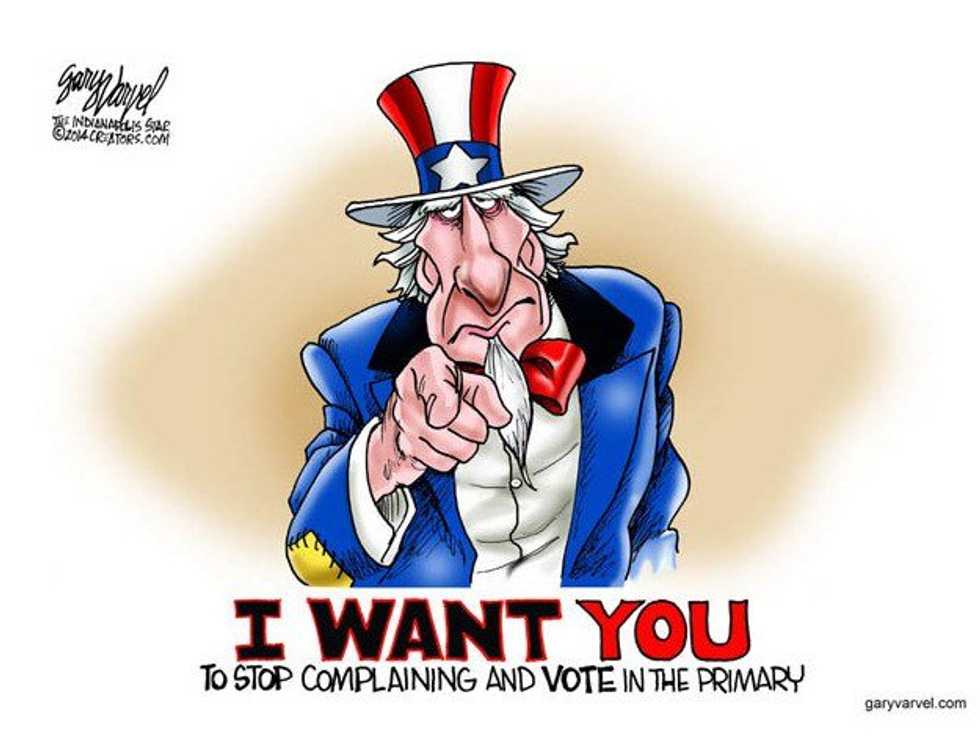
Cartoons making fun of the presidential candidates are a surprisingly accurate way to learn about them. Regardless of your status as a Democrat, Republican, or another party, you'll enjoy these cartoons. They're a free, quick, and effective way to exemplify a candidate's point of view on an issue. Inevitably, the artist will exaggerate for effect, but that's a key component of the cartoon's effectiveness. They're humorous and easy to understand, which makes them more accessible to a larger audience of people. At times, political discourse can seem uninteresting to the average person. So, artists who make fun of candidate's strengths and weaknesses make politics more interesting to someone who usually isn't interested. You can learn a lot about a candidate by how they're being made fun of, so keep laughing!
4. Have conversations with your peers
Honest conversations with your peers are always good; also, they are particularly useful in political discourse. Talking about your political preferences is sometimes scary because politics can be a polarizing topic of conversation. It's easy to avoid the awkwardness of disagreement by not having these types of conversations, but that's doing you a disservice. Honest, passionate discourse often becomes constructive discourse. By facing an "opponent" in conversation, you have the chance to intelligently reinforce your ideas. Not only can you clarify your own ideas, but you can also widen your perspective on the topic at hand by considering the other point of view. As always, keeping an open mind in essential. Even talking to a friend who actually shares your opinions is useful because you can learn more about your preferred candidate and why they're awesome!
5. Watch and re-watch the Democratic and Republican debates
For me, the debates are the most interesting and entertaining part of the campaigning. It's the only time you get to see all of the candidates go head to head on big issues. You can condense weeks of searching for information into a couple hours in the evening. Each candidate will (in the most obscure and frustrating way possible) expose their thoughts and opinions on issues plaguing the country: gun control, national security, or even the nation's debt. What is perhaps more interesting than the content of the debates is the behavior of the candidates with each other. You see rivalries and allies form on the stage, with simply a pat on the back or a conspicuous eye-roll. The level of civility between the candidates can be telling of the current political atmosphere - are they tense, frustrated, confident? Why would they be? Overall, it's an easy and entertaining way to learn more about the candidate's plans, their opinions of each other, and their social graces.
I hope these points have given you the confidence to be an informed voter. At the end of the day, what matters is your vote. Participation from the people is the foundation of a democracy, so be a part of it!

















