
Small villages of ramshackle houses. Overgrown train tracks. Crumbling retaining walls. Faded and broken signage.
You're used to having to go through hours of checking and interviews to leave the city and travel to Potsdam, even though it was a mere hour's train ride away, less than trying to enter East Berlin from the west, but still enough to frustrate and frighten Berlin's inhabitants.
More shacks line the ravine next to the tracks, hidden from the posh complexes behind an overgrown tree line. On the other side are freshly painted offices and shops with shiny, colorful cars parked out front. You enter the outskirts of Potsdam and see the restored Victorian tenant buildings and for a little while you feel better. The image of the new, reunited Germany is restored. It becomes easier to cling to images of a history lesson in middle school. The horrors of World War II and the Communist Era are long gone. The Cold War ended, right?
We all saw the videos of the wall coming down; people climbing over from both sides to stand on top as their last defiant act towards the crumbled communist government.
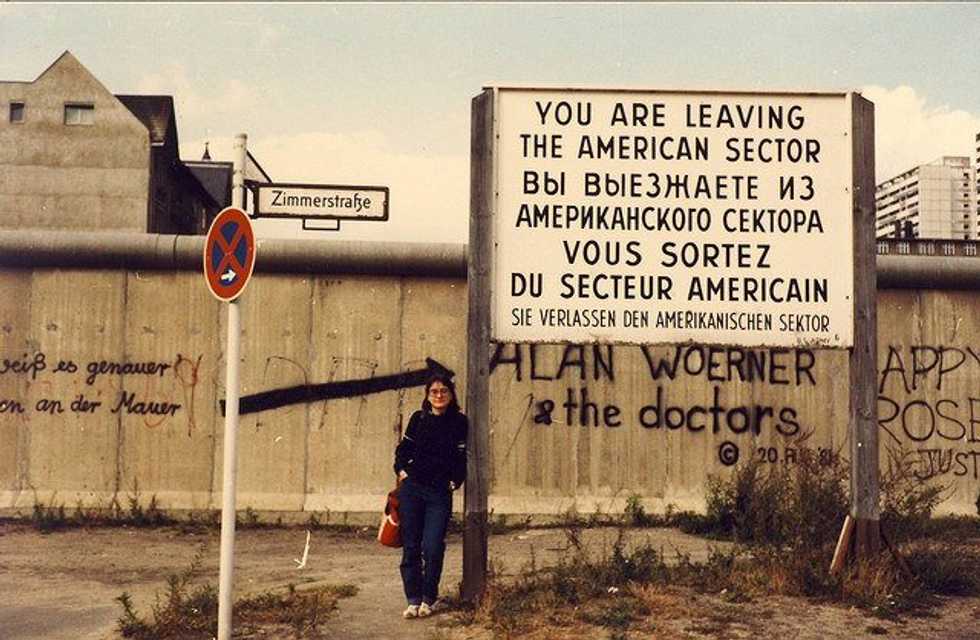
Yet the divides remain. The crossing into the East from the West is still noticeable, even though meters of concrete no longer separate them. My neighborhood was once surrounded on three sides by the wall. Walk far enough east down my street and you can tell when you've crossed the line. There's more construction; less kind faces. Less people in general. The borderlands are always eerily quiet.
The East Germans wanted to keep reminders of their past, so much of the German Democratic Republic is still there in spirit. But in West Berlin, they fought tooth and nail to remove and rebuild any and all remains of their 40-years of pain and suffering.
And that's why the film museum is in Potsdam. A city literally right next to the famous Berlin. An East German city. That's why we went there to watch a film based on the Grimm's "Briar Rose/Sleeping Beauty" produced in the early 1970s. Somehow, the GDR was able to turn a children's story from German history into a sly propaganda in favor of Communistic thought and practice. And because East Germany was so secluded, everything -- the hair styles and costume design and music -- was about 10 years behind. A story supposedly set in the Baroque/Rococo era, the music shifts quickly from orchestral to jazzy flute solos and subtle guitar strums. The 1960s prairie look sneaks its way into the dress and hair design for the women. The defiance of the fairy who wasn't invited to the party -- presented as the patron fairy of industry in this adaptation -- to the arrogant and greedy king screams Marx's call for proletariat revolution.
I commend the effort of the story they told, and how they wove in their political ideas. But what I am always most impressed and disturbed by is how deeply intrenced the wall is in the minds of Berliners and Germans.

















