
When I first stepped off the plane, pink backpack clutched between my palms, the heat rolled off of the pavement and slapped me in the face. It wasn’t the crisp, dry heat of Oakland, California - this air was thick and sweaty, and I imagined that if I touched the handle of the car waiting for us, I’d find that it had softened under the sun. It wasn’t just moist air; the scent of a country is distinctive, and Seoul, South Korea smelled like garlic, exhaust fumes, and the facial cream my halmoni spread across her face every night. The back of my shirt dampened instantly, and for the remainder of our month-long vacation, it stayed more or less in that state of perpetual perspiration.
We spent four weeks together in my maternal grandparents’ tiny apartment, on the eleventh floor of a towering complex with dim white walls and small corridors. Right by the apartment was a worn-down playground with peeling paint and four dilapidated swings. In the mornings, Jonathan and I would race down the stairs for the sandbox, which was a treasure trove. Buried in the tar-stained sand were broken arms from foreign cartoon figurines, scraps of candy wrappers with hanggul written across the corners, pencils that came in rainbow colors instead of our simple #2’s at home. Under the smog that settles like a gray blanket over the city, we’d collect ginkgo leaves and avoid the school children cutting through the playground on their way home. Our whispers of English were sharp and sudden against their susurrus of our peoples’ language.
Every afternoon, we walked to the street market with our grandmother. It’s an experience that’s not to be missed. Ten thousand things are happening all at the same time, and demand your attention: fluttering kites tied to store front posts, tulle dresses flapping on their hangers, tiny children running in squealing circles around their mothers, oil streaming from food carts into drains, stray dogs lounging in the shade of canopies, flashing neon lights advertising sales, ajimas with their headscarves straightening piles of yams and bickering over prices, old men smoking pipes and gossiping, smoke rising from sizzling grills, rustling shopping bags, brilliant colors of Marc Jacobs knock-off sandals, and above all, the food. We would amble down the long, crooked road but never got to the end: fried dough balls with sweet bean paste inside, and red pepper ddukbokki rice cakes ladled into troughs, and kalbi short ribs skewered with sliced onion, and freshly-made candy, still brown and steaming at the centers, snagged our appetites far before we finished our walks. My memories of Seoul are salted and spicy and taste like honeydew ice cream bars that melted down our wrists in the burning sun before our halmoni wiped us clean.
Every elderly man had the bearing and gravelly voice of my grandfather; every ajima wore the same foam sandals, and smelled like the blossoms of my grandmother’s hug. When we met my grandmother’s friends at church, they smiled in identical, demure motions that didn’t display their teeth, and I bowed as I was expected to.
“Say hello in Korean!” my mother would hiss.
And then, with a light laugh, “오, 그녀는 조금 수줍어합니다.”
Oh, she’s just a little shy.
I parroted her greeting awkwardly, all too aware of how the words sounded garbled and clumsy on my tongue. Yet as I dipped my head, feeling red rush to my cheeks, there were no second glances, no Californian friends to materialize from behind the walls and tease me for “being so Asian.” Even as a first grader, I felt the impact of race. Their quips about my intelligence (which was assuredly a genetic quality that could no more be affected by my studious work than could the color of my skin) and comments on my driving abilities, piano skills, and martial arts practice were thoughtless, fatuous, and wounding. I would come to learn that even as a “fully assimilated” person, respect from and for one culture does not transpose to the next.
In Seoul, however, there was no need to discuss cultural values, expectations, or practices; in every interaction, we operated on the unique and significant connection of a shared ancestry. Our blood was the same. But it wasn’t enough.
I could identify the deep-fried fragrance of special walnut cake which my mom sometimes bought, but I never asked for seconds because I didn’t know its name. When I heard my Korean name mentioned, a sure sign that I was being summoned for the requisite humiliation at the hands of my relatives, I’d silently seethe. They’d ask me rapid-fire questions and pinch my cheeks, and I couldn’t do anything but stare blankly, perhaps blundering gracelessly through a few all-purpose sentences before my parents gave an apologetic speech on our behalf. We had our favorite dishes, but shied away from the traditional fare which involved anchovies and fermented bean paste; the subtle social manners common to even the youngest of Korean children were lost on our brazen friendliness.
I saw myself in every window, public bathroom, and restaurant - those same dark eyes, framed with thick eyebrows and black hair which was so conspicuous among my fair-headed peers back home. I watched high school girls running down the streets, marveling at how their cheekbones spread under the skin in familiar arcs, how their thick calves and round faces reflected mine. But there was a deep disconnect, as though I was viewing myself through the distortion of warped glass. We were not the same. We shared chromosomes, skin color, even palate preferences, but in the peninsula where my ancestors lived and died, I’d never felt more out of place, with my round double-creased eyes, short American hemlines, and missing heart. I found myself longing for everything we we ate, watched, wore, and used in California, and while those inclinations can be attributed to a child simply wanting what is familiar, I believed I was betraying my background. On the flight back home, we rose between the city and the cloud layer, and I watched life sweeping by under my feet. I was passing through, as I had been for the past four weeks, with interested but marked detachment.
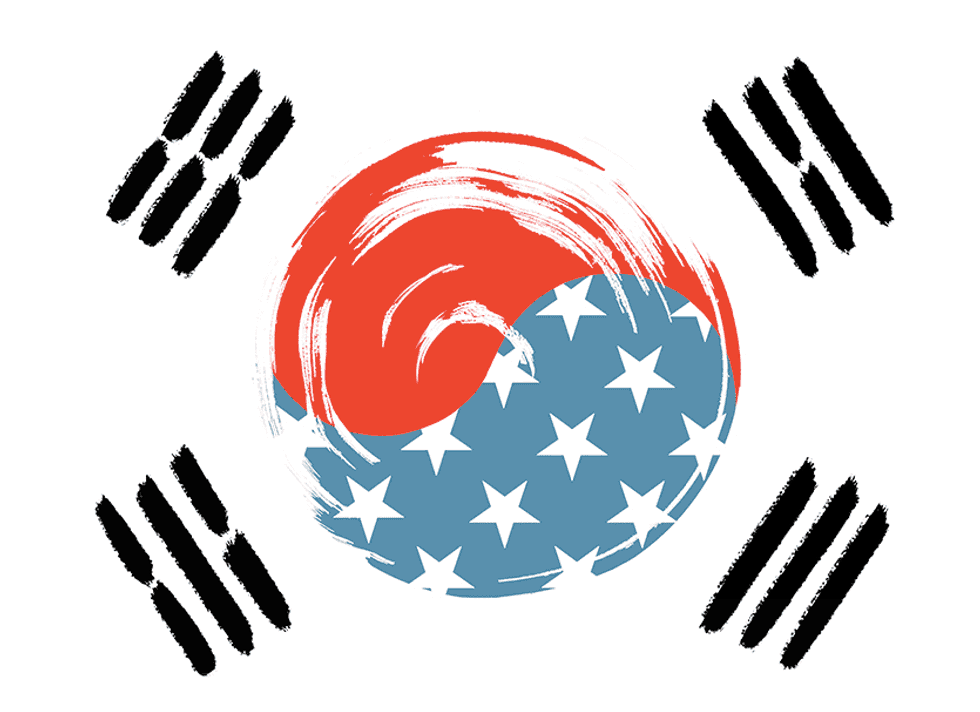
I expected a sincere chord to strike in my soul, to bind me to my homeland. Culture - or the culture you wish you knew more deeply - is more intangible when it’s been transplanted into different soil. Our mantle is a shrine to a hand-painted paneled screen, displaying traditional Korean mural art; calligraphy scrolls invoking prosperity, family, and humility hang above our mirrors, a striking dichotomy of cultures. Every time I speak my full name and stumble over the Korean, two syllables that part my first and last, I am reminded of the simple truth. I am the product of centuries of prayer and hard work, I am a living American Dream, the future my grandparents had envisioned when they immigrated here, and yet, I can wear the face, mannerisms, and genes of an entire nation without being a part of them. It’s so much more than the foods and clothes and landscapes of the country you live in; my mentality, for all intents and purposes, is American, and something is lost from my Korean identity when my thinking originates from here.
When I unloaded my baggage and walked out of the Oakland Airport, I breathed in the cold air that smelled of the bay and nothing else. I could almost feel roots, spreading from under my feet back into the ground, and I was ashamed and relieved for it.