Art is a luxury. The ability to pursue any of the arts, regardless of the medium an individual decides to work in, generally comes along with a degree of privilege that is not available to all. While I don’t find that this alone should ever discourage people from pursuing the arts, I do think it’s critical that artists understand the reality of the opportunities they’ve been granted and then create art in a way that acknowledges the power their individual art holds.
Elitism has run deep through the history of art for centuries. Museums are filled with portraits that an insanely wealthy family paid an artist to make for the sole reason of memorating members of their lineage. In the first six months of 2015, art collectors had already spent “$3.7 billion on Impressionist, modern, postwar, and contemporary art at auction.”
Money is so closely tied to art, in a way that makes sense. While art is finding itself becoming more mainstream, this exposure is only to communities whose realities grant them the time for the arts. In the rural, underprivileged schools of the third world, students can’t afford to focus on making art. Teenagers working the fields and herding cattle in El Salvador don’t have the opportunity to worry about who Van Gogh was or what chiaroscuro looks like on canvas. When you’re physically working to provide for your family and school in itself becomes a secondary thought, there’s no way you’ll have time for art.
There’s three ways to interpret this reality. Artists can see this as indication that their creative pursuits are meaningless and give up art entirely. Artists can also ignore the reality that producing art is not an opportunity open to all, which is selfish and incredibly dangerous. Artists can also acknowledge their privileged opportunity and then mobilize their art to make a substantial impact on the world. The third has been adopted by some of the most important artists of the past century.
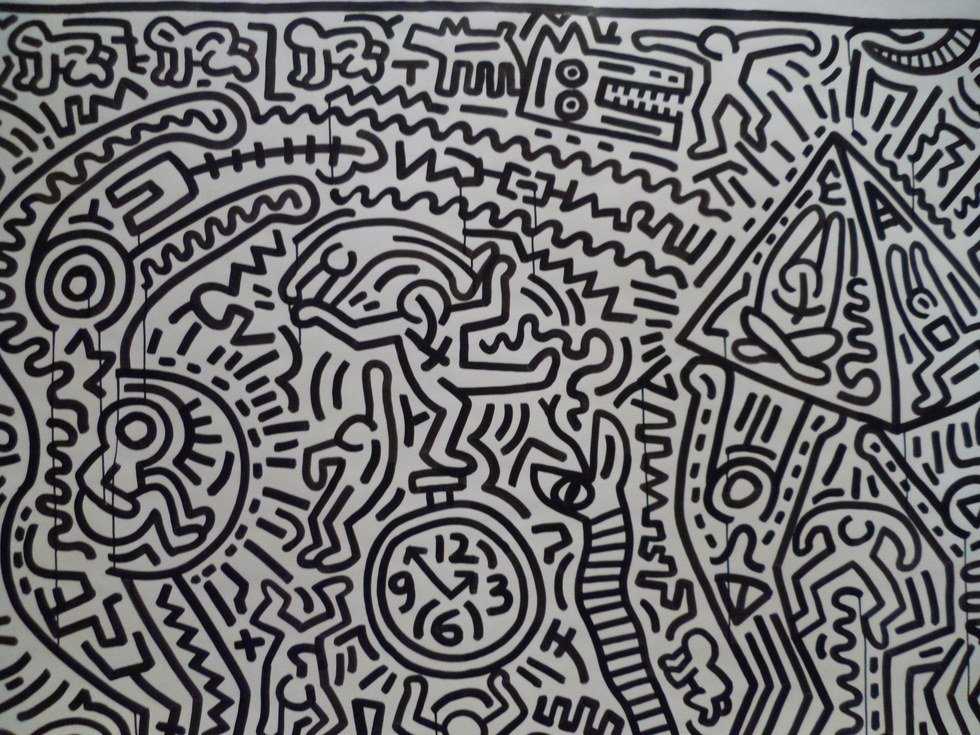
When discussing the meaning behind his art, Keith Haring writes, “There is no previous knowledge of art necessary to experience the instinctive natural reaction that inevitably occurs when a human being is placed in an unfamiliar environment. It is spontaneous and automatic.” Keith Haring was the pinnacle of making art accessible to a wide audience. He started his career by drawing quick sketches in the New York subway system as simple graffiti, but eventually his work came to be worth thousands of dollars in the New York art scene. Keith Haring’s reaction to this newfound fame was selfless and focused on the impact that he realized his art had.
He continued to make large public murals, some of which were for hospitals and other necessary facilities. He created logos for nonprofits, politicized his art to promote AIDS awareness, and generally worked in a way that was so much larger than himself. Instead of allowing his success in the art world to make him self-indulgent, he instead produced art that served a larger humanitarian purpose for admirers from all walks of life.
That’s the power that the arts serve. They are a way to grasp an experience or a world different from ours. Paintings, films, and literature all help to bridge the gaps between the diverse understandings the human experience produces. Pursue art when it calls, but do so in a way that’s constructive to a collective purpose larger than yourself.