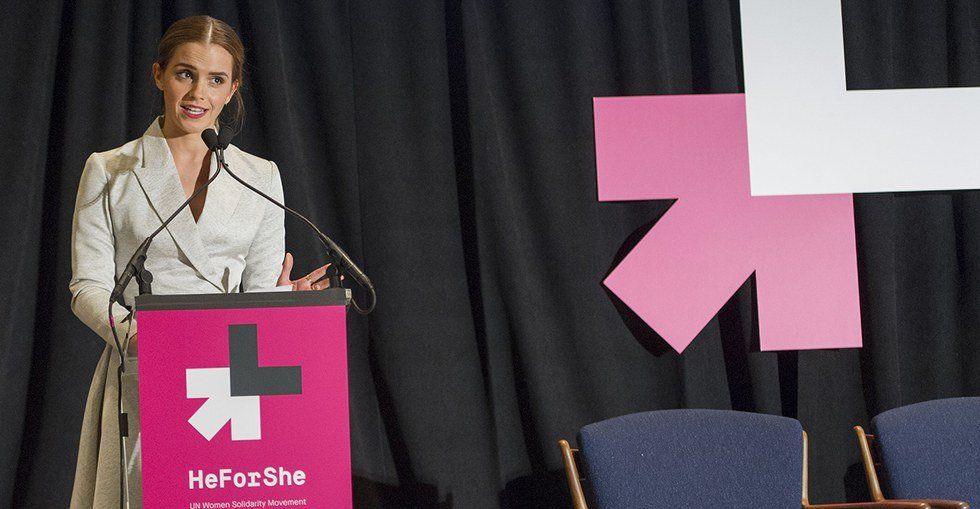
Any time some one mentions the “f-word,” people’s eyes widen, they freeze in their tracks, and their jaws drop. People will begin to wonder if he or she really just referred to himself or herself as a feminist. They will begin to shy away, already wondering what radical belief system he or she follows. Every single day, young people hide from labels and strong opinions for fear of judgment from their peers. As a result of this culture, chances are the majority of middle school students have never heard of feminism, and if they have, they remain incapable of correctly defining it. A lack of education leads to confusion, and although teenagers may believe in gender equality, they reject the title of “feminist.” In response to this, youths who consider themselves “feminists” move to the background, overshadowed by outspoken non-feminists. The time is now to start educating young adults on the unspoken truth behind the movement and the incredible ways in which feminism allows one to view himself or herself and the world around him or her. Here’s why you are a feminist, and you don’t know it yet.
1. Feminism is not a suffocating title.
Feminism is a way of perceiving the world in its various elements and living a life that supports all of your human rights. You do not walk around every day with a sign across your forehead stating “feminist.” Although one chooses to identify as a feminist, he or she will maintain his or her individual identity while embracing newfound ideology. One begins to treat each person he or she encounters with the justice they deserve.
2. You define your own feminism.
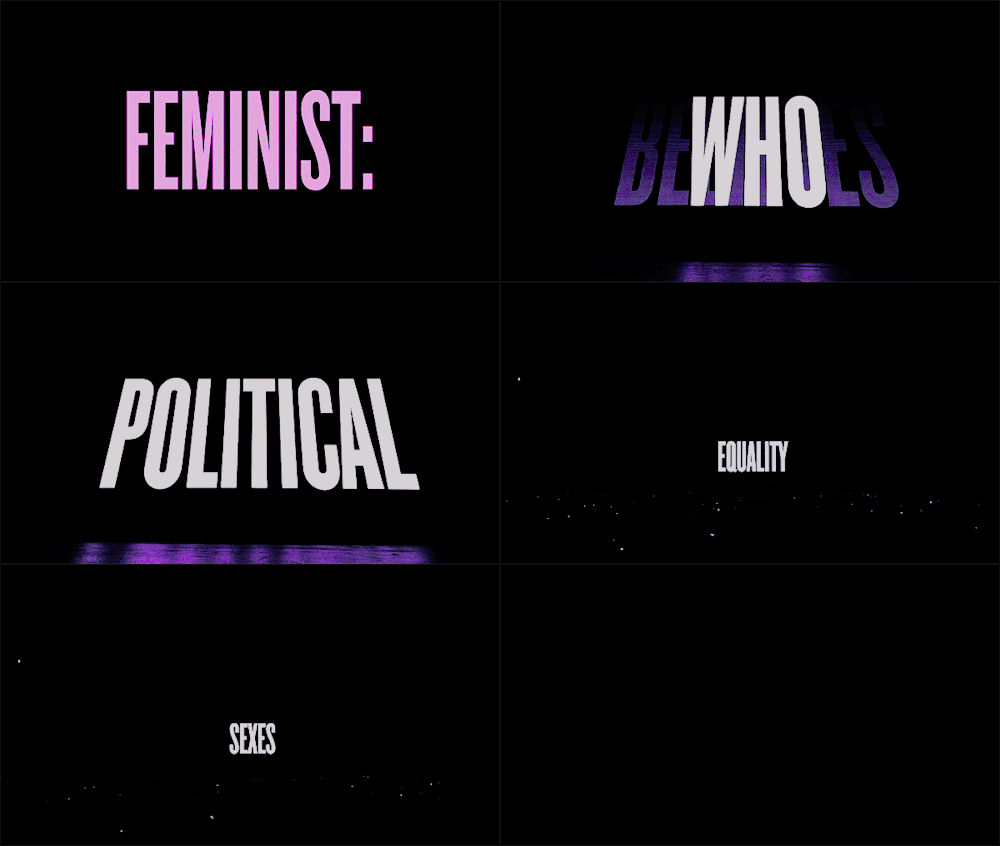
In its most basic definition, feminism is a man or a woman who believes in the full social, economic, and political equality of women and men. Nothing to be scared of there! Pick and choose which parts of the movement you can realistically apply into your everyday life, and stick with those.
3. Feminism spans beyond gender inequality.
One cannot begin to address gender equality without a knowledge and appreciation for many ongoing fights for justice such as classism, racism, homophobia, and ageism. Viewing feminism from the outside as a monolithic movement skews one’s view, for many fragmented, heterogeneous pieces of it become overlooked, overshadowing the true depth of the cause. At its roots, feminism is a movement yearning to relate to various issues on the spectrum of inequality, and use multiple differences to empower one another.
4. Men can be feminists too.
The movement requires the participation of men in order to achieve full gender equality and will not claim women as its sole domain. Boys and men, as a product of a common upbringing, desperately try to live up to their prescribed gender roles. The feminist movement wants to renew that stereotype and allow everyone, regardless of sex, to adopt a fair, contemporary way of thinking.
5. Feminism doesn’t mean taking away men’s rights.
It’s a leveling of the playing field. Gender equality does not mean women are taking certain rights away from men. It simply means they are achieving the rights men already possess.
6. There is not a single feminist stereotype.
As one chooses how to define his or her personal version of feminism, it proves impossible to identify a single stereotypical feminist. Typically, young people associate the movement with the most radical of feminists, for that is what becomes visible from controversial social media accounts and popular culture.
Instead of worrying that a child feminist is going to be beaten up on the playground, let us be at peace with the fact that he or she will be embraced and empowered to treat everyone fairly. The fourth wave of feminism is right now, and our society needs to stop fearing it. Feminism is a movement for the masses, a movement often misunderstood but never underestimated. For us, an insight into the feminist movement provides us with an invaluable astuteness to the intersection of oppressions that we will carry with us for years to come.