
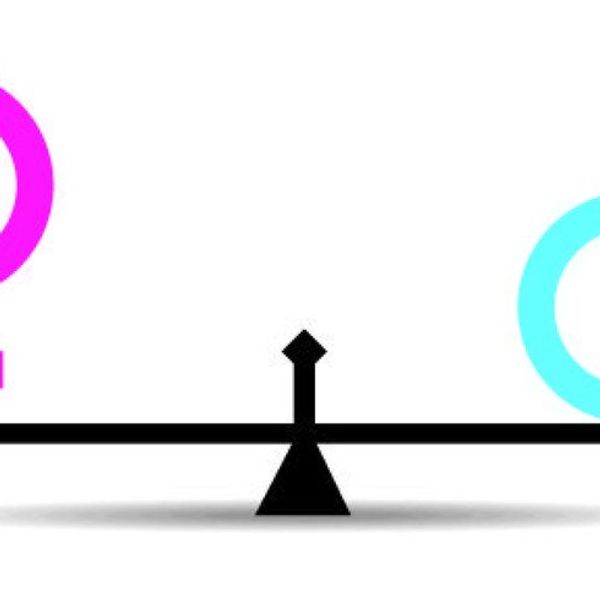
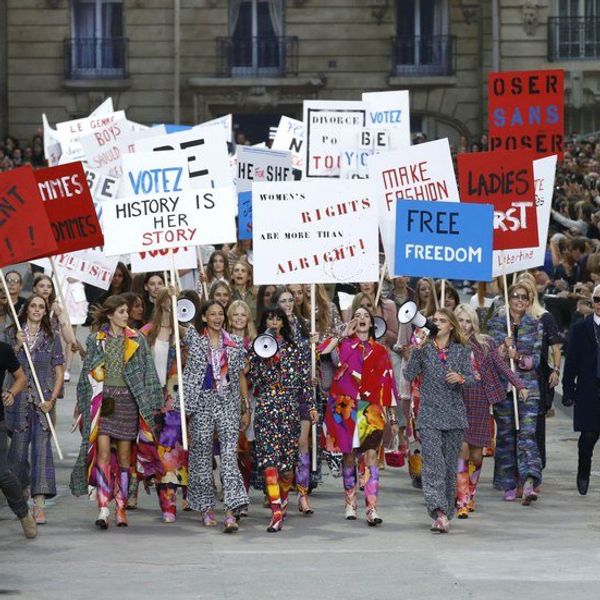
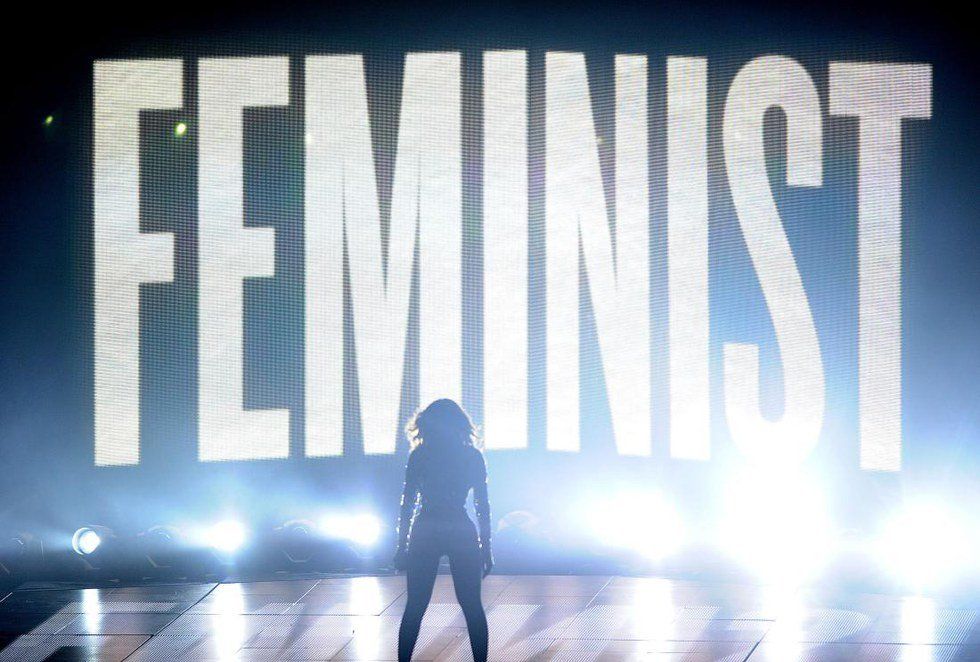
There are lots of people who don’t like the word feminism, but say they agree with the concept. Most of these people think it should be called something else, such as “equalism,” “egalitarianism,” or “humanism.” Clearly, since feminism is about equality and fairness regardless of gender, any of these words seem to be good words to use instead of feminism. But this may not actually be the case. Before anything else, it’s helpful to take a look at the history of the feminist movement, and the reasons why “feminism” was chosen instead of, say, “egalitarianism.”
Feminism began in the 19th century as the radical notion that women were people, not objects to be bought and sold, as they were legally treated at the time. Women were to live with their fathers until they married a suitable husband (who was approved by her father). Once married, women were expected to take care of the house, keep their husbands happy, and have lots of children. If she was part of a rich family, she would make sure the servants did their jobs, and sit around looking pretty. If she was on the poorer side, she would also be expected to cook, clean, make clothes, and help her husband wherever he needed it, on top of taking care of all the children. If she failed to do all these things, her husband was expected to beat her into submission. And while there were plenty of happy marriages during this time, there were plenty of marriages that today would be called abusive. Regardless, divorce was seen as a last resort, and was only allowed in cases of desertion, adultery, bigamy, or impotence. But since women were seen as property, often men were the only ones allowed to bring the divorce case to court. And once a woman was divorced, she would be hated, alone, poor, and she probably wouldn’t be able to find a job.
So during the 19th century, a group of women got together to change this. They started with an act that recognized things that belonged to a married woman as hers, not her husband’s, which allowed her to write a will, for example. Soon after, the same group of women came up with the idea that women should have the right to vote. At that point, the idea was ridiculous, but in 1920, the 19th amendment was passed, allowing women to vote in every state. After this, feminists focused on other legal inequalities, along with gender inequality in the family, and workplace, as well as issues such as domestic violence. All these things put women at more of a disadvantage than men, which is why women were the founders of this movement, and why they chose “feminism” as the name for their movement instead of something else (if they hadn’t included something about women in the name of the movement, it would have been dismissed because the constitution says that “all men are created equal” and women would be forgotten from the equation).
So since feminism is still about lifting women up to the same level as men, why don’t we change the name to assure the people against the movement that we only plan to have men and women on the same level, not have women higher than men? Here are a few reasons.
First of all, the term “feminism” is a nod to the suffragettes and feminists who fought so hard to get the rights we have today. If it wasn’t for them, the founders of the movement, we would still be where we were in the 1800s.
Secondly, women are still more at a disadvantage than men. Don’t get me wrong here, women do have a few things better than men, and feminism is trying to fix that. But women are more likely to be raped, more likely to be victims of domestic violence, and more likely to be paid less than a male coworker in the same job, of the same experience.
But there are also other reasons why we don’t use “equalism,” “egalitarianism,” or “humanism” instead of feminism.
All three of these words already have other definitions. Equalism and egalitarianism actually mean the same thing – that all people, regardless of race, gender, ethnicity, or any other factor that makes them different, are equal. Equalism, however, is also a made-up word used by people who don't know what egalitarianism means. Of course, this concept is a very good thing to believe in, but gender issues often can’t be solved by looking at the big picture like this. When talking about gender issues, feminism is the best word to use.
Humanism is completely different. It’s a branch of philosophy dedicated to the belief that people are generally good because they are people, rejecting the belief in higher or supernatural powers, and finding self-realization through reason. Of course, some people who call themselves humanists because they believe in gender equality may also actually be humanists based on the actual definition, but humanism has nothing to do with gender or gender issues.
So, in reality, feminism is the only word that can or should be used when talking about gender issues and gender equality.

















