

Within the past few months, I've made a conscious effort to remain aware of the ever-evolving culture that surrounds the concept of fandom. The cultural sway held within these individual sects is immense and global to the extent that some colloquialisms from specific television series or novels have become standard memes utilized by those that might not have been in the fandom prior to the prominent usage. It's a phenomenal boon for marketing officials, I'm sure, and with the consistent availability to the Internet, instances like this are becoming more commonplace. In many cases, these aspects of fabricated reality have become mainstays in the daily lives of those that are actively involved in their fandom community. Take K-Pop fandoms, for instances. Or, as they're called more often than not, armies (not intimidating at all, right?). Members of these armies gather together to watch music videos as many times as possible as a means of competing with other groups, most of which is in friendly fun. Additionally, they learn the dances performed by the group members and perform them with friends at conventions and K-Pop summits. Fandom isn't just a passive mode of pastime on the Internet any longer; it has officially slipped into our consciousness, and I doubt it will leave any time soon.
For the most part, this is fantastic. I've spoken previously about the positive effects these mass gatherings of shared minds can have on those that might have felt out of place before, and as the concept of fandom becomes more readily accepted--similar to the popularization of the "nerd"--more and more young men, women, or fabulous, non-binary folk will come out of the wood work and take their place with like minded individuals. However, like nearly every movement, there are darker aspects that are rarely addressed by those involved, which is something that has grown to be bothersome.
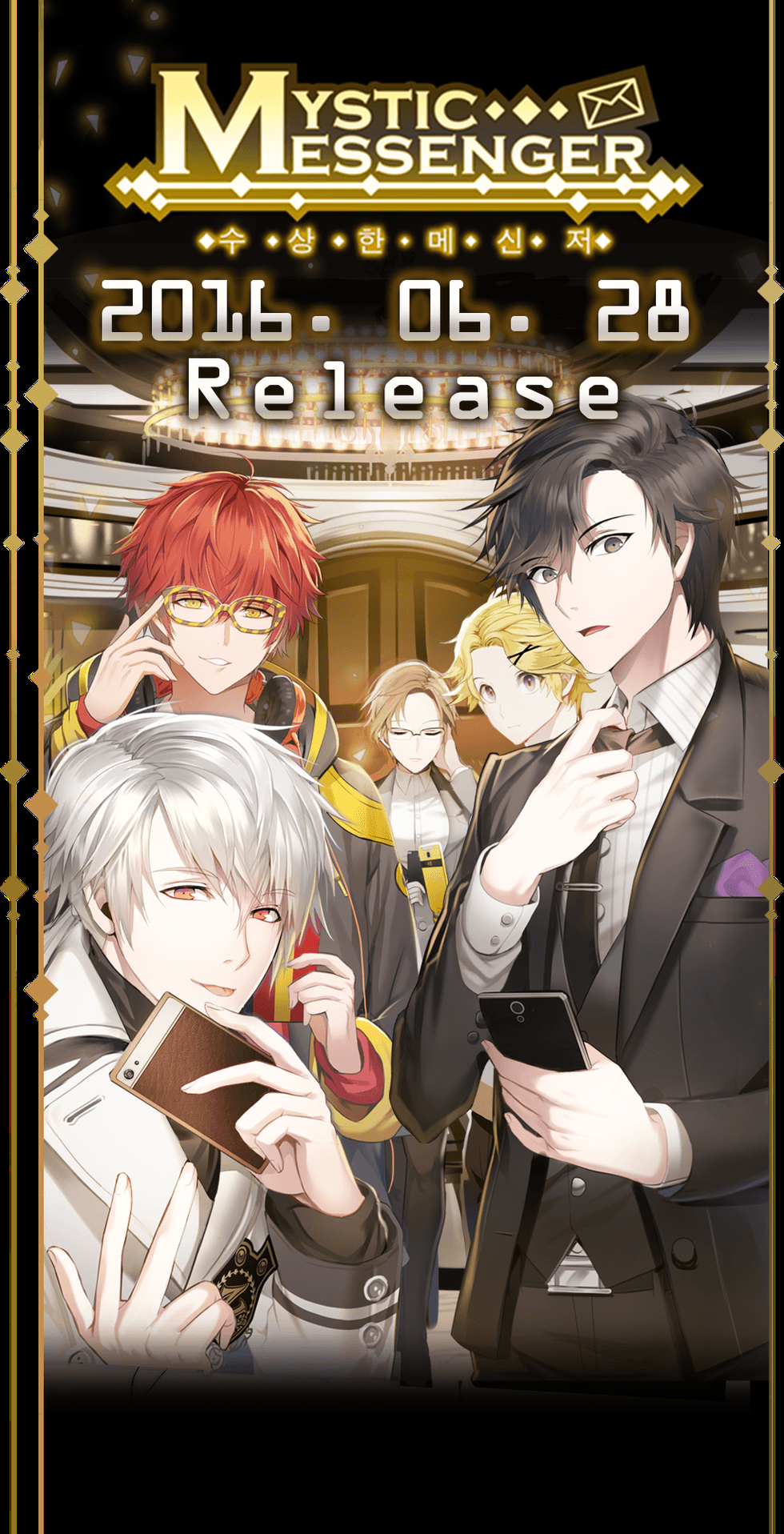
Recently, a game was released entitled "Mystic Messenger." A remarkably immersive, chat-room style visual novel that incorporates the player's photos and chosen responses in a format wherein the male (and, unfortunately, only one female) characters can reply in real time. The animation is gorgeous, the storyline only a little convoluted, and the music is bomb. So, what's the problem? Shouldn't it be an amazing feat that the characters can send you text messages? And call you?!
Sure, maybe, but this calls into question the concept of fandom immersion in a new light: that is, can immersion reach an unhealthy level? Of course it can. The trope of the thirty-something living in his/her/their parents' basement doesn't exist for no reason, but does the potential for this becoming more widespread become more likely with the idea of becoming fully submerged in a chosen subculture?
Within this realm, there is a particularly interesting format of writing that seems to strengthen this argument. However, I would like to provide a disclaimer: I am by no means condemning those that enjoy this type of writing, nor do I think that it is potentially harmful to everyone. It cannot be ignored, however, that some people have fallen into a deep depression over the fact that fictional characters will never be physically manifested as sentient beings.
There are three categories of writing being examined: headcanons, imagines, and scenarios. Headcanons can appear in a variety of ways, but most commonly in bullet pointed form, outlining exactly how a character would react in any given situation, ranging from G-ratings, all the way to NC-17, or worse, depending on the blog or Wattpad/Ao3 page. These are particularly helpful for fanfiction writers that are not privy to certain aspects of characters because the original content creators have provided little in regards to character personality. A friend of mine relies very heavily on Overwatch headcanon blogs due to the fact that, in her words, "Blizzard has literally given us nothing." Imagines and scenarios work towards a similar goal but are instead written in full narrative format, often inserting the reader into the text with black spaces or Y/N (your name).
Essentially, writers are rounding these characters and making them more accessible for others, even to the extent of telling those requesting the scenarios how the characters in question would respond to personal body types, sexualities, social behaviors, etc. With games such as Mystic Messenger and blogs containing this kind of content, fans are now able to slip into a fantasy world much easier, and the figurative line in the sand between fiction and reality seems to blur indefinitely (for some).
Is this destructive? As a single individual, I cannot make that decision for everyone. There is a piece of advice to be given in situations such as this, though. Be aware of what is fictional and what is not. Do not wax philosophical about how a given universe is better than another instead of actively trying to make your world better. These may be fun activities, but do remember that Tracer, Zen, Dean Winchester, etc. will never be real.
Just some fuel for potential contemplation, really.