
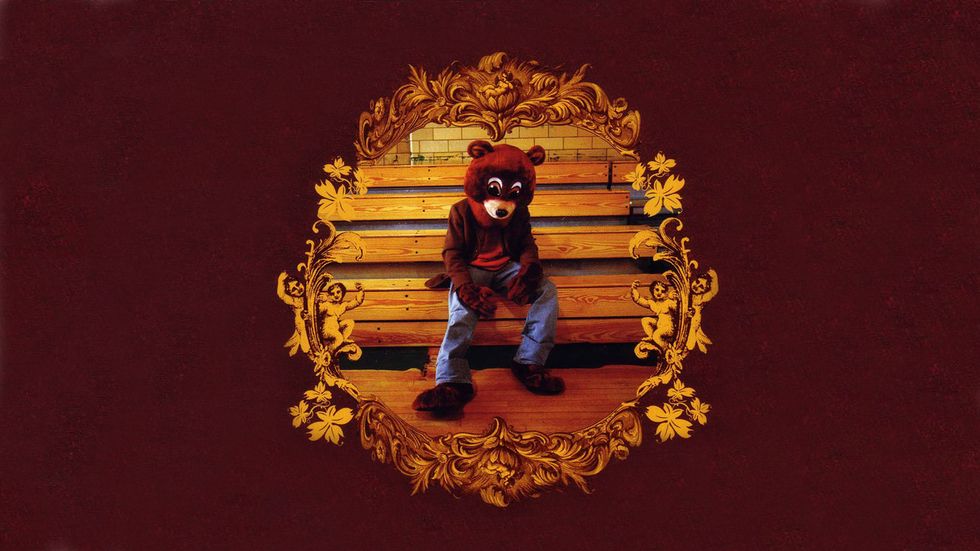
It was an unremarkable day when I first heard this song. See, I've always been a Kanye fan (despite facing several challenges to my faith as of late) but there was one album that I hadn't listened to straight through.
This album was his inaugural effort, The College Dropout. I was six years old when it came out, so hearing it way back then was out of the question, and I'd been distracted by the later Kanye West albums. Anyway, intending to make up for lost time, I took a seat, grabbed a cup of coffee, pressed the play button, and closed my eyes. I'd heard most of these songs before, so I zoned out a little bit. As always, the songs were laced with Kanye's classic self-conscious narcissism. Between the inspiring anthem 'Through The Wire' and the contagiously confident victory lap 'Last Call', I found it. Like rescuing an engagement ring from antiquity in an old jewelry box, or a long lost picture book under dust and detritus.
Beginning with a simple conversation much like one would hear at any family gathering ("How's your son?" "He made the team this year?"), Kanye incorporates the title when the first verse begins. Stating "This is family business, and this is for the family that can't be with us", he describes the pain of an elder's absence at a congregation of relatives and goes on to mourn the prison sentence of a cousin who is also unable to attend. Ye also describes a familiar indifference towards his cousin's actions, rapping "And look, if you tell you ain't did it then you ain't did it, and if you did? Then that's family business". In this line, and those prior, Kanye manages to capture the paradoxical sobriety/joyousness of a dinner with kinsfolk, especially in the black community, where in addition to simple family squabbles, we deal with a disproportional enacting of 'justice', or, in other words, the sequestration and ostracism of human beings we tend to be related to. For evidence of this, I point to an especially poignant issue of the Du Bois Review, in which they queried 4,500 people about the acquaintances, family, and friends that they had in prison. A whopping 44 percent of black woman said they had a family member in prison, compared to just 12 percent for white women. Numbers for black men were equally as ominous, with 32 percent having a relative in prison, compared to just 6 percent for white men. Now, Ye doesn't necessarily broach these issues in the lyrics; he smoothly dances atop them, much like any conversation at a family dinner. The focus from the beginning of the song is the simple joy of being together, and it's a better piece for it.
The hook is also a treat, with the lyrics proclaiming the value of family over materialism ("Diamond rings, Diamond rings, they don't mean a thing") and some soulful singing by Tarey Torae and Kevin Shannon, both relatively little known backup singers. In a twist, however, Torae actually supplied the stories heard in the song, with Kanye folding them into a universal narrative. The second and third verses are great, but relatively standard fare for a Kanye song. As a whole though, this song stands an underappreciated jewel, with a production that reminds of a plate piled heavy with thick mac n' cheese, a slab of turkey, an island of stuffing in a pool of gravy, the sweetness of candied yams, and lovingly seasoned collard greens. The track is also relatively clean for a Kanye song, with a couple of softly spoken n-words sprinkled in, but with the cadence of the word brother.
In conclusion, this song is not a shining star in Kanye's figuratively galactic career, it is instead a warmly lit cloud of oxygen, a breath of fresh air in a career and persona percieved in contemporary society as being contrarian, alien, and fiercely individual.