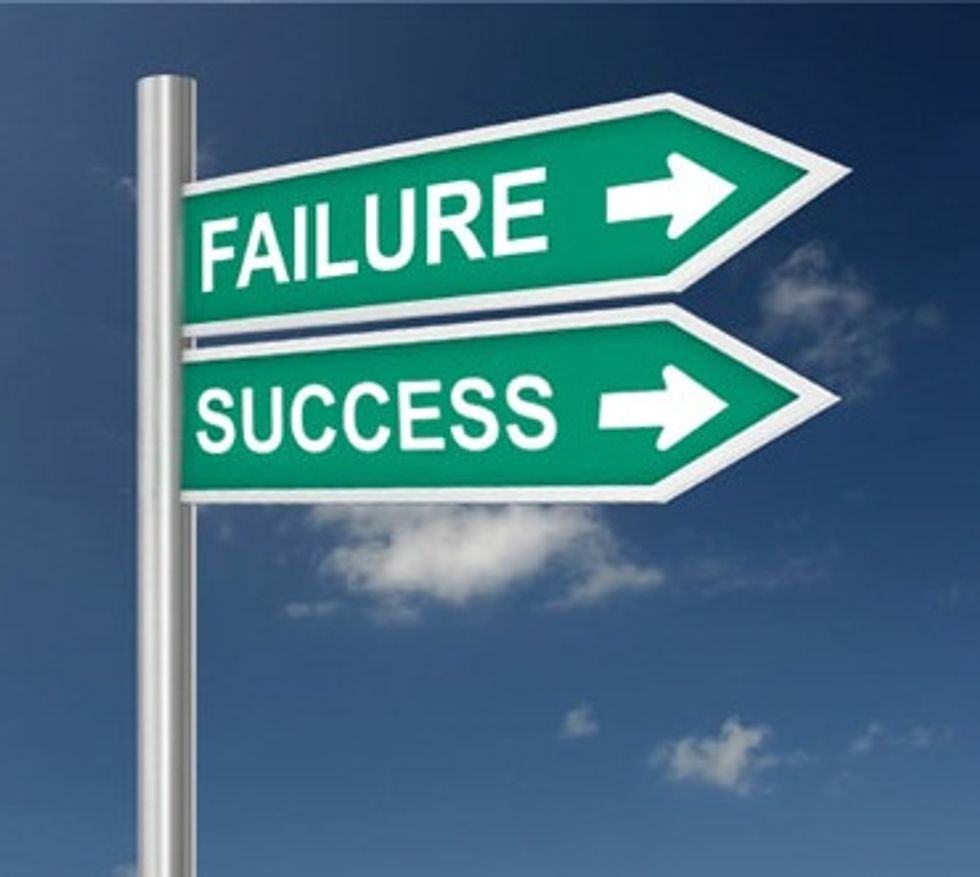
From a young age, we’ve always been told that failing is bad, whether it’s in school, in a relationship, or simply in life itself. We’ve always been punished when we’ve made mistakes. We’ve always heard that if we fail, we aren’t good enough.
It’s the reason why so many preteens, teenagers, and young adults struggle with anxiety and depression. The concept of failing is so daunting to all of us because with failure often comes disappointment from our friends, family, significant others, or even ourselves. As humans, we are naturally dependent on one another and are reluctant to let our loved ones down. And this interdependence can hurt us in the long run. We have become so obsessed with “succeeding” or “passing” because that’s what everybody says we have to do if we want to make it in the world. We’re pressured to excel at every aspect of our lives because that’s what we’ve been trained to do.
The fears that come with failing are a result of the rewards that come with succeeding. It’s no secret that we all want to get an A on our next exam or get a raise at work. When we get an A or when we get a raise, we are rewarded. The assumption is that we have worked hard and are good at what we have done, so we deserve something to feel good about. But what do we get when we fail? We get a big fat F on our exam or our manager yells at us at work. There’s no reward. There’s no “E for effort.” Compared to our peers, we are underperforming. It doesn’t matter how hard we try. It’s just not good enough.
And that last part—the part about not being good enough—kills people. After we fail, we become self-conscious, depressed, and even angry. We’re jealous of all the people who get singled out for their extraordinary intelligence, athletic ability, or other talents. We’re jealous because, according to society, they’re the ones who are making it while we’re the ones who are falling behind.
But failing doesn’t necessarily mean that we didn’t put in the time or effort—it just means that we came up short. Part of the negative stigma associated with failing comes from the notion that, because we have failed at this one aspect of our lives, we will never be able to succeed in that area. For college students, it’s terrifying to fail a test or a required course of a specific major. We begin to second guess ourselves, wondering if this is really what we want to do with ourselves. But in reality, it’s one thing. Just because you didn’t live up to the expectations of this one event doesn’t mean that you won’t be successful in the future.
In my mind, the word “failing” doesn’t mean that you are unsuccessful. It just means that you’re a work in progress; you’re working towards becoming successful. And failing is arguably an essential step in becoming successful. If you don’t fail at a task, how do you know if you’ll be able to figure out a solution? You don’t know—not until you have failed.
It’s easy to get down on yourself after you have failed, especially if you have let other people down in the process. Unfortunately that feeling is probably never going to go away. But that doesn’t mean that you should give up entirely after you fail. Failing is a learning experience that everyone has to go through. People may yell at you along the way and tell you that you’re never going to succeed, but ultimately it all comes down to you.
Do you want to succeed? If so, failing isn’t something that should dominate your life. Your “failure” can be used a motivational tool. After failing, you’ll try harder to succeed. And once you do, you’ll come out stronger. We’ve all failed at something, and we’ll probably fail at something else in the future. But the trick to success is how we recover from our failures.
So don’t be afraid to fail. Failing provides us with an opportunity to ask ourselves if we really want this and are going to do whatever it takes to achieve success or if we are just going to give up. Which will you choose?