The 2000 presidential election in Florida was a disaster, regardless of its outcome. Accusations flew about miscounts, confusing ballots, voter fraud and irresponsible poll workers. One news story in particular always stuck out to me—the story of David Siegel, who encouraged only his Republican employees to get out and vote, giving them the day off and quite possibly giving Bush the election in the end. Today, companies like Facebook and Google can accomplish the same thing on a larger scale with alarming ease.
On election day in 2010, Facebook split its users into three groups. One group was shown a clickable button that said “I Voted,” along with information about how and where to vote, while another group was shown that same button along with pictures of Facebook friends that had clicked it. The third group was a control and received no button.
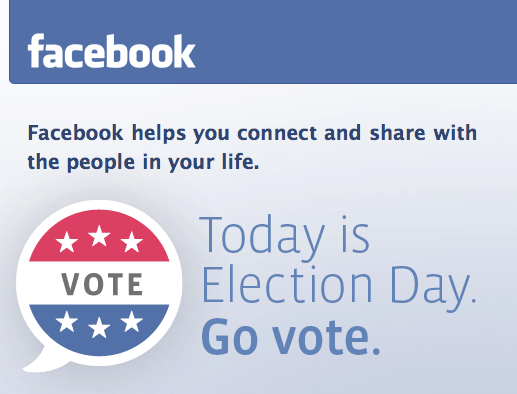
The results? People who were shown the informational post voted no differently than those who didn’t. But out of the 60 million or so people that saw pictures of their friends who had gone out to vote, an additional 340,000 went the distance themselves. Researchers estimate that 60,000 or so were directly influenced by the social message, while another 280,000 were convinced after seeing messages pop up in their newsfeed about a friend that had gone to vote. These are relatively small numbers, sure, but James Fowler, who lead the study, says that the study was conservative in its estimates, and if we learned anything from Florida it is that elections can come down to minuscule margins.
What’s so bad about increased GOTV efforts—who cares where they come from, as long as people are getting out to vote? Well, we should. Facebook knows you. Very well, in fact. When it comes down to it, they’re just a company like any other, and companies have interests. Facebook has the ability to encourage only certain voters. And they aren’t the only ones.
Google has become somewhat similarly involved in the election game. For a while now, they have been rolling out their Quick Answers feature, which does its best to show you an answer without even having to click on a result. Now, searching a presidential candidate shows you information about how their campaigns have been financed and a quick snippet about their policies.
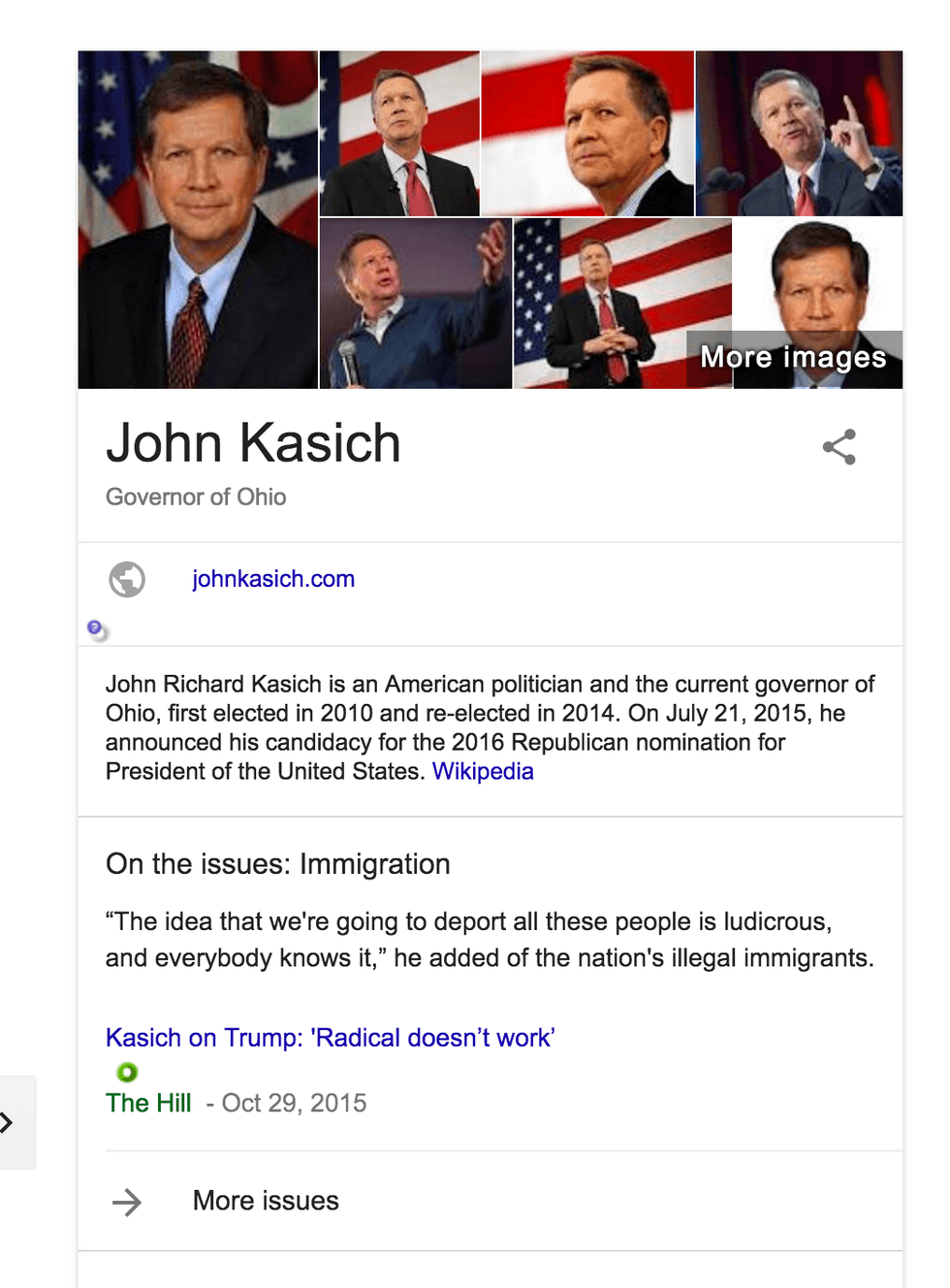
I tested it myself, and found that the information it shows depends on the candidate. Searching for Hillary Clinton brings up her stance on foreign policy. A quote from Bernie on making education more affordable shows up when you Google him. Ted Cruz’s page shows a quote about national security, while Googling Kasich or Trump produces their opinions on immigration. Coincidentally, the quote that appears when you search for Kasich directly rebukes that of Trump. Why were these particular issues shown? Is Google producing information to make certain candidates look better or worse? Even if not, what happens when other companies join in?
Facebook’s experiment proved that people can be swayed online. Door-to-door efforts have a higher rate of increase, around 8 percent, but those take time and effort to organize, whereas companies online can reach millions of potential voters with very little work. These online companies control the flow of information we receive. No matter how universally friendly a company like Google might seem to some, this is a scary reality.