I’m not usually much of a believer in conspiracy theories, nor do I ever give them the time of day to internally debate the likelihood of their accuracy. I was surfing YouTube (easiest way to procrastinate, let me tell you) and I saw a video titled “6 Conspiracy Theories” from a YouTuber I’m subscribed to. Naturally, my curiosity sparked and since then, I’ve been hooked on one conspiracy theory in particular — the Mandela Effect.
According to mandelaeffect.com, the “Mandela Effect” happens when someone has a clear memory of something that never happened in this reality.
Many people — mostly total strangers — remember the exact same events with the exact same details. However, memories are different from what’s in history books, newspaper archives, and so on. Many people speculate that parallel realities exist, and mankind has been “sliding” between them without realizing it.
If these universes are truly parallel then these timelines cannot come into contact with one another, but if they are not parallel then they might occasionally interact. Evidence for such connections may be found in these common (mis)memories.
The term "Mandela Effect" was originated by blogger Fiona Broome, who has written on her website that she first became aware of the phenomenon after discovering that she shared a particular false memory — that South African human rights activist and president Nelson Mandela died in prison during the 1980s when he actually died in his home at Houghton Estate in 2013
It turned out that there were many other examples that didn’t add up for more than a couple people. It seems farfetched and that’s what I thought too. I was so skeptical because parallel universes are way beyond my range of thinking.
There were a few examples that really sealed the deal for me because they actually resonated with me personally and I can remember them from my own childhood.
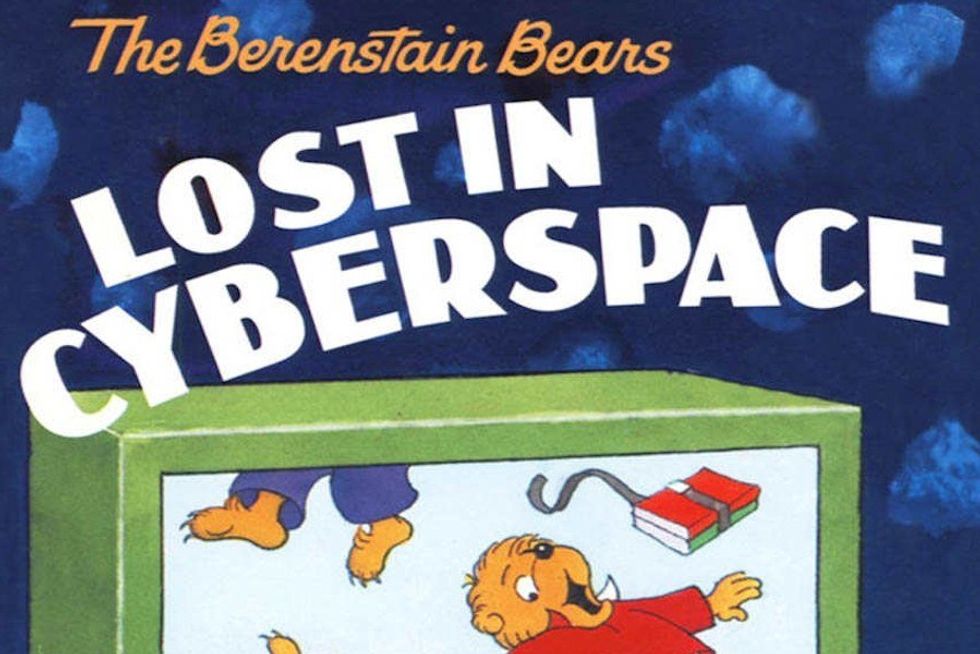
My first example of this theory is the children’s show and books The Berenstain Bears. Notice how the spelling is “stain,” not “stein.” I distinctly remember childhood memories of reading the books and watching the shows having the spelling Berenstein. To make sure I wasn’t the only one, I asked some group messages I’m in and for the people who remembered the show, they agreed with me that they were shocked it was actually “stain.”
Some people have gone so far as to check their attics and storage closets for the VHS tapes or the old books to double check that it hadn’t been a rebranding issue. Basically, skeptics have come to the conclusion that things in the parallel realities haven’t been matching up and this is an example.
Another one that I think will resonate with people who are familiar with Disney movies is an example from Snow White. Remember ‘Mirror, mirror, on the wall, who in this land is fairest of all?’ Yeah, that doesn’t exist. It’s actually ‘Magic mirror.’ Has my childhood been a lie? Again, skeptics took to attics and storage to check the VHS tapes and again it was proven true that it was, in fact ‘Magic mirror.’
The Mandela Effect is certainly difficult to wrap your mind around and it really depends on the person and their own memories to decide if they really believe it’s a possibility. There are multiple other explanations for why people remember the same events differently than it really happened.
According to Snopes, getting back to Berenstain vs. Berenstein, one explanation for the variant spelling is that names ending in "stein" are far more common than those ending in "stain." People's recollections are distorted by prior associations and expectations.
Why do some people remember Nelson Mandela dying 30 years before he did? Maybe it's a case of two isolated bits of knowledge — that Nelson Mandela spent a long time in prison and that he's dead — being pieced together into a false memory in the absence of an actual recollection of the announcement of his death.
Clearly, memory can be fallible.
Here are some links to research more, if you're interested.