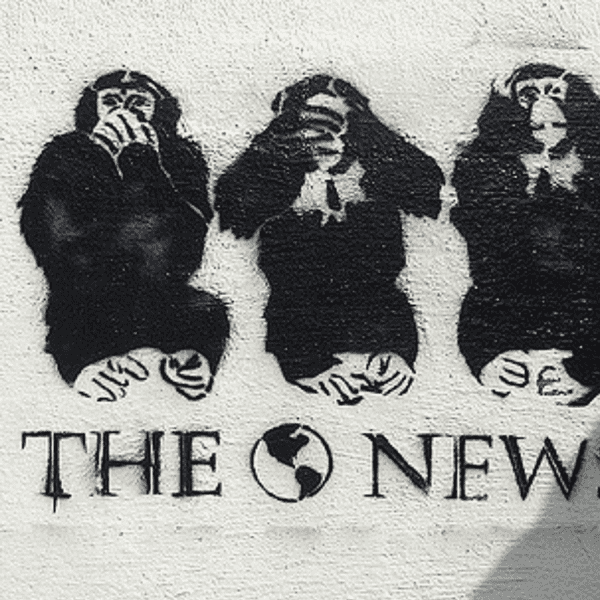


As a media writer and news consumer, I will be the first one to tell you the (many) problems with our media today, especially with the craziness of the 2016 U.S. Presidential Election.
From 140-character tweets to 15-minute TV news segments, the depth of a news story is condensing. Mass communication is moving towards speed and conciseness instead of detailed and depth. Mass communication is “communication from one person or group of persons through a transmitting device (a medium) to large audience or markets” (Biagi, 2015, p. 6). News stories have to be produced and published faster than ever before with journalists and broadcasters rushing to be the first to share a story. In addition, the popularity of social media adds to the increased brevity of news stories.
This conciseness of language reflects the concentration of media company ownership and, unfortunately, the loss of various media perspectives and viewpoints. Variety within media content is not as cherished as it once was. With media companies scrambling to own most of their competition for market control and desiring to post the most recent and popular stories first, there has been a loss of message pluralism within the media today. Message pluralism is the “availability to an audience of a variety of information and entertainment sources” (Biagi, 2015, p. 14). The loss of message pluralism affects more than what you would see in a newspaper or hear on the nightly news; it affects all aspects of communication within the media.
Development of loss of message pluralism in today’s media
Media is an industry like manufacturing or healthcare; therefore, basic economic principles, such as competition, still apply. The mass media industry has possessed a great amount of competition since the invention of the printing press. Companies can help to eliminate competition by acquiring their competitors to more firmly control the market; this process is called concentration.
Concentration of ownership is “the current trend of large companies buying smaller companies buying smaller companies so that fewer companies own more types of media businesses” (Biagi, 2015, p. 11). When larger companies absorb smaller companies, the acquired companies are now under the direction and influence of the larger company. This reduces the amount of media variety within our society.
In addition to concentration of ownership, conglomerates also feed into this erosion of media variety. Conglomerates are “companies that own media companies as well as business that are unrelated to the media business” (Biagi, 2015, p. 12), such as Sony Pictures Entertainment and Sony Electronics.
Another going trend for media companies is vertical integration. Biagi (2015) describes vertical integration as “an attempt by one company to simultaneously control several related aspects of the media business” (p. 12). This is where one media company owns more than one type of media property, such as magazines, television, newspapers, and radio for example. One of the most well-known examples of vertical integration is the Walt Disney Co., which owns two amusement parks (Disneyland and Disney World), the Walt Disney Motion Pictures Group, the ABC TV network, the ESPN cable network, and ESPN: The Magazine (Biagi, 2015). Another example of vertical integration is within Time Warner. Time Warner, a cable company, owns Warner Bros Pictures, CNN, HBO, Turner Broadcasting, Sports Illustrated magazine, TBS, Cartoon Network, and TNT (Biagi, 2015). By using vertical integration, a company can influence various media outlets simultaneously.
A cornerstone of the mass media industry is intense competition. To help eliminate competition, media companies are buying and selling each other to position themselves at the lead of the media marketplace (Biagi, 2015). This increasingly rapid trend of convergence is allowing big companies to control the media unlike ever before.
Biagi (2015) explains that convergence is the “melding of the communications, computer and electronics industries,” and that convergence is the “economic alignment of the various media companies with each other to take advantage of technological advancements” (p. 12). Convergence is used to increase profits and decrease competition.
Convergence has been able to skyrocket for two reasons: public ownership and government deregulation (Biagi, 2015). Due to the open availability of stock in public media companies, it means any company or individual with enough money can invest in media industries (Biagi, 2015). This is why many companies are able to accumulate so many media companies in such a short time.
Beginning in 1980, the Federal Communications Commission (FCC) began adopting less stringent regulatory policies for the broadcast media (Biagi, 2015). The FCC started to deregulate the media by withdrawing many regulatory restrictions on media ownership. Before 1980, the FCC established rules to avoid media ownership convergence. For example, the FCC only allowed a broadcast company to own only five TV stations, five AM radio stations, five FM radio stations, and five newspapers (Biagi, 2015). In addition, Biagi (2015) noted that media companies were also required to hold onto a station or newspaper for three years before the owners could sell it. The post-1980 FCC eliminated the three-year rule and raised the amount of media an owner could possess. Also, the Telecommunications Act of 1996 introduced significant regulation relaxation on media ownership requirements (Biagi, 2015).
Public ownership and deregulation led to the growth of media convergence and the loss of message pluralism, as media ownership becomes more concentrated, so do the news agendas and viewpoints presented to the public. With less media companies, the less media diversity and variance will be produced for the public.
The controversy of media convergence and concentration of media ownership
Supporters of concentrated media ownership and media convergence argue that a large media company can offer advantages that a small media company could never afford (Biagi, 2015), such as higher wages and better working conditions for its employees. However, the major arguments against media convergence of ownership are that concentration of so much power limits the diversity of opinion and the quality of ideas available to the pubic and reduces message pluralism.
Message pluralism is the “availability to an audience of a variety of information and entertainment sources” (Biagi, 2015, p. 14). This loss of message pluralism affects more than the amount of variety news consumers will be exposed to. The loss of message pluralism affects every aspect of communication.
Benjamin H. Bagdikian, dean emeritus, graduate school of journalism at the University of California stated that “today’s media giants own nearly all media channels, which not only close off entry points for competition, but influence the choice of entry at the start. This should concern all of us” (Biagi, 2015, p. 14). Bagdikian argues that if large media companies already hold such control over the media markets, how is another company expected to enter into that market.
Although this trend of company convergence happens in multiple industries, it affects the amount of news produced and promotes each large media company’s agenda better than ever before.
Agenda setting is the “belief that journalists do not tell you what to think about, but do tell you what and whom to think about” (Biagi, 2015, p. 260). A type of agenda-setting that is quite popular within the mass media industry today is consensus journalism (Biagi, 2015), which is the “tendency among many journalists covering the same event to report similar conclusions about the event” (p. 260), rather than reporting different interpretations of the events.
With only a handful of media companies controlling the majority of news content people consume, this form of agenda-setting is unsettling. People read the news to gain knowledge and perceptions of life and the world around us. With consensus journalism in addition to the loss of message pluralism, the way individuals perceive the world will become limited and skewed to the desires of the large media companies.
Donohue and Glasser (1978), mass media researchers from the late 1970s, had predicted this loss of message pluralism within the media in anticipation of the deregulation from the FCC in 1980: “most Americans will be trapped in what I call a ‘no-choice informational bind,’ a condition attributable to the economic character of media institutions that encourages imitation, reinforcement of the status quo, and heavy intermedia-dependency” (p. 593). Their prediction of a “no-choice informational bind” has become our all too sad reality regarding our mass media.
Message pluralism is the “availability to an audience of a variety of information and entertainment sources” (Pronk, 2010). Since message pluralism is limited in the media, people lose access to more sources of knowledge and perspectives. The loss of message pluralism is a loss of information, knowledge, perceptions, and human experience.
Ways to reduce the loss of message pluralism in the media
News articles, television shows, radio broadcasts, magazine editorials, and more are the pieces individuals use to construct his or her own perceptions and sense of reality. With larger media companies being able to influence their own viewpoints and agendas on the public more than ever before, it is critical to reduce the loss of message pluralism within the media.
Although no one has identified an “official” method to increase message pluralism within the media, many suggestions from media experts have been expressed. One way to reduce the loss of message pluralism is to increase the amount of government regulation of the FCC on media companies (Pronk, 2010).
Whether the FCC restricts the amount of media outlets a company is allowed to own or if a waiting period needs to be established before a transfer of media company ownership, government regulation would help to reduce the amount of power and control large media companies possess.
However, one of the roles of media is to be a “watch dog” of the government: “essentially, a main focus of the media is to support the democracy by offering access to the public sphere and to the different ‘voices’ of the society” (Klimkiewicz, 2010). If the government intervenes with the media, this affects the media’s ability to police and comment on the federal government (Pronk, 2010). This is one of the reasons the FCC deregulated the media in 1980 and again with the Telecommunications Act in 1996 (Biagi, 2015).
Another method to increase message pluralism is to capitalize on the opportunities social media and the Internet provide. Klimkiewicz (2010) explains that “although media conglomerates may have monopolized most print media and television, the internet and social media offer gateways for smaller media companies to promote and publish their own content in an environment that is available for numerous U.S. citizens” (p. 186). For example, a new smaller media company, Upworthy, shares and promotes its news articles and content purely through its social media accounts: Facebook, Twitter, and YouTube, and its website. By using the Internet and social media, small media companies can reach audiences on the same platform that large media companies use as well. Although large media companies may have more resources to aid their digital presence (advertising, a public relations staff, money to fund websites, and more), small media companies can capitalize on their own niche markets to find success and coverage for their content.
Conclusion
Mass media is supposed to reflect and affect politics, society, culture, and government, not reflect the viewpoints of large media companies (Klimkiewicz, 2010). Although we are in the midst of a shortage of message pluralism, efforts can still be made to increase the variety and amount of media sources in the world today.
News and entertainment from the media are critical components of how individuals construct their own perceptions and sense of reality. The news is a cornerstone of the American culture. Therefore, the more media sources the world has, the more power news consumers have to freely decide how they choose to perceive an issue and the world. With more information, perspectives, and diversity at our fingertips, we can only become more well-rounded individuals and effective U.S. and world citizens.Sources:
Biagi, S. (2015). Media impact: An introduction to mass media (11th ed., Vol. 1,
pp. 69-85). Stamford, Connecticut: Cengage Learning.
Donohue, T. R., & Glasser, T. L. (1978). Homogeneity in coverage of connecticut
newspapers. Journalism Quarterly, 55(3), 592-596.
Klimkiewicz, B. (2010). Media freedom and pluralism: Media policy challenges in
the enlarged europe. Budapest, Hungary: Central European University
Press.
Pronk, R. (2010, June 11). Understanding Mass Media Today. Retrieved from