


Whatever you’re going to school for, when people ask what you’re majoring in, they tend to follow up with, “What do you want to do with that?”
We all ask this because we’re all in school for a reason, and it’s only fair to inquire what career you are hoping to have with the degree you’re pursuing.
This gets complicated to explain, however, when I tell people that I am an English and history major with a German minor. Almost everyone strings these together into one profession, asking if I want to be a teacher. While I understand where this response comes from, it is a telling one. This immediate correlation from degree to career rises from a problematic, longstanding paradigm our culture’s discourse seems to be trapped in.
When I tell people that I don’t want to be teacher, they get a little stumped. I try to help by further explaining that I’m specializing in writing. This gives them something tangible to run with, and they have a visible moment of understanding. Writing tends to become synonymous with journalism for most people. Thus, many people’s next question is if I want to write for a newspaper. Again, I answer no.
Again, confusion on their face. What’s left? Well, a lot. To be fair, I can’t give a specific answer about what career I’m pursuing precisely. The only thing I know for certain is that I’m a writer, and I intend to be writing in some way in my future. This is usually a more satisfactory answer for the inquirer, now the foundation of a career can be tied to my course of study: I’m a writer. Now they can understand. Yet the question inevitably still remains: how do history and German fit into the picture?
Well, they probably don’t. I’m not seeking any sort of career in which I would utilize German. I wouldn’t be opposed if an opportunity arose in which I could continue using German, but that’s not what I’m looking for. Similarly, I don’t plan to utilize my history degree in my career. Though, again, if I found a good fit in which I could combine it with my writing interests, I wouldn’t look the other way.
So why tack on these two potentially “useless” courses of study to my degree?
Why not?
This is the part that gets particularly tricky to explain to some. People are never sure how to respond when I explain that I’m studying history and German simply because they interest me. OK, technically I did have to have two years of a foreign language for my B.A., but I had planned on taking German in college anyway.
And why German, rather than Spanish? Well, I tried — and struggled — with Spanish. And as soon as I could take German, albeit for only one year in high school, I jumped on the opportunity. I grew up learning about Germany and picking up German words from my dad who lived there periodically for the military, so I already had an interest in it.
As for history, I always enjoyed that subject in school, especially in high school. I had a wonderful AP U.S. History teacher, and I’ve immensely enjoyed my history courses thus far in college. Initially I was only pursuing a history minor, but realized I could easily fit in a major before I graduated. “Why not?” I figured.
This is a concept a lot of people, however, do not agree with. Many people feel it is a waste of time and money to take classes and diversify their degree with non-career building fields of study. Many people are in college to get a degree so they can get out and get a job. They have a mission and they do not intend to stray from it. That’s OK, I guess.
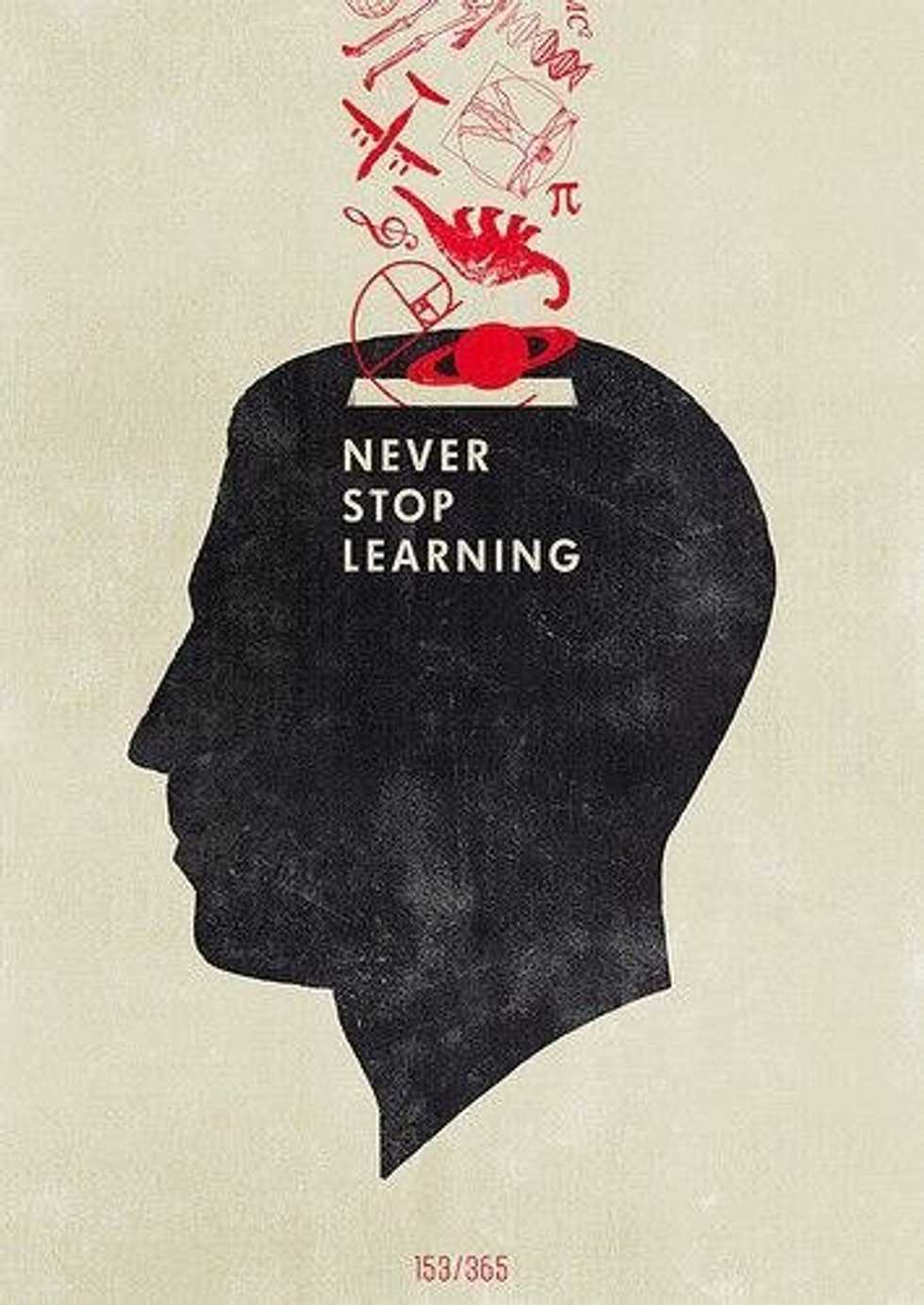
I, however, want the most out of my college experience. I want to receive a well-rounded education; I want to learn, not just prepare for a career. I still have that excitement and curiosity that I did as a child to seek knowledge and explore new ideas. I want to gain understanding of things outside my own realm.
Think back to when you had to do projects in English class growing up for books that you probably hated. Remember reading the biographies of these long-dead authors you didn’t care about? Remember how most of them went to college and studied all kinds of sciences, mathematics, philosophy, and more? But then all they ended up doing in their life was travelling and writing this book you were forced to read.
Receiving a higher education in a university was once a distinguished, prestigious privilege given to select few. It was a way to become an educated, esteemed individual. It was considered enriching and elevating. A high-class affair. We are fortunate to live in a time that a higher education is the norm, despite its flaws (like the crippling debt we are accumulating), but that is another argument.
I am reminded of Oscar Wilde’s sentiment, “Art for art’s sake.” I encourage education for education’s sake. Learning for the sake of learning. It is wonderful to be on a career track in college, seeking success, and if that is your goal and your passion, then by all means, you do you.
However, I would like to remind people of this: college is likely the end of your formal education career. We should all be life-long learners, but this is the last time you will be a full-time student, in a setting where you have the time and access to take all of these classes. Don’t squander your time. Don’t be in a mad rush to graduate early. Enjoy your college experience, and take a few classes just because you're interested in them.
If you have an interest in something, within your major or vastly different than your major, invest your time in that class. Diversify your education, break out of your paradigms. Don’t treat a degree and college as a means to an end. Make your degree more than just a ticket to a career. Make it an experience that exemplifies what you’re passionate about.
You have the rest of your life to lock yourself down in the career world. For now, be curious, explore different ideas, broaden your perspectives and read. Write. Ask questions and seek answers. Do research. Take a proactive interest and be passionate about your education.
















