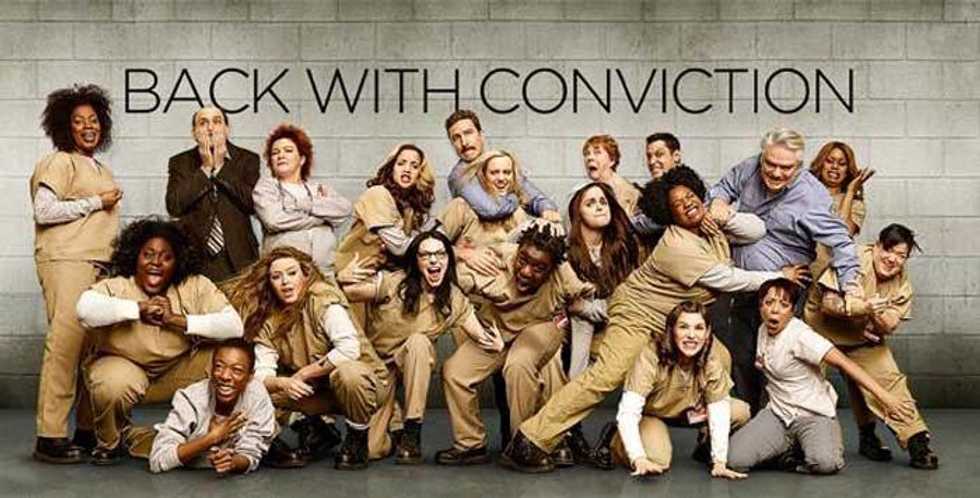
I haven’t finished watching Orange is the New Black yet. I know, season 4’s been out for over a week. But between work and everything, I haven’t been able to properly binge-watch my favorite show. So far, I think the show has tackled more conflicts dealing with race, religion and other characteristics than ever before.
I think Orange is the New Black is one of the best shows of our generation. Why? Because it is a perfect example of how people with different genders, races, religions, ethnicities and socioeconomic backgrounds interact when nearly everything else is equal.
Season 4 was released on June 17, and (don’t worry, no spoilers ahead), all our favorite characters are back! The inmates of Litchfield still sleep in the same beds, shower in the same bathrooms, are given the same toothbrushes upon arriving, and eat the same food everyday. And season 4 is no different than the past; with new CO’s, a ton of new inmates, and new conflicts, we still see a lot of race and ethnicity issues.
In season 2 episode 9, we witnessed Piper Chapman being granted with the illusory furlough in which she got a free 48 hours on the outside to pay her respects to her grandmother. Other inmates never had seen an inmate granted such a privilege. Perhaps it was because she was a white inmate who followed all the rules. I mean, other inmates weren’t even able to be with their own mothers when they passed, but Piper was able to see her distant grandmother. This is the first time viewers get a taste of the differences in characters.
Fast forward to season 4, we see more and more conflicts arise. New CO’s begin impromptu pat-downs in which the white inmates can simply pass by. A certain Jewish inmate disagrees with her new Muslim bunkie. When the commissary runs out of feminine products with the influx of new inmates, those who have more money can afford them when they raise the price.
One of the most interesting conflicts we see arise this season so far occurs after Piper starts a task force set on breaking up ‘gang-like behavior.’ She manipulates the new CO Officer Piscatella so that the task force essentially just targets the Spanish mami’s who threaten Piper’s panty line territory and the task force becomes a white power group.
Another interesting dimension of the show is when more Latina inmates come, and we see differences in ethnicity. All the Latina inmates so far tend to be categorized together as the same ethnicity. However, when more Latina inmates come in the prison, Flores and Ruiz start to take sides according to their respective heritage.
Orange is the New Black is one of those shows that just exemplifies the race, religion and ethnicity issues we see in real life because in prison everything comes down to skin color, or which God they pray to, and how much money they are able to spend at commissary. Those characteristics about our favorite characters are what set them all apart when everything else in the prison system is equal.