
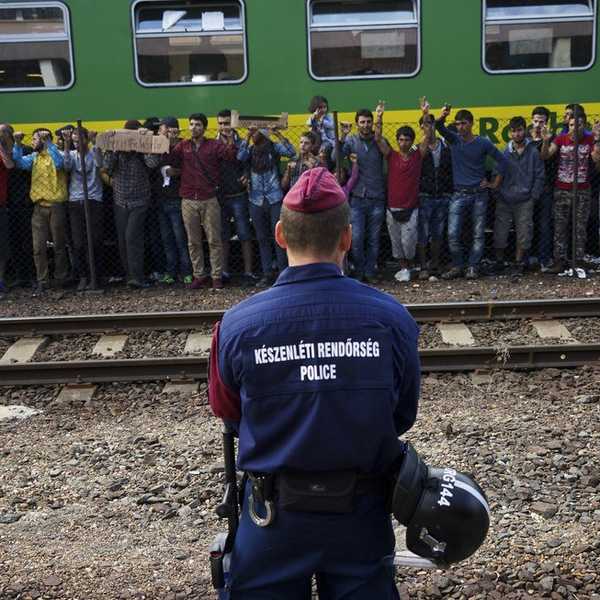
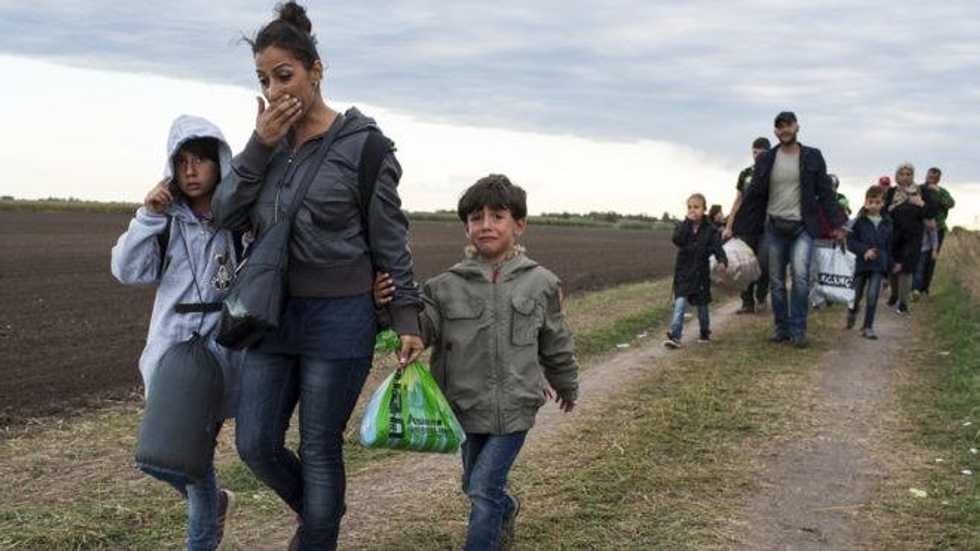
As a result of the looming civil war in Syria caused by the struggles between militant terrorist groups like ISIS and jihadists and peace-seeking civilians, hundreds of thousands of people are moving west in search of refuge. Most of these people are trapped in Hungary because Hungary is acting as the border state between Eastern and Western Europe and trying to maintain the Schengen system, a visa and foreign policy program that issues provisional documentation to migrants, so they can move freely throughout Europe. This migrant crisis is the biggest movement since World War II. To try to resolve the crisis, the United Nations has ordered all developed countries to open their borders to these refuge-seekers, and it has also set a quota for each country to accept in order to handle this migrant crisis. The trouble is that the developed countries such as Austria are not following through with their quota requirement even though most of them signed the 1951 U.N. Treaty on refugees.
High criticism has been pushed on the Gulf States, the states closest to the war states these refugees come from, for not taking in people and for not doing their part to help. These countries are Saudi Arabia, Kuwait, Bahrain, Oman, and the United Arab Emirates. These countries feel that they do not need to take in refugees because they have each donated a large amount of money, nearly $900 million, to the U.N. and various other organizations for situations just like this; therefore, they feel as if they have done their part to help. These countries are not obligated to help because they did not sign the 1951 U.N. Treaty on refugees.
Egypt and Turkey have taken in refugees in cooperation with the treaty while countries like Lebanon and Jordan who are non-members of the treaty have also provided aid and refuge. “Turkey has taken in nearly 2 million refugees; Lebanon more than 1.1 million; Jordan at least 629,000. Egypt has played a role, too, welcoming more than 130,000, and even Iraq, a country still ravaged by violence, has accepted nearly 250,000 refugees,” according to CNN.com.
Most of these refugees do not want to stay trapped in Hungary or these other Middle Eastern and North African countries. On September 8, 2015, these people pushed against the Hungarian border police and ran through corn fields and harsh areas to escape because the refugee camps’ conditions are extremely poor. They want to move to Sweden, the U.K, Germany, and other high wealth countries.
The quotas given by the U.N. are based on the size, power, and economic status of the member states, and countries like Britain are supposed to take in large numbers of refugees because it is a wealthy nation.
“Britain has taken in fewer Syrians than other EU countries but has given Europe's biggest donations in aid to the region, arguing that this is more effective assistance for millions of displaced Syrians than accepting thousands as refugees” according to an article published by Reuters.
Even Mexico has taken in refugees. The question is why so many countries like Mexico and Germany are willing and ready to take in refugees while other countries like Britain are so against it. One theory is that Mexico and Germany are trying to assimilate these people into their countries as a way to pad their middle classes and increase growth for their declining populations.
Although the United States has done little so far in terms of relieving Europe of some of its migrants, the Obama administration has issued claims that it is aware of the urgency of the situation. Americans need to pay attention to this issue because this could mean a huge flow of European refugees crossing the nearly wide-open border from Mexico. Not only does the U.S. need to show itself on the global stage, it also needs to address the border control issue that is already evident with Latin American immigrants illegally crossing the Mexico-U.S. border.
As time passes, it will be interesting to see how the United Nations, European Union, and other organizations band together to solve this European migrant crisis.

















