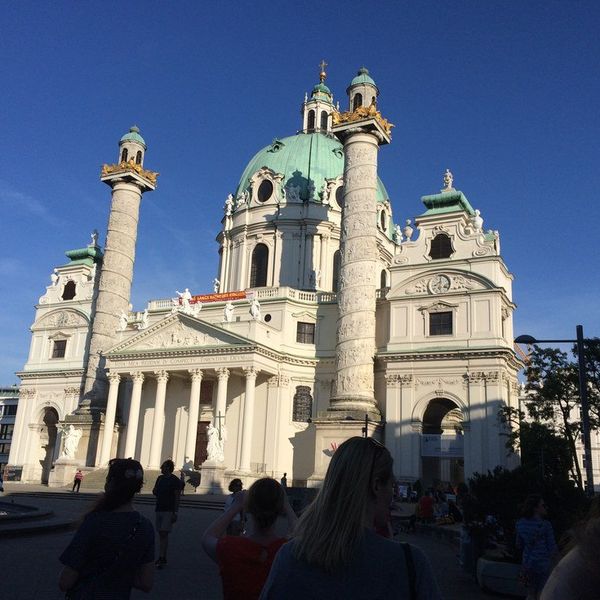


Before you leave to study abroad people will remind you that when you come back home you won't be the same person you were before you left. I didn't know what anyone meant, and I'm still not 100 percent sure, but something about crossing the Atlantic Ocean and living over 4,000 miles away from home changes you, I imagine. I'll have been in Europe for two full weeks this upcoming Tuesday. I've been to Paris, Barcelona and Madrid, and although I've learned a lot about different cultures, I've learned the most about my home, the United States.
Every day that I'm in Europe and am meeting new people, I'm reminded of how different the rest of the world is from the United States. The people I've met here are cultured and knowledgeable. They know what the people are like in Italy and what the best places to visit in Australia are. Most, but definitely not all, people in the United States haven't been out of the country once, and if they have it was for spring break in Cancun and the experience was solely touristic. Now granted our country is much larger than those in Europe so there are more places to explore within it, but really, the difference between Iowa and Illinois, and a lot of other states for that matter, is hardly recognizable. Also, we aren't as able to take a break from school and spend eight months in China or a year traveling across Europe because our country has a very strict recipe for success that allows very little, if any wiggle room. You get your diploma after 13 years of school, sit through classes at a college campus for at least another four years, get your degree and you get a job. But it's not like that in other parts of the world. The rules are more lenient and allow for more time to explore the different continents of the world and learn things that a college professor could never tell you.
So it's true that we, as residents of the United States, know very little about the different cultures around the world, but they all know about us. They listen to our music even though they can't understand it. They add voiceovers to our TV shows. They broadcast our news on their daily newscasts, and they know the people's names who belong to our pop culture. I'm only speaking for myself when I say this, but I don't know any famous people in Korea and I've never heard a French rap song or watched a German TV show. The simple answer to that is that I don't speak Korean, French or German, but most people in those countries probably don't speak English either. We, in the United States, would never turn on the TV and see a show in which the words and voices coming out of the people's mouths don't match and have been dubbed over with English, and being in Europe has made me wonder why that is.
None of these comparisons are to say that one place is better than the other. They're solely things that have been brought to my attention since I've been here. It's barely been two weeks since I've been abroad and I can already see for myself the impact that it's making on me.