

Some time ago, I encountered a theory of consciousness developed by Stuart Hameroff, M.D. and Sir Roger Penrose. Their theory suggests that human consciousness is eternal.

Hameroff is Professor Emeritus at the Departments of Anesthesiology and Psychology, and Director of the Centre of Consciousness Studies at the University of Arizona. Penrose is a mathematical physicist, mathematician and philosopher of science. Their theories are based on quantum physics; the same things that scientists have found control bird navigation, plant photosynthesis, the human sense of smell and possibly play a role in vision. Hameroff and Penrose theorize that our consciousness is actually quantum information that resides in microtubules in the brain. At death, the quantum information (our consciousness) found in these microtubules in the brain loses its quantum state and is released from the body into the universe at large. They basically argue that we will always exist as quantum information in the cosmos. So our conscious mind remains while our physical body is gone. In effect, we are eternal. Many say that this theory is a modern argument for the existence of the soul.

For instance, many people who have had near-death experiences have reported seeing a white light, a tunnel, dead relatives or floating above their body. Is it possible that these experiences can be attributed to our consciousness escaping from our body? Could quantum information, our soul, truly be able to navigate the universe after death?
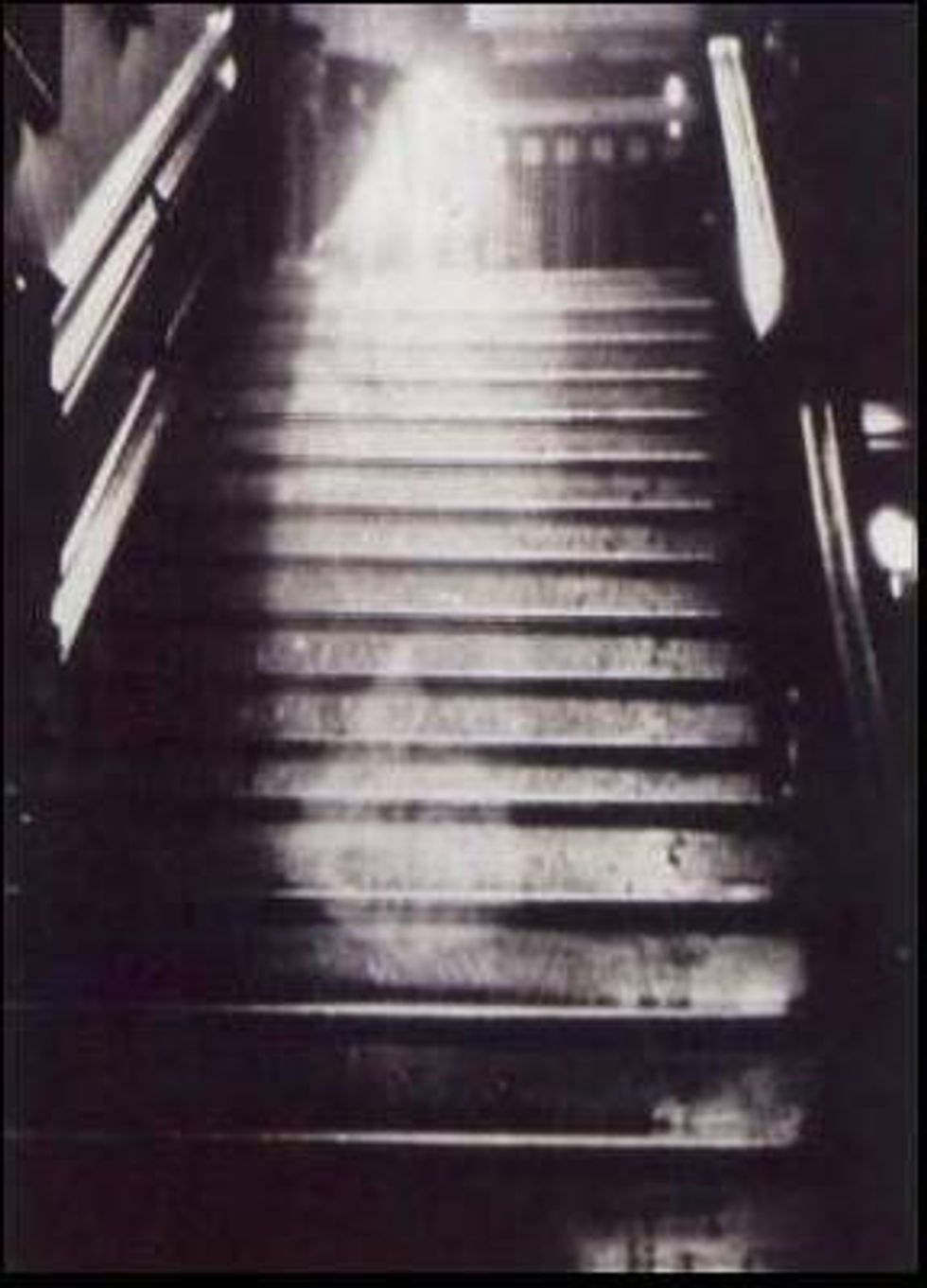
Maybe this quantum information is a form of the human soul but I see this theory as an argument for paranormal events, and I’m not the only one. Since it has been discovered that quantum mechanics is responsible for a growing number of things in our world, it is possible that ghosts are actually the quantum information of a person who has died being witnessed by the living. A theory regarding these spiritual manifestations of quantum information has been put forth by Professor Max Bruin, PhD, which relates ghosts to an impression of emotions into the quantum tapestry of the world:
“Ghosts are created when the observer’s emotions create a semi-permanent ‘indentation’ into the quantum tapestry of the universe. Like the scent of burned toast that remains long after the offending bread is discarded, ghosts are impressions of emotions that remain long after the cause has been resolved. Ghosts, therefore, are formed not from the dead, but from the living and their interactions with the world around them. The recording of events within the subatomic weave gives rise to an afterimage, and depending on the intensity of the emotion and the permeability of the quantum state, different ‘types’ of ghosts can be created” (Bruin).
The concept is riveting when you truly consider all the possibilities. In essence, our consciousness is our soul. The only difference between the traditional meanings behind it is what happens to our soul after we die. Even with all this information leading to possibilities that had not been heard of before it still neither proves or disproves the existence of God, heaven or hell. However, many who have had a near-death experience seem to have lost all fear of death, as after their experiences they now believe that they will survive physical death.

Obviously, these theories call forth more questions than answers. Among those questions is, exactly how long does our quantum information remain after our physical bodies are no more.
As per Bruin’s example: “Like the scent of burned toast that remains long after the offending bread is discarded”. The thing is, eventually, the smell of burnt toast dissipates. It is absorbed and is gone. Will the same thing happen to our consciousness once it is released from the confines of our physical bodies?