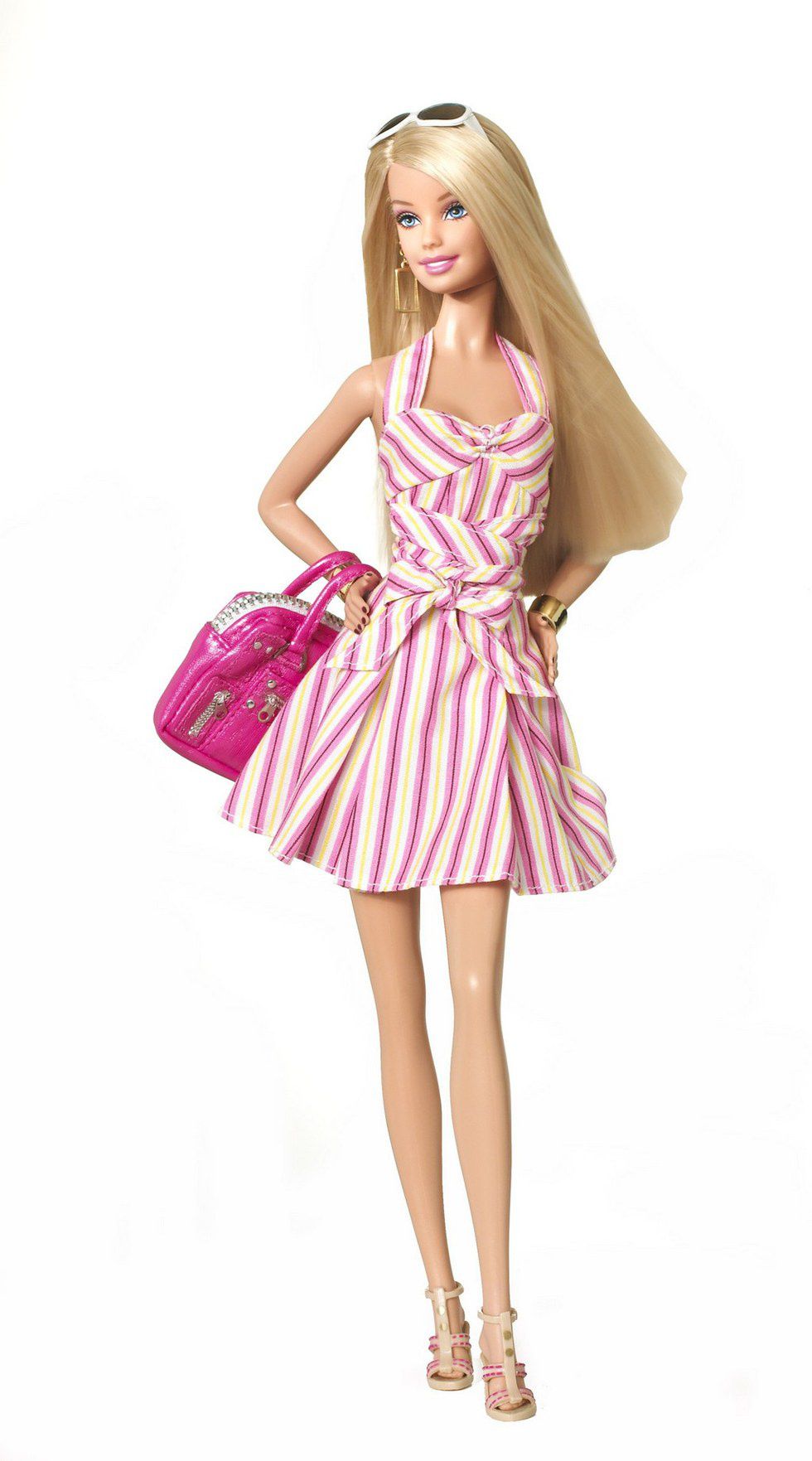
When we think of Barbie, the doll that comes to most people's minds probably looks something like this:
But the future of Barbies looks something like this:
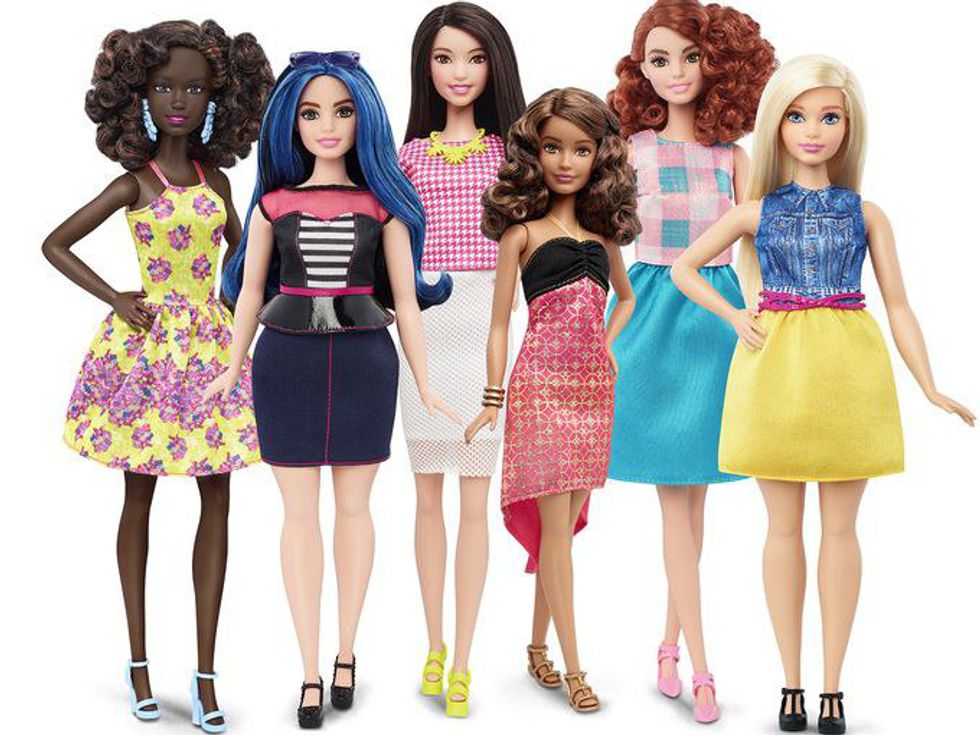
Last week, Mattel announced the debut of a new era of the iconic doll brand that makes a comment on the changing ideals of American beauty and embraces diversity among women’s body types. Barbie has been updated to come in three new body types: petite, curvy and tall, and is available in seven different skin-tones. What are the implications that the new, ever-diversifying Barbies will have on the children who play with them?
Barbie has been a constantly evolving toy that has kept up with the times in many ways. Her original trademark smirk has slowly shifted into a more genuine smile, she has more than 150 careers on her resume and she comes in many different skin-tones and ethnicities. While all of these changes are “progressive,” Barbie didn’t consider one important progressive change until this year: a change in shape.
Barbie’s biggest criticism over the years has been her extremely unrealistic proportions that portray an ideal body shape that does not exist in nature. Her giant 22-inch head sits on a neck twice as long and six inches thinner than the average American neck, which means that if Barbie were real she would be incapable of lifting up her head. Her 16-inch waist leaves room for half a liver and just a few inches of intestines, and her ankles are so thin that she would not realistically be able to hold up her whole body weight without standing on all fours. While Barbie encourages girl-power in a lot of ways, her appearance is extremely discouraging to many young girls' idea of beauty.
Psychologically speaking, play is vital in child development. Through play, children can express thoughts or feelings that they might not be able to otherwise articulate. When children gain the ability to put themselves in someone else’s shoes, they start to compare themselves to others and form concepts of self-esteem. Exposure to play figures that look like the traditional Barbie can negatively impact those early concepts and influence children to strive for the unattainable. The new group of Barbies represents different shapes and sizes, and looks more like a “real-life” group than ever before. Barbie is shifting away from the archetypical doll to a brand with more representative diversity, and I think that’s fantastic. However, I think it will take quite a long time for this change to be fully embraced and accepted by the young girls who will be playing with the toys.
According to Time magazine’s article about the Barbie’s new body, a 6-year old in Mattel’s focus play-group was playing with curvy Barbie and pretending the Barbie was saying, “Hello, I’m a fat person, fat, fat, fat.” One of the moms of a child in the play group brought her daughter to a Christmas tree lighting with Barbie and Santa Claus and commented, “‘If a black woman or a redheaded woman or a heavyset woman had shown up, my daughter would’ve been like “‘Where’s Barbie?’” Young girls today already have an image in their head of what Barbie is and isn’t, but I imagine that girls who will grow up only playing with the new Barbies will be much more willing to embrace them.
These shape and size changes are the most radical ones that Barbie has ever been through, but they are changes for the better. Studies show that children as young as 5, both boys and girls, are concerned with their body image, and one in four children has engaged in some sort of dieting behavior by age 7. A driving force of these statistics is the unrealistic body representation that children see in the media and in their toys. This can be difficult for children to realize when many of the play experience they have are with these unrealistic play objects. While introducing these new Barbies is sure to cause some controversy, I believe that overall it will be a positive change that will hopefully bring a positive impact to the next generation of young people.