
Socrates may have said it best: "The more I learn, the more I learn how little I know." Here Socrates acknowledges the falsehood of our beliefs, that all that we believe might simply be conditions of the beliefs of others, which still, might be inherently false. Alternatively, the firmer we stand in our convictions, the less we may find out about ourselves, about others, about the world, and about life itself.
In this world we are urged to take a path and stick to it, claim knowledge over certain things, become experts. This is all good and well, but when we claim to know what we do not, or still, when we do not recognize the foundation from which our beliefs arise, then we set ourselves up for failure, not only in our quest for knowledge, but in our quest to becoming honest and empathic human beings.
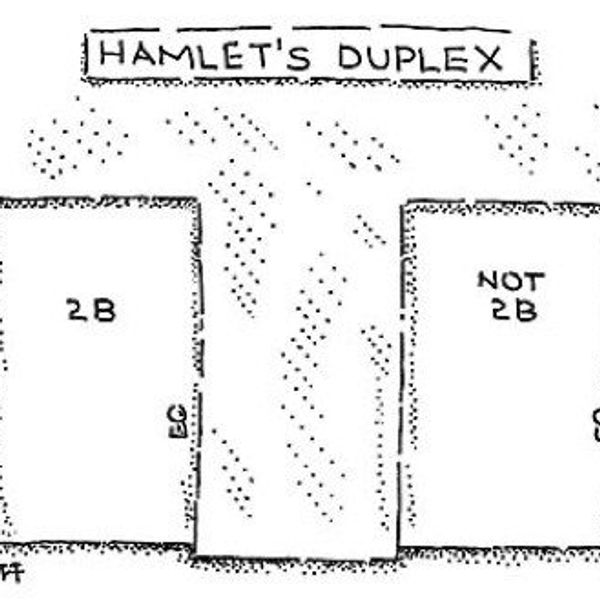
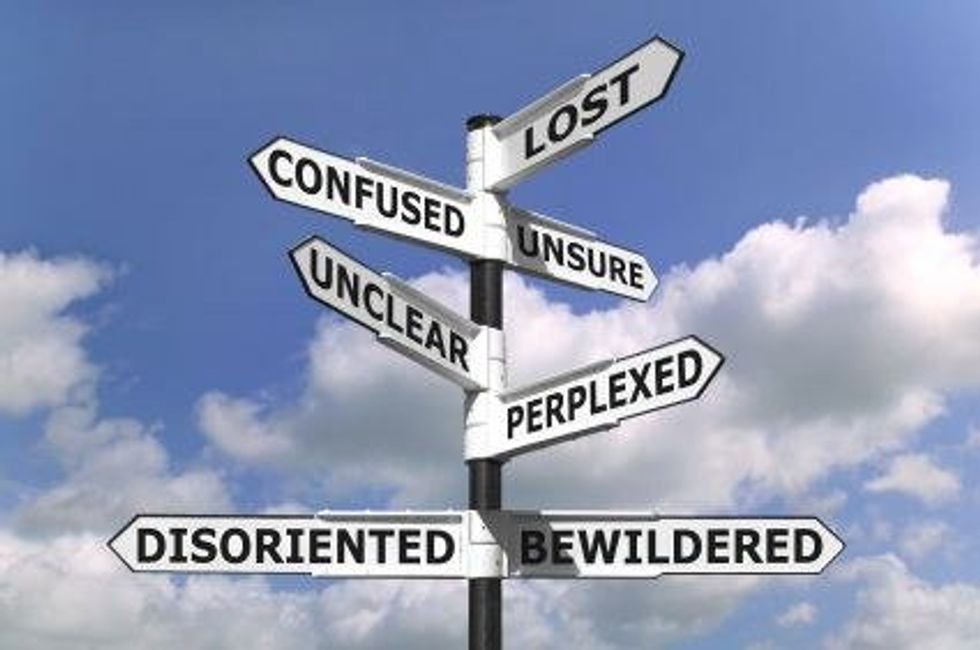
Sometimes it can be difficult to admit when we are wrong, not only in regards to our relation to others, but in regards to ourselves. As humans we have the capacity for introspection, but often we do not use it, and it is from this fault that we often find ourselves misguided and confused, deceived by our own negligence. Indeed the capacity for introspection, our ability to take a step back and evaluate ourselves and our decisions, is supremely important in understanding ourselves. However, what may be equally important, if we want to understand the nature of our convictions, is our capacity for self-doubt. After all, how can we accept any notion at all before considering it's alternative?
In today's society, when we think about doubt and uncertainty, we might attribute it to low self-esteem, or confidence issues. However, this could not be further from the truth. A disposition towards self-doubt and uncertainty can be harmful, yes, but only when it consumes an individual entirely. An inclination towards doubt and uncertainty denotes a disposition towards critical thinking, and towards a genuine interest in the world, and the true state of things.
In today's society we are consumed by falsehoods, and we too often adopt the beliefs of others as our own. We want one road to go down, and there is no room for uncertainty on that road. This may be a result of the state of modern education. Public schools today are built to deal with the masses. We get one question and one answer, never is it supposed that there is an alternative. In elementary schools, middle schools, and high schools, students are taught uniformly, are taught the same thing, the curriculum being handled by officials who value standardization and solidarity over critical thinking.
Moreover, in school we are not taught the value of emotional intelligence, about the personal value that can be derived from simple contemplation. We are absorbed into a system that sets us up for failure, that deprives us, some might say, of our humanity.
We can learn a lot from others, but we might be able to learn even more by being skeptical of what others say. By no means should we become cynics; we should not neglect what others have to teach us, because it is true that everybody can teach you something that you do not know.
Conversely, we should inquire more and ask people what they really mean; we need to get at the root of our convictions, understand each other and stop being so afraid of criticism.
We are absorbed with ourselves, always; that is simply human nature.We need to ask of ourselves, and of others too, if we really know what we're doing or if we're just winging it. If it is the latter, then you might be on the right track.