Some interesting things have occurred in the Tesla/SolarCity world over the past couple of weeks.
Both Tesla (NASDAQ: TSLA) and SolarCity (NASDAQ: SCTY) are Elon Musk companies, specializing in future technologies around electric vehicles, batteries, energy storage, and renewable energy production. So, it isn’t really a surprise that Tesla is currently in the process of acquiring SolarCity for $2.6 billion.
But, what does that signal?
There are two streams of thought here.
One: The companies have unique synergies and it is a strategic move to align technologies and increase competitive advantage.
Two: SolarCity’s profitability is quivering and the company needs further leverage (debt) to continue operations.
Now, I am a proponent of both electric vehicles (EVs) and solar technology. I understand the exponential rate at which both utility-grade and residential solar is growing. It is estimated that U.S. cumulative capacity of solar power will reach over 100 GW sometime around 2020 (as compared to nearly nothing in 2007). EVs are also becoming ever more popular and affordable.
What bothers me though, if I were an investor, is that SolarCity continues to be riddled with debt problems, the most recent being a $124 million bond offering released earlier this quarter. While Musk has previously used other companies to purchase the bond offerings (e.g. SpaceX), funding SolarCity’s operations, this is the first time he has personally invested in a debt offering. He purchased $65 million using his own money — a signal of either immense confidence or desperation.
SolarCity is undoubtedly a company of the future, but their finances need to get in order. Solar costs are dropping, but the cost of the company’s debt is rising. Just like any other investment, when you purchase a bond from SolarCity, you receive your money back, plus interest. In 2014, you would have received a 4 percent interest rate for investing in a seven-year bond. Today, invest in a bond and 18 months later you can expect 6.5 percent interest.
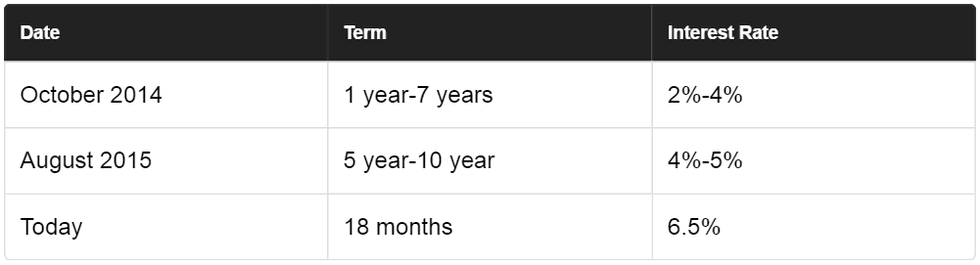
The reason this matters is that it costs SolarCity much more today to fund their operations than it did two years ago. According to one analyst, SolarCity’s future valuation is around $2.6 billion (matching what Tesla paid), but its' debt level has risen to around $3.4 billion.
Elon Musk’s recent purchase of more than half of SolarCity’s bond offering is a negative signal to investors. "When you see an officer buying stock, it is a good sign — it means the business might have a good future," said Charles Elson, an authority on corporate governance at the University of Delaware. "If you see them buying debt, you wonder, what is the long-term value.”