Dystopian fiction is amongst the darkest and most politically poignant genres of 20th-century literature. Schoolroom standards like Aldous Huxley’s "Brave New World" and George Orwell’s "1984" have become universally iconic in Western culture and are highly reflective of the cultural tensions of their respective time periods. Those early, genre-defining novels were everything a literature professor would refer to as “high-culture.” The writing was loaded with layered subtext, classical allusion, heady symbolism and enough allegory to fill a college degree.
Literary technique and complexity separates traditional dystopian fiction from the booming modern industry the genre has evolved into. Blockbuster book-to-movie franchises like "The Hunger Games" and the "Divergent" series have emerged as one of the most popular trends of contemporary pop culture media. This new wave of dystopian fiction is marketed primarily to the young adult demographic, featuring teenage protagonists set in a world damaged by adults, and has garnered mass popularity unseen by traditional dystopian writers. The harsh violence and serious political themes of theses novels stand as an anomaly in high-budgeting pop culture, especially for media marketed to teenagers.
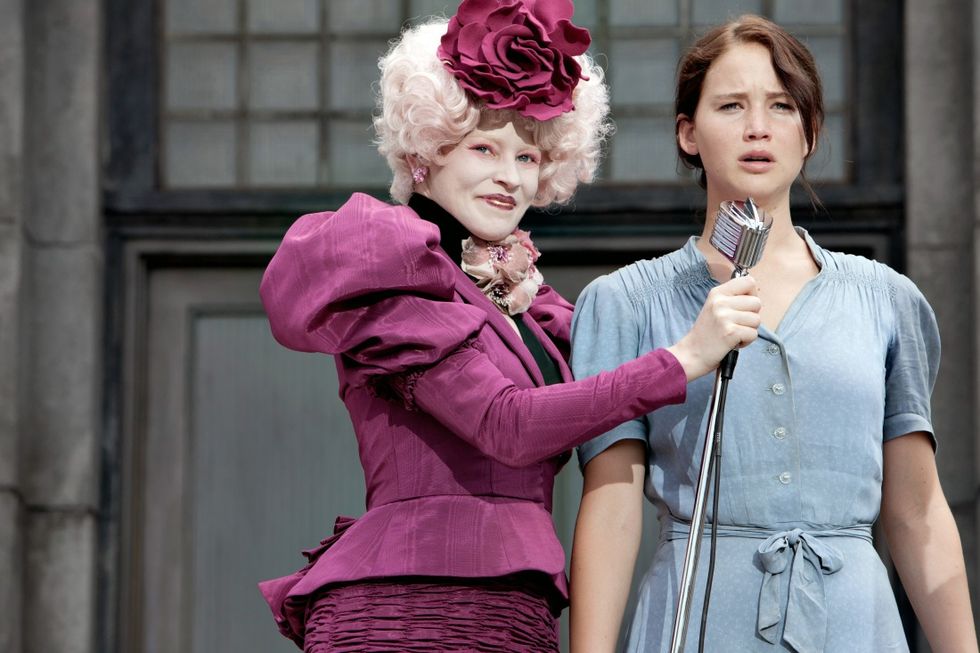
This phenomenon leaves much to be questioned about the culture it attracts and the fear it relates to. In November of last year, Suzanne Collins’ Hunger Games franchise concluded its domination of young-adult cinema with its fourth and final installment, "Mockingjay Part 2", sporting the sixth largest opening weekend box office numbers of 2015 and finishing the year in 8th place with a $281 million gross. Despite its impressive statistics, "MJP2" was the lowest earning film of its four-part series, all of which were box-office hits. The financial success of "The Hunger Games" series juxtaposes heavily against its subject matter in which teenagers are forced to kill each other in an arena by an oppressive, totalitarian government. Other dystopian franchises like Veronica Roth’s "The Divergent" series, James Dashner’s "Maze Runner", and Jeannne Duprau’s "City of Ember" trilogy all achieved similar success both in theaters and in bookstores.
These dark, violent, and socially critical stories are a far cry from previous young-adult hits like "Harry Potter" and "Twilight". Dystopian fiction of the past has always been clearly reflective of broad cultural fears and anxieties; "Brave New World" was published in 1931 on the heels of the Russian Communist Revolution, the first World War, the formation of the League of Nations, and the first few years of the American Great Depression.
Ray Bradbury’s "Fahrenheit 451" was published in 1953 right after World War II and during the height of McCarthyism. The worries of new-school dystopian fiction can be broken down and explained in much the same manner as the classics. Global issues of the rising generation are easy to pick out; war in the middle east, climate change, the NSA surveillance scandal, rising nuclear tensions, deforestation and the reemergence of Russia as a major world power are all arguably represented in these novels.
"Divergent", "City of Ember", and "The Maze Runner" are all set on a planet Earth with an environment ravaged by the war and pollution of its careless human beings. The characters in "The Hunger Games" and "Divergent" are presided over by totalitarian regimes of boundaryless control and consequence. Global problems are the obvious inspiration behind the writing of many young-adult dystopias. The real question is not what pushes authors to write about these themes, but what draws the young adult audience to read about them.
America’s youngest generations are connected to world affairs in a way past youths never experienced. Social media and the internet brings all world-worries into one concentrated stream of information and media. Millions of teenagers across the United States don’t even have to be looking for cultural fears to find them; these issues are unavoidable in the vast and restless social hubs of websites like Facebook, Tumblr, Twitter, and Instagram. Not only do these sites bring together updates and opinions from people all over the world, they are directly used by political candidates, news organizations, interest groups, and other such info-pushers to promote opinions and ideologies as well as spread news of world events to as many people possible as fast as possible. It’s no wonder young people are reflecting heightened world-weariness in their consumerism. In addition to social criticism, the structure of young-adult dystopia is designed to appeal directly to young minds; the global disasters and social injusticesfeatured in the books is just a frame for the struggle between young-adult protagonists and the authoritarian adults that destroyed their world with war and uncontrolled consumption. What could be a more resonant conflict in the eyes of a teenager?
Once dominated by the kind of books you’d find in a college literature class, dystopian fiction has evolved into a mainstream cashcow, directed primarily towards the young adult demographic. This pop-culture phenomenon is reflective of a younger generation frustrated with its elders and anxious about its standard of living. Social networking and the internet catalyze these tensions, provoking a whole new wave dystopian fiction that succeeds both in book sales and movie-theaters.