
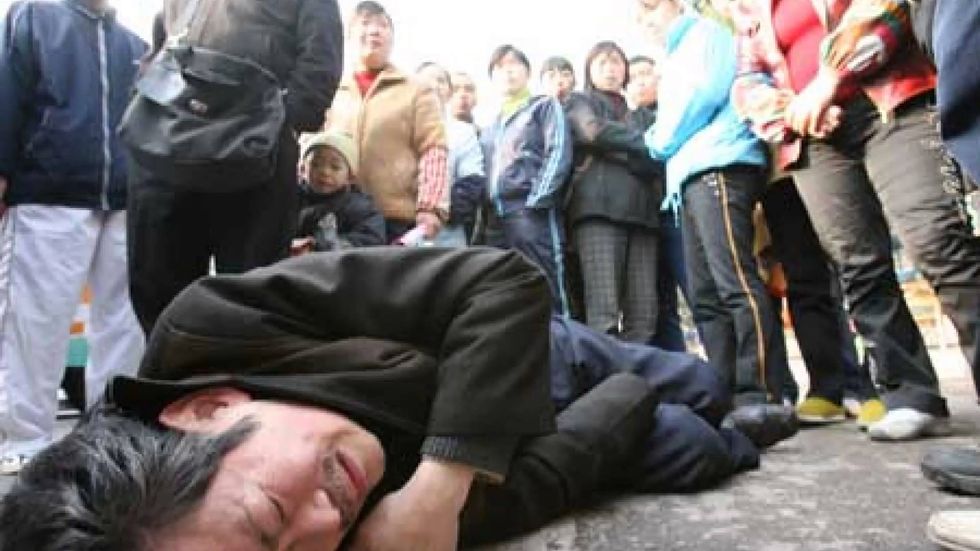
The heated political climate has stirred a myriad of beliefs about how the United States should function. Many of these opinions perpetuate institutional and interpersonal oppressions, leading to marginalization of minority groups and inequality reigning in America. Several people are taking a stand against the injustices minority groups experience on the daily basis. However, many people aren't and are actively choosing not to.
A lot of people choose to be a "bystander"- someone who watches something occur but doesn't try to help de-escalate the situation. Bystanders think they're helping by not actively making the situation worse. However, they still get the privilege of witnessing the event occur and knowing everything that happens. Contrary to popular belief, being a bystander is just as bad as being the oppressor because you're not actively depressing the situation, but rather providing an audience for the oppressor to thrive in. You watch the oppressed be bullied and yet do nothing to help it. Though there are many reasons why bystanders do what they do, I believe there are two common reasons why people sit back and watch.
1. You don't care about the issue at hand.
You remain apathetic because the issue doesn't pertain to you. You don't care about those being oppressed, and you don't care the oppressor is perpetuating violence. As long as nothing is happening to you, you'll stay silent because you simply don't care, and yet still get to watch everything unravel. You get the free show without caring what happens to either party. Your apathy makes you as bad as the oppressor because you don't care about how the injustice affects other people. As long as you're not involved, you don't care. This makes you part of the problem.
2. You're too scared to stand against oppressors.
You don't want to go against the oppressor because you're too scared to face the repercussions. Although you agree with those fighting for what is right, you don't want to do the work they're doing to make your opinion known. You want to live in your comfort, and you don't want that taken away from you. You're not confident in what you believe and are afraid to get scrutinized for it. You think being a bystander is helping because you believe your involvement will make it worse. Though internally you agree with the oppressed, your actions choose the side of the oppressor. If you really want to help, you'll build the courage and stand for what's right.
Being a bystander doesn't help anything. It only allows the bully to continue to undermine and insult others. Choosing silence over justice speaks volume about your character. Think about the impact your silence has the next time you see harassment occur.

















