


Domestic violence in relationships has truly taken center stage in the media in recent months. Just as any social issue does, it blew up on Twitter. The hashtag, #MaybeHeDoesntHitYou, followed by stories and anecdotes from women and men, has truly shed light on the toll that emotional abuse can take on a person. And it shows just how little awareness we have when it comes to what could go on behind closed doors.
The hashtag was started by Zahira Kelly, and since then it has spread all over social media. Users have written about every possible facet of emotional abuse from their significant others, from feeling belittled, living in fear or feeling quite literally trapped in their situation because they can't seek help without the danger of the reaction of their partner or spouse.
The reality that domestic abuse is a leading cause of death in the United States is troubling, but it makes this social media movement even more worrisome. We don't hear about all cases of domestic abuse because they go unreported, etc. So what does that mean for emotional, verbal and non-physical abuse in relationships? We hear about them even less.
The statistics are troubling -- many women and men alike have experienced a toxic relationship. Young people are lucky to be so surrounded by social media as a platform for discussing these issues, and it's time we take the steps to do so.
The men and women tweeting about this issue are in pain and struggling. It isn't okay. In many situations of domestic abuse, the abusive significant other will become an enormous force of control in the life of the victim, they'll use tactics like victim-blaming and will use guilt as a way to keep the situation in their hands. It can become so difficult to get help because the situation can make the victim think it's their fault and that it is normal to feel the way they do, when the truth is that relationships are meant to be the greatest force of harmony and happiness in our lives. Toxicity of this kind is never, ever OK.
Women discuss stories of everything except being hit, but they’re all similar in magnitude: things being thrown at them, their emotions being manipulated, being cut off from friends and family, their lives being under constant control and their insecurities amplified by their abusers. The criticism of the bodies of victims, the invalidation and the way the abuser takes advantage, are things that are highlighted in this vast portrayal of what happens when no one can see what happens in a toxic relationship.
What I hope is that the people tweeting are the ones who have overcome their situation and are ready to bring awareness to such a powerful movement, and yet a devastating reality for many men and women. I know that might not be the case. But if it is, and others on the flip side are afraid to speak out because of where they stand, I hope that a movement such as this one has brought light to the ways you can understand what might be happening to a person you love, and how to be of help if they were in a crisis of domestic turmoil.
Domestic abuse is one of those issues that is silent in nature and takes something like this to spur a movement. I hope that this movement in the media has done just that -- given victims the voice they deserve, helped others to see what they might not have understood previously and build a strong platform that can eliminate dangerously toxic relationships.
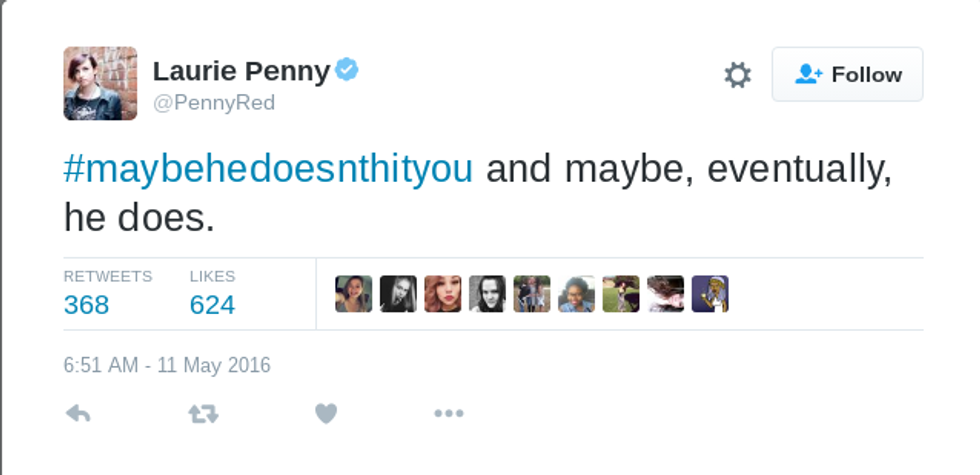
In the end, one response to the hashtag truly caught my eye. It read, “#MaybeHeDoesntHitYou, and maybe, he eventually does.”
It’s so important to open our eyes to what is going on around us. Take a second and put your phone down, look around and be aware of your friends and loved ones. The people that you would never expect to be a victim could be, and it is so crucial to have the tools and the courage to step up for the people around you. You don’t want to find out too late.
Maybe he doesn’t hit you, but maybe he makes you feel like trash. Maybe he has turned your life upside down and your goals are diminished. Maybe you feel inferior to him. Maybe you only stick around because he threatens to hurt himself if you don’t. Maybe you are just waiting for the day that he’ll lash out again. Maybe you wish that you could get some help, or that someone else knew what was going on and could save you.
Be aware and involved to help your loved ones. And if you or someone you know needs it, here’s where to go to know the signs of emotional abuse and what to do to get help:

















