


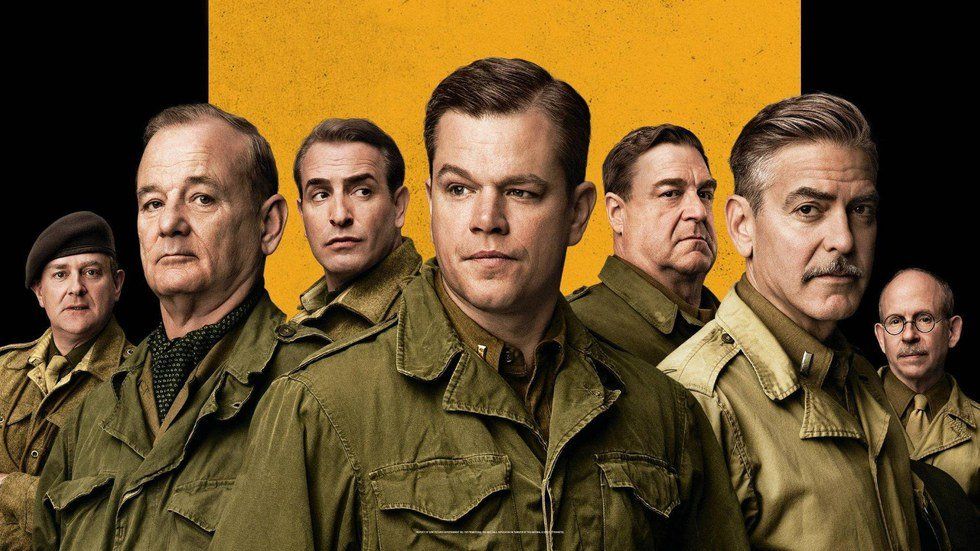
Battle. Soldiers. Bloodshed. Tears.
These are the words that are usually the first things people associate with the word “war.” Most of the time, history tends to focus on the actual battles (the action) of a war or on its economic and political effects on the sides involved.
Paintings. Sculptures. Books. Religious works.
But rarely are these our first concern when we initially think of war, and it’s unfortunate. More likely they would be things that we would look on in retrospect rather than in the moment. It’s highly improbable for today’s people to know the men who worked behind the scenes of World War II as opposed to the battles.
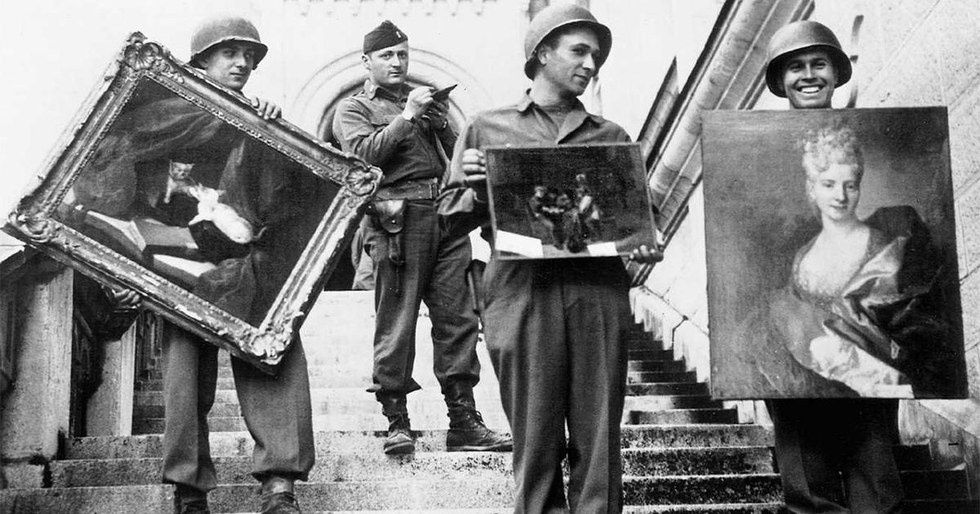
The Monuments Men, more formally known as the MFAA (Monuments, Fine Arts, and Archives program), were a group of people in the Allies formed for the sole purpose of finding and saving (or in some cases, recovering) art pieces, cultural objects, and artifacts during the course of World War II. The group was formed in 1943, four years deep into the war and only two years before it had ended, in order to mitigate the cultural damage of the Nazi Art Plunder. Even six years after the war’s end, they continued to save thousands of art pieces from the plunder, and in the process they lost two men, both of whom were dedicated architects and scholars.
Can you recognize this piece?
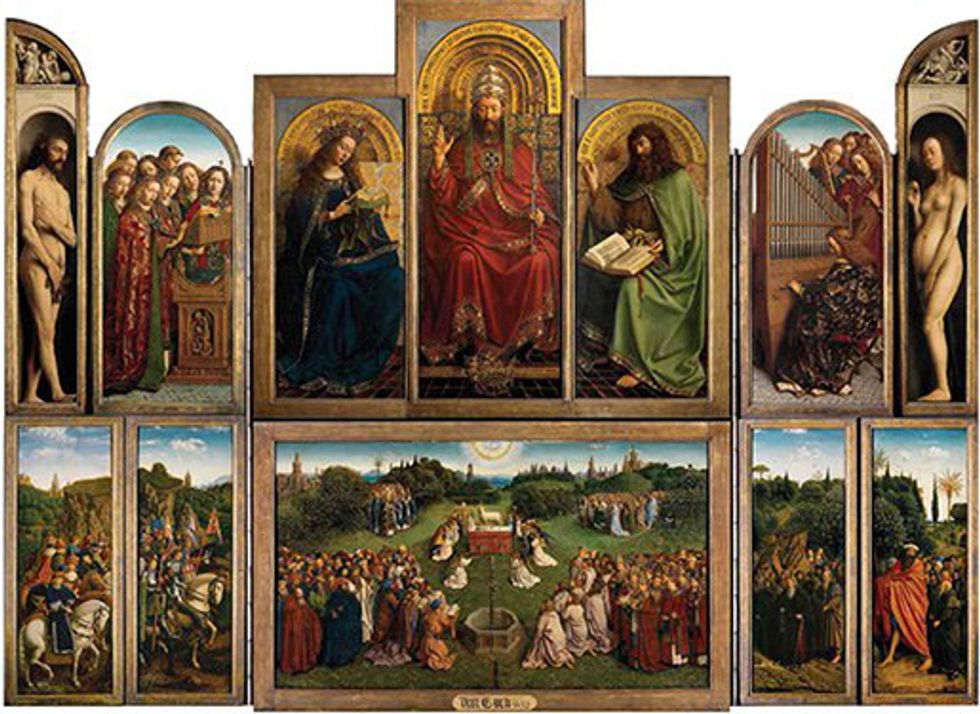
Known as The Adoration of the Lamb, it comes from a larger work entitled the Ghent Altarpiece and it’s considered to be a Northern European masterpiece and the first great painting of the Renaissance. Yet, such an important work came extremely close to being completely damaged after being kept in an ancient salt mine during WWII. It was only thanks to the recovery work of the Monuments Men that we still have the panels of the Ghent today.
Some time a couple of years ago I got to watch The Monuments Men, a 2014 film based on the real events and experiences of the curators, servicemen, and even civilians that made up the MFAA. There was some general humor sprinkled throughout the first half of the movie, but the sadness of the film's theme was explored more as the movie drew towards its end.
Through a final exchange between the main characters, the leader of the Monuments Men is asked, “You were in charge, and this gets to the heart of the matter. You think, 30 years from now, anyone’s gonna remember that these men died…for a piece of art?”
What do the humanities matter in a time of war? What does culture matter? Who cares? And that’s the unfortunate truth: people may remember the grand warriors at the head of battles who died for their country, but far fewer will remember those that die for the sake of protecting human history and culture.

















