

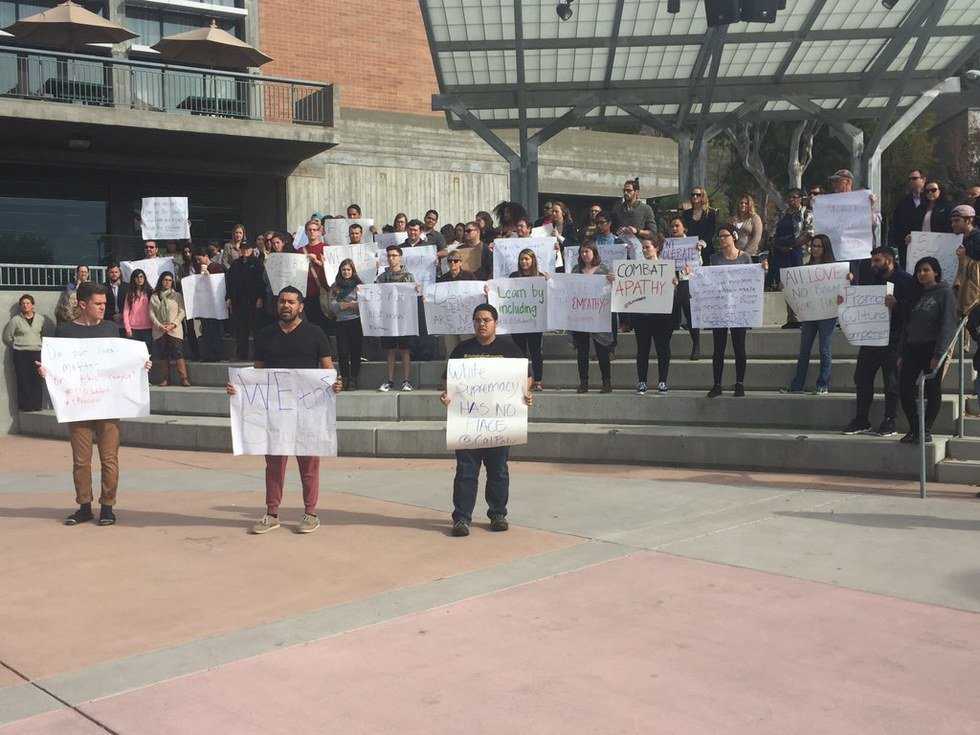
At first, I was very hesitant to write this piece. The SLO Solidarity movement and the immediate response (and backlash) to it has been the single largest topic of debate on campus recently, including discussions on Facebook and other social media. All this coverage is overwhelming, and I am not one to perpetuate controversy or drama.
But, like it or not, this movement will continue to be an ongoing conversation here at Cal Poly. I truly believe that SLO Solidarity’s intentions are good, and I completely support increasing diversity and abolishing discrimination and hate on campus. I think that this is something many of us can agree upon; but the disagreement lies with how we’re going to achieve said diversity and abolish said discrimination and hate. Both sides are right in many ways, and both are wrong in many ways as well. But, somewhere along the way, through all the debate and discussion, we got caught up in the how instead of the why. And while their methods are certainly crucial to this conversation, we mustn’t forget their message.
I am a Caucasian, cisgender, straight female from a middle class family. I attend a university that is overwhelmingly Caucasian. Beyond insults in regards to my being a liberal arts major, I have never experienced discrimination or prejudice toward me in my two-and-a-half years here at Cal Poly. But that doesn’t mean it’s not there. I am not a member of a minority or disadvantaged group, so who am I to say that they are entitled, or spoiled, or overdramatic, for demanding change? I have no idea how it feels to be “the other,” so to speak, in society.
According to a study done by the American Foundation for Suicide Prevention and Williams Institute, 41 percent of those who identified as transgender had attempted suicide at least once; this is in stark contrast to the 4.6 percent of the overall U.S. population that has reported a suicide attempt. It was also estimated that 10-20% of all lesbian, gay and bisexual adults have attempted suicide. The U.S. Department of Health and Human Services reported that African Americans are 20 percent more likely than Caucasians to experience serious psychological distress. A poll conducted by the Pew Research Center found that 64 percent of Hispanic Americans thought that discrimination against their ethnicity was a major problem in schools.
These are alarming statistics, and they point to issues that extend nationwide. And these numbers are exactly why I support SLO Solidarity. I do not agree with every item on their list of demands, but I do think that the movement is innately good. We are all getting caught up in the practical and logistical aspects and, while these are extremely important, they pale in comparison to the general sentiment being expressed.
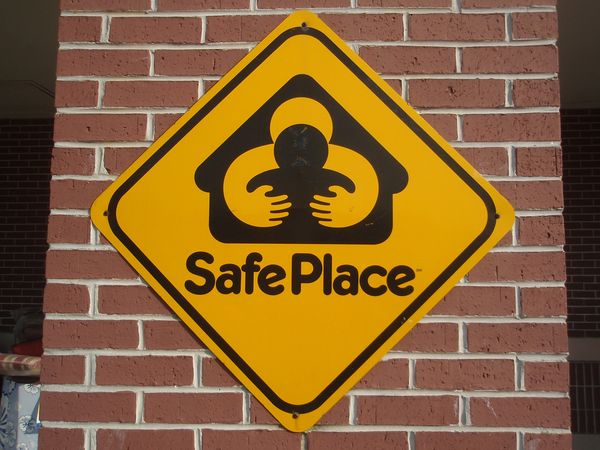
Perhaps the single most oft-voiced complaint I’ve heard in regards to the SLO Solidarity movement is that its supporters are entitled and that are we are not required to babysit them and create a “safe space” for them. I do agree with this to some extent. We attend a public university, and it is important for us to expand our horizons, interact with those who are different from us, and challenge our previous beliefs and values. But our students should not be confronted by death threats. Or a non-inclusive campus climate.
There is a fine line between caring for our students and coddling them – and we are dangerously walking it. The outside, post-graduate world will not be nearly as kind to us, regardless of our ethnicity, sexual orientation, or any other defining characteristic. But in the meantime? We should be able to meet halfway to create a safe enough space on campus that is free from death threats and discrimination – but not free from diversity of opinions and disagreements. The world is not divided between merely good and evil or right and wrong. Neither is this debate. We need to be able to recognize that there are more than two sides to this story and this movement, and only then will we be able to work together to make positive progress.















