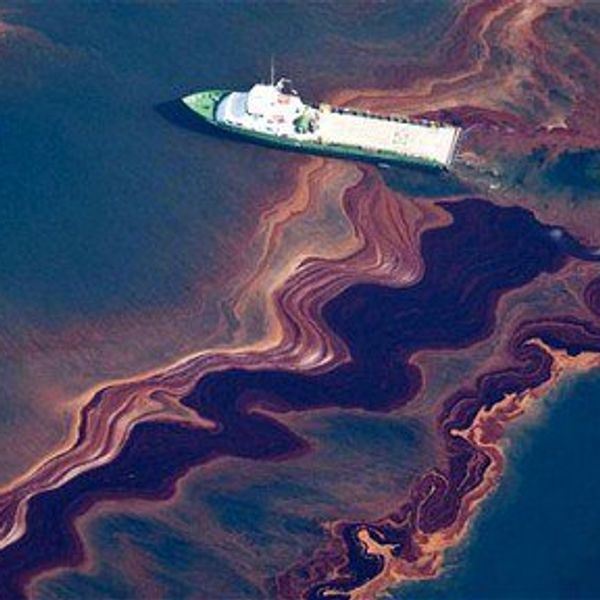
Everyone has heard of fracking: the process of injecting liquid into the ground to get at the oil within. Fracking is incredibly controversial; this process boosts oil production with less CO2 gas emissions, though at high environmental concern. Despite high productivity, fracking can potentially leak carcinogens into the groundwater, causing both health and environmental crises.
Though by far the most known, fracking’s partner is not as well known. Directional drilling is a method that allows drillers to reach otherwise unreachable oil. This technique of drilling requires probes that read the direction of the drill and reports the information back to the operator. A new technique, called the ‘Rotary Steerable’, enables the entire drill string to be rotated for faster and more accurate access.
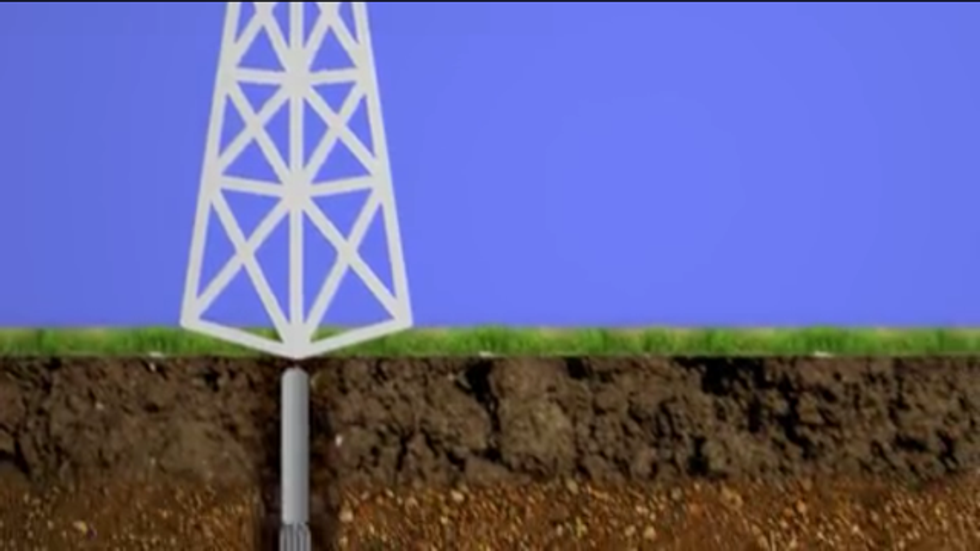
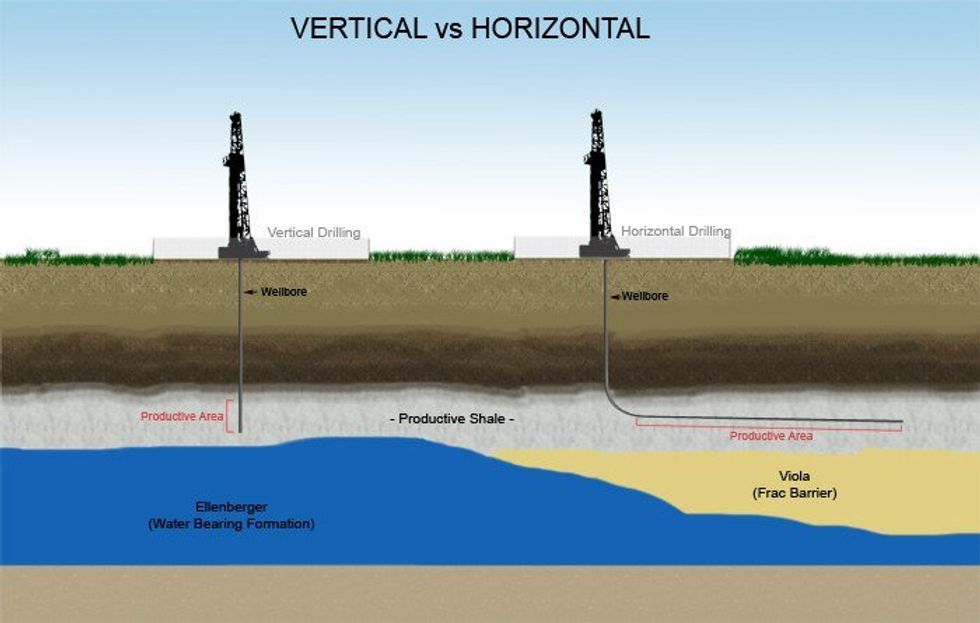
Most wells are drilled vertically, but drilling at an angle gives access to sources that cannot be reached with a vertical approach or when the driller cannot get a permit for that source. Directional drilling allows drillers to drill under parks or other off-limits drilling sites, by manipulating where the drill reaps oil or gas from, in relation to the drill pad. Similarly, directional drilling allows drillers to drill in multiple directions from one drilling pad.Though this is largely considered positive, drilling in multiple directions raises concerns about stealing oil. For example, in 1990, Kuwait was accused of stealing Iraq’s oil, creating an international dispute.
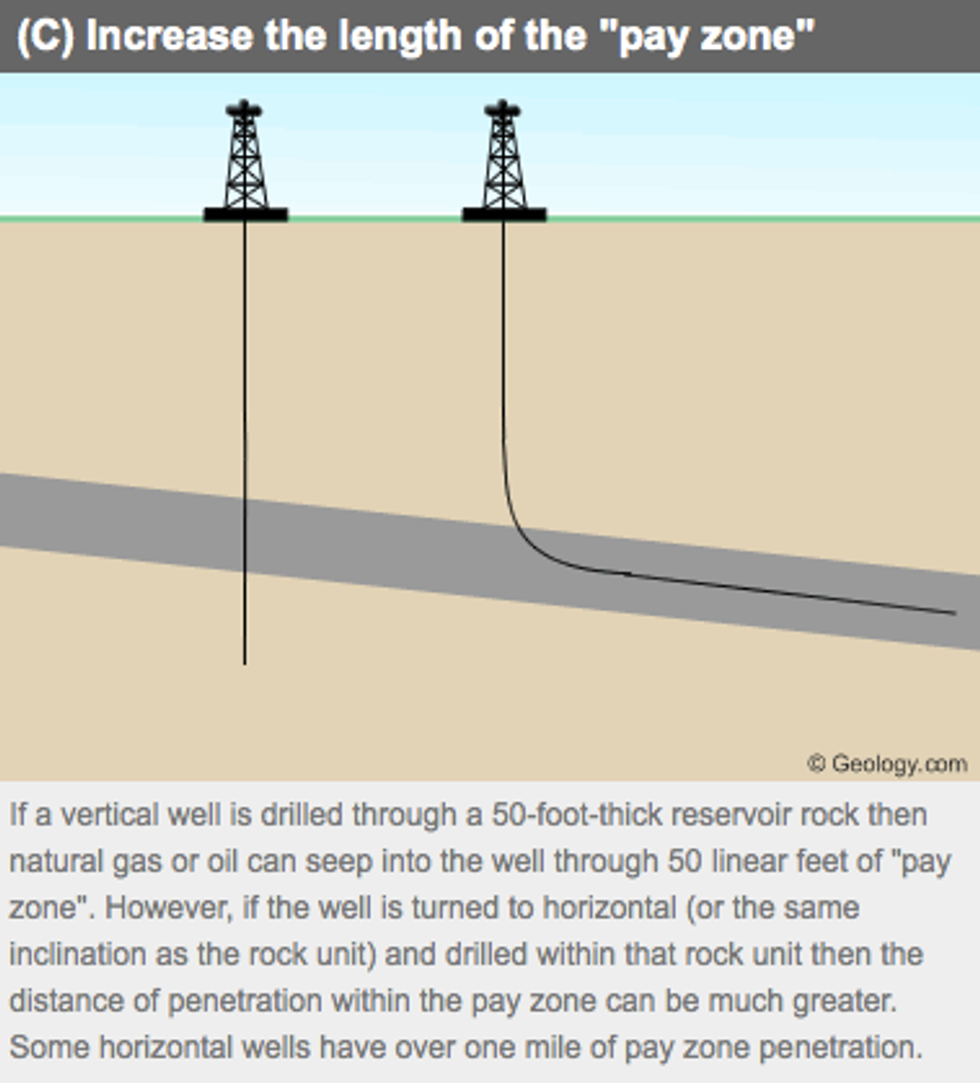
Directional drilling, when combined with hydraulic fracking, can also stimulate the source, potentially reaping more oil and gas from the same source that would not produce as much oil when drilled vertically. This method of drilling can increase productivity in more than one way. For example, reaching a 50 foot deep well vertically means drilling 50 feet deep, whereas drilling this same 50 foot well at an angle increases the ‘pay zone’, or the amount of oil the well can access. Directional drilling also uses the maximum number of fissures, therefore draining more oil or gas. This method does not only increase production, but can reduce emissions by drilling in multiple directions with only the water, energy, and emissions of one drilling site.
Directional drilling can also be used as a safety measure of sorts. When a well gets out of control, or if the pressure is too high, a ‘relief well’ can be drilled at an angle to intersect the original well and relieve some pressure or drain the well to prevent a spill. Alternatively, an out of control well can be sealed using the same approach.
Also, directional drilling allows the installation of underground utilities. Utilities that must cross a town, or even just a road, cannot be implemented above ground without major disruption, directional drilling can be used to implement utilities without major interruption.
Though it can bring many benefits, directional drilling does not get rid of any risks. Water still gets contaminated, and leaks are still risked. Directional drilling can bring a greater gain though the increased production of oil will increase our reliance on oil. The increased oil gain will take the focus off of renewable energy, exactly where we need to develop technology for the future.