
As the world continues to grow, it is only a matter of time before there is not enough space on this planet to adequately sustain human life. As every day passes, we inch closer and closer to running out of room and resources on earth.
Overpopulation has affected many cities around the world and has forced many governments to take action. Take China for example, with their self-imposed birth limitation that was put on couples living in urban areas some 20 years ago which only allowed them to have one child, is still in use today.

As a result of this law, forced abortions and sterilizations are somewhat common in these areas, all in efforts to reduce population size. While this law seems to be highly uncommon in the world, one must ask if all countries face the same fate in the future as the world's population continues to grow and expand. The issue of overpopulation and the inability for Earth to sustain humans current way of life has led scientists to venture off of the earth in search of answers, on planets such as Mars, with hopes that human life on other planets will be possible.
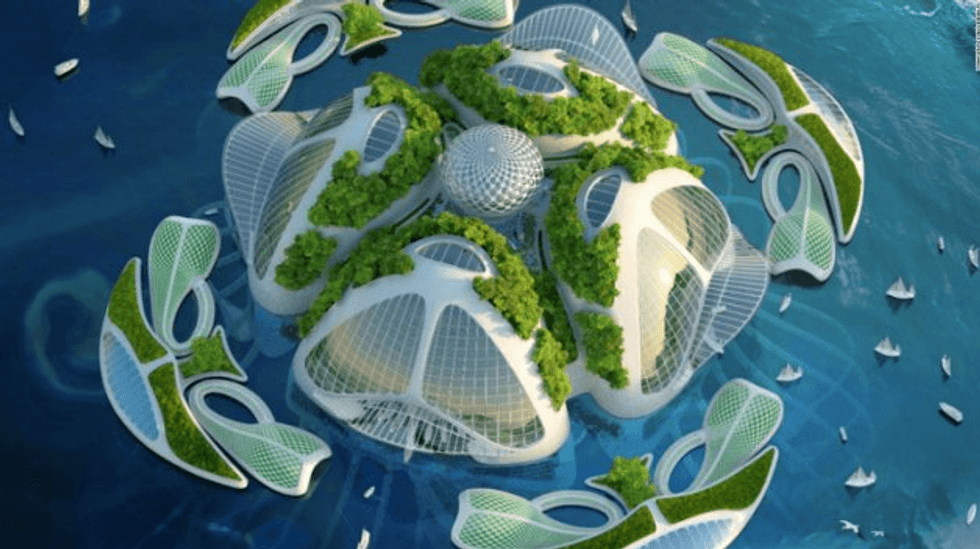
However, a Belgian architect named Vincent Callebaut has come up with a very different and creative solution to the world's problem with overpopulation, and it does not require humans to travel millions of miles away from planet earth. In fact, Callebaut has designed a concept for an underwater world made up of skyscrapers with the ability to house up to 20,000 people per building, and they can be built right here in our planet's oceans.
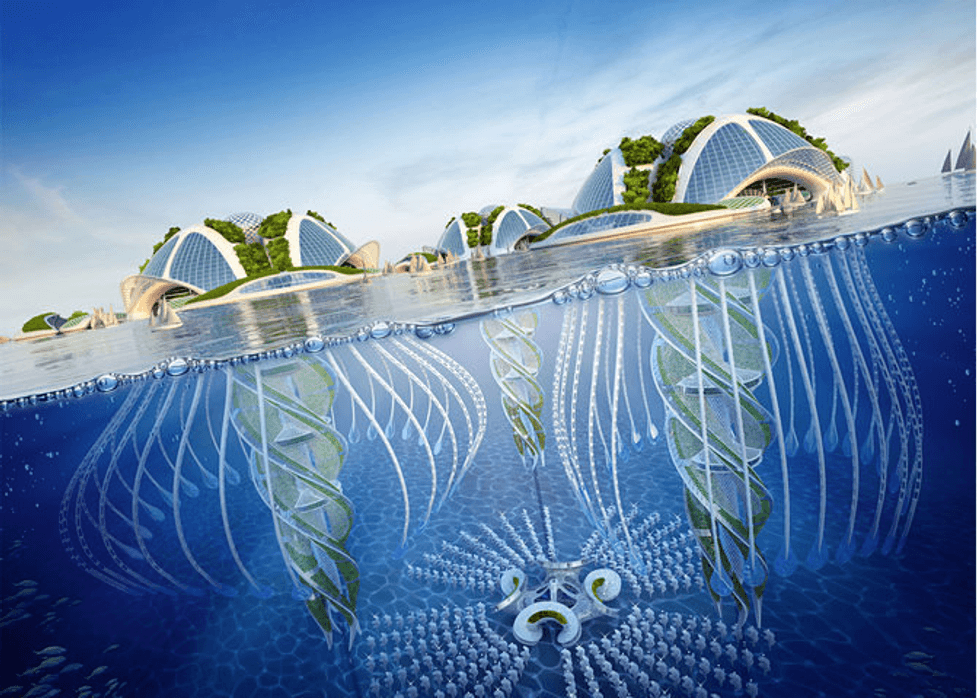
These skyscrapers will start on the surface of the water and reach as far as 1,000 meters underwater, much like a glacier. Not only will this reduce the overcrowding of cities, but it will also help reduce our carbon footprint as humans, as the architect has said that each building will be created entirely from recycled material collected from the Great Pacific Ocean Garbage Patch (for those who do not know, this is a giant body of floating human waste that gathers in our oceans due to current patterns).
Each building would be comprised of 250 levels, each floor serving a different purpose such as apartments for people to live, labs to conduct scientific experiments, office spaces for jobs and businesses, hotel rooms for visitors, sports fields for entertainment and farms for production of food. What is even better is that each building will be entirely self-sufficient. These structures will get their own food from their farms and through fishing the ocean, will recycle their organic waste through the use of algae, and utilize bioluminescence to produce light and heat.
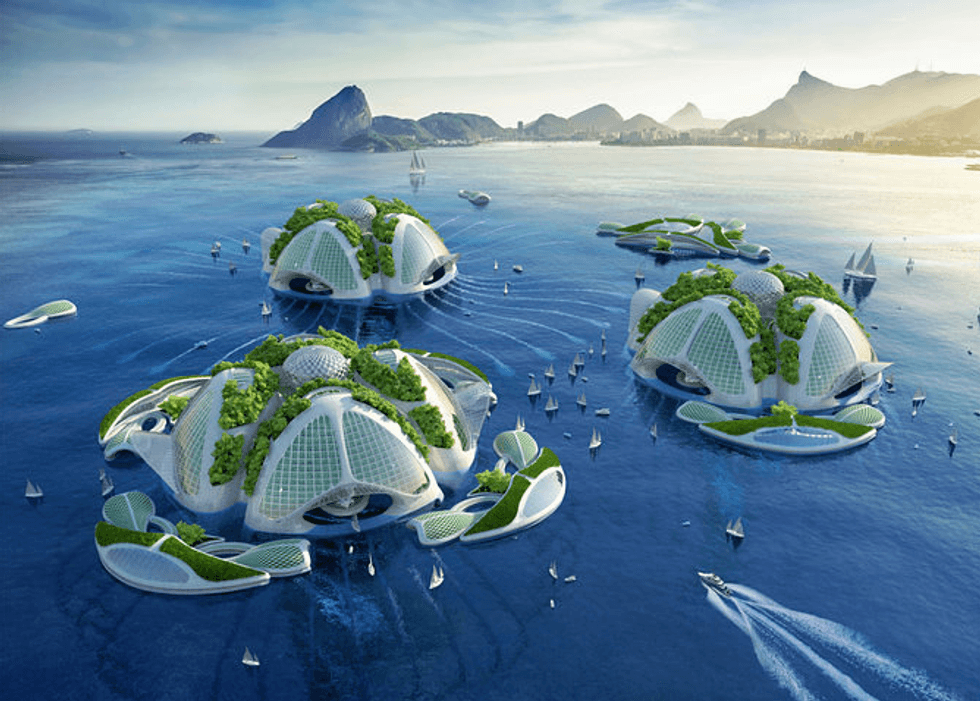
Since the technology needed in order to build such buildings is still being created, it may be some time before his design is ever actually utilized. However, one has to admit that his idea does have the ability to tackle both the rising concern of overpopulation, as well as pollution in a very modern and stylish fashion in the future.