If I were to ask you which African country has the largest economy, which one would come to mind? Maybe South Africa? Sure, South Africa is a fairly developed country and has a lot in common with other Western nations, so it makes sense to think of it, but the Federal Republic of Nigeria has emerged as the continent’s largest economic power. Oil is the main driver behind Nigeria’s prosperity, but only recently has the country been able to expand its economic success into the political realm. Since gaining independence from the United Kingdom in 1960, Nigeria has been plagued with the military coup d’états and counter-coups that toppled regimes, leaving the entire system incredibly unstable. Exacerbating the political instability, coinciding geographic, ethnic, and religious differences have come to define political alliances and leanings, putting Nigeria’s future as a unified country into doubt
The Federal Republic of Nigeria is the third country in the Democracy Around the World series, following the Russian Federation and the Islamic Republic of Iran (Part One and Part Two). Unlike Iran or Russia, Nigeria’s experience with democracy was crippled for decades because of imposed British colonial rule, making the country ill-prepared to launch into a democratic government in 1960 and providing the perfect soil for ambitious generals in the military to assert themselves as rulers throughout the 20 th century. Nigeria is currently experiencing the longest period of democratic civilian rule in its history, starting in 1999 when General Abdulsalami Abubakar succeeds General Sani Abacha as head of state and quickly announced the transition back to civilian rule. Whether or not the country is able to overcome its historic tend toward authoritarianism and survive as a unified state is a question that can only be answered with time.
Nigeria’s history can be divided into three distinct time periods: the pre-colonial era, the colonial era, and modern Nigeria. Before British rule beginning in 1860, Nigeria was exposed to Islam through trade routes through the Sahara Desert. The religion had migrated from its birthplace in the Arab world to North Africa, Persia, and Southeast Asia as Muslim traders brought goods along land and sea trade routes. Within a short amount of time, Islam had come to supplant local belief systems as the dominant religion in the region that would become northern Nigeria. Islam’s prominence in the north of the country has developed to the point of creating a cleavage or divide in modern Nigerian society. Christian missionaries from Europe landed on the coasts of southern Nigeria, where the people lived in more forested areas than in the north. The division between Islam and Christianity in modern Nigeria are traced back to the pre-colonial era and has persisted to this day, sometimes presenting issues for the federal government, especially in the judicial system.
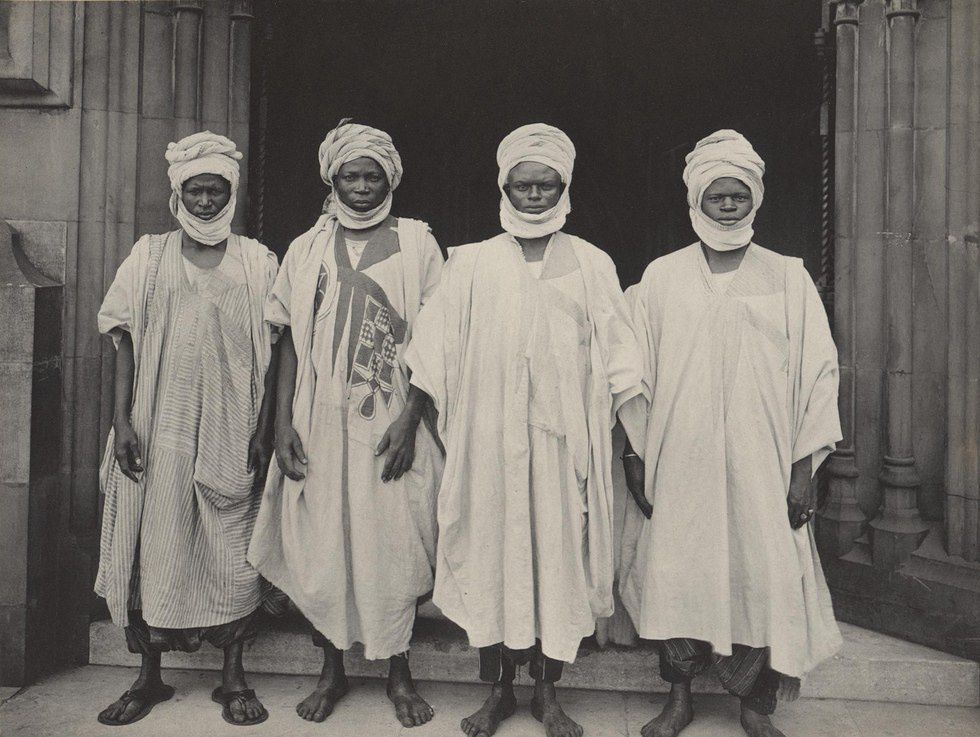
Members of the Hausa ethnic group in northern Nigeria in 1902
Portuguese sailors were the first Europeans to make contact with the southern Nigerians, but soon Spanish, Dutch, French, and British traders landed on the coast. Starting around the 16 th century, local Nigerians were exploited for slave labor, with the Atlantic Slave Trade entering full swing in the 17 th century. Nigerians were taken from their homes and families and packed into the hulls of massive slave ships, transported under inhumane conditions for weeks to mainly South America, the Caribbean, Europe, and the British colonies in North America. These transplanted Nigerians, along with the people of other African nations, eventually fused their traditional culture with the new local cultures and traditions, forming distinct cultural and social identities in their new homes.
In the early 1800s, the Fulani ethnic group began to wage war in the north against the Hausa people. King Yunfa of the Hausa city-state Gobir had banished Usman dan Fodio, an Islamic scholar and reformer from the Fulani people, sparking the conflict. Both the Fulani and Hausa are predominately Muslim and dan Fodio’s forces were able to overrun several Hausa states in Nigeria, forming the Sokoto Caliphate. The caliphate ruled much of northern Nigeria from 1804 to 1903, when British colonial troops finally put an end to a decades-long conflict between the two groups. Although British General Frederick Lugard officially abolished the caliphate after a clear military victory, colonial authorities named a new caliph, continuing the role of sultan in their newly-established Northern Nigerian Protectorate.
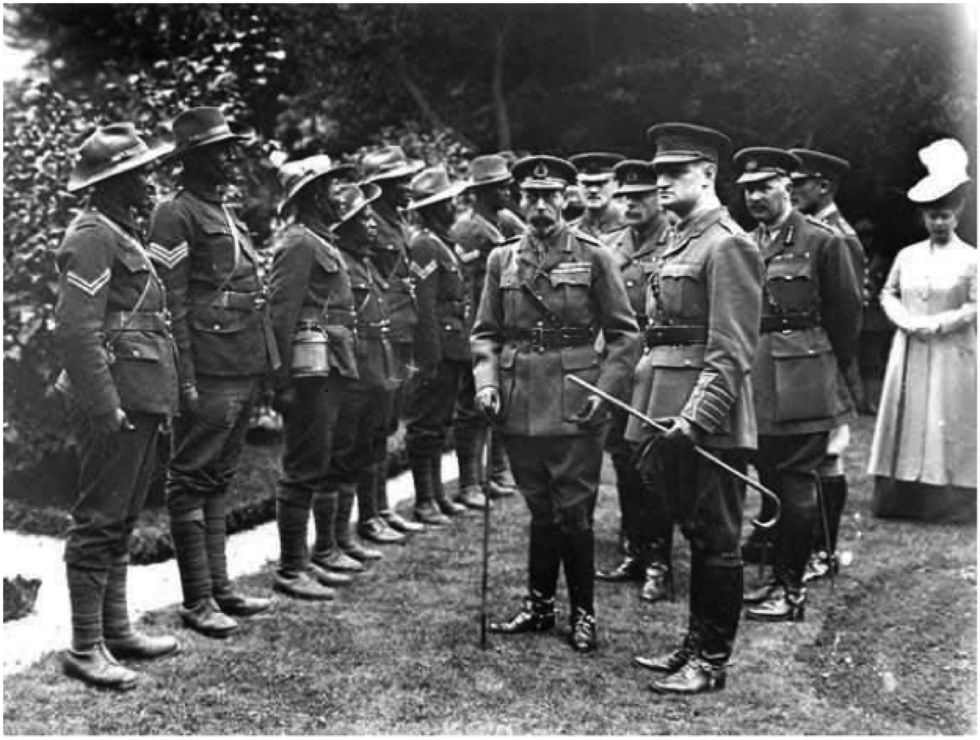
King George V inspects Nigerian troops in the British colony
By 1860, Nigeria had become a well-established trading outpost and an invaluable station for the European empires. In that year, the British imposed indirect rule over the entire country by training Nigerians to fill positions in a traditional European-style bureaucracy. The southern regions of Nigeria attracted the British because of timber, oil, and other natural resources, encouraging them to enforce greater control over the political affairs of the south. Colonial authorities wanted to exploit Nigeria’s natural resources and labor as much as possible and the south proved to be a more desirable target for control. Because of this, the British left the Islamic political structures in the north of the county largely intact. This move put the two different regions at political odds, with the north being based around religion and emphasizing sharia (Islamic law), while the south was featured a secularized government. Even after British rule ended, these differences are still well pronounced in Nigeria.
British efforts in the country led to the introduction of even more power to the Nigerian elites, encouraging the practice of seeking personal benefits from government service, a tendency that has endured to modern day. Christian missionaries were allowed to establish schools based on the Western style of teaching. For the most part, these schools focused on primary education, but in 1934, the first higher education institution was established in the country and Nigeria got its first university system in 1948. While the education increased the literate population, but reinforced the already present cleavages. The British schools were concentrated mainly in the south, preventing much of the northern Muslim population from receiving a Western education, and the elites tended to be the only ones who had enough money to get the most out of the available education, further separating the class from everyday Nigerians. Because more southerners were education along Western lines, many began to stereotype the northerners as backward, causing discontent between the two groups.
Before 1960, the British had been preparing for the eventual release of its colonies, as many European imperial powers were letting go of their colonies after the Allied victory in World War II and the establishment of the United Nations in 1945. Nigerians were trained to take over the positions of the colonial authorities and educated on Western political values, like freedom, justice, and equality of opportunity. Again, the majority of those Nigerians prepped for post-colonial governance were from the south, further cementing political differences between north and south. By the time the British granted Nigeria independence, the north was still based around traditional political structures and Islamic judicial systems, solidifying another clear difference between the south and north. Coming into the modern era in 1960, Nigeria was divided along geographic (north and south), ethnic (Fulani and Hausa in the north, Igbo and Yoruba in the south), educational (Western-educated southerners), and religious (Fulani and Hausa being predominately Muslim, Igbo being largely Roman Catholic, and the Yoruba being split between Christianity and Islam).
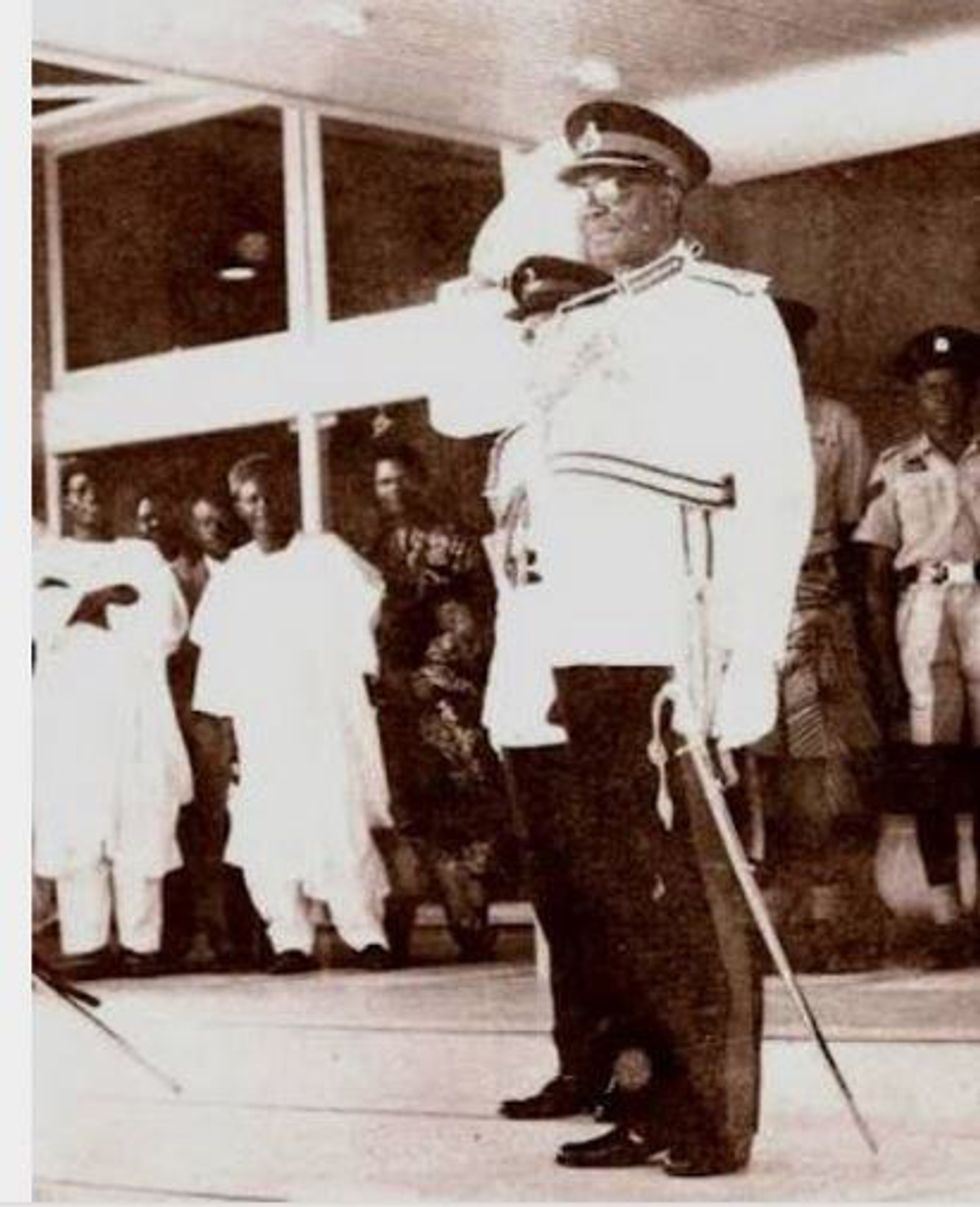
President Nnamdi Azikiwe leads celebrations on the anniversary of Nigerian independence
In 1963, the independent government formed Nigeria into a federal republic, with Nnamdi Azikiwe as its first president. Politics was pitted between the northern-dominated National People’s Congress, consisting of mainly Islamic conservatives, and the southern-dominated National Council of Nigeria and the Cameroons. Northern Cameroons had decided in 1961 to join Nigeria instead of the new country of Cameroons, while Southern Cameroons had not, making the north of Nigeria much larger than the south. Regional differences between southerners had now been well pronounced, with the Igbo representing eastern issues and the Yoruba advocating for western interests. This period of time proved to be chaotic and arduous, ultimately resulting in the first military coup in 1966. Majors Emmanuel Ifeajuna and Chukwuma Kaduna Nzeogwu successfully toppled the parliamentary government and assassinated the prime minister and the premiers of the Northern and Western Regions. A group of mainly Northern officers launched a counter-coup in the same year after Ifeajuna and Nzeogwu were unable to establish an effective central government. Lt. Colonel Yakubu Gowon was installed as the new head of the ruling Supreme Military Council of Nigeria as a result of the counter-coup and tensions rose sharply between the North and South, with Igbo in northern cities fleeing to the Eastern Region after intense persecution.
To make matters worse for the struggling republic, the Igbo-dominated Eastern Region succeeded from Nigeria on July 6, 1967, after declaring the economic, religious, ethnic, and cultural tensions between the East and the rest of the country were too much to continue. More than 30,000 Igbo people had been killed in the North following the 1966 coups, which were seen as an Igbo plot. The self-declared Republic of Biafra pulled away from Nigeria, led by a former Nigerian lieutenant colonel, C. Odumegwu Ojukwu, the military governor of the Eastern Region since 1966. Biafra took the Niger River Delta with it, along with the foreign oil refineries in the region. A civil war ensued and control over the Delta became the paramount military objective, with fighting waging until January 15, 1970. France backed the Republic of Biafra while Britain and the Soviet Union gave support to the Nigerian government. Egyptian pilots became the aces of the Nigeria Air Force during the conflict. Colonel Olusegun Obasanjo led the final, crippling Nigerian offensive against the Biafran forces in December 1969, and Ojukwu’s vice-president, Philip Effiong, officially surrendered to General Gowon on January 13, 1970.
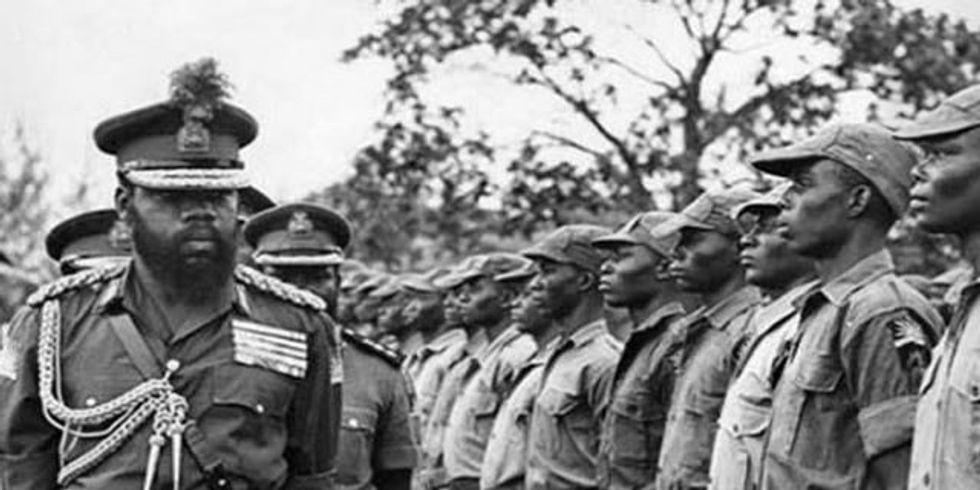
Biafran military officials survey rebel troops during the 1967-1970 civil war
Although the Biafran Civil War was over and stability was to return to Nigeria, stormy times were on the horizon, posing a significant challenge to democracy in the country. Rouge military officers took it upon themselves to launch more coups and install themselves as the new legitimate ruler of the country. Each military leader made promises to return the government back to democratic civilian rule, and aside from one general, all went back on that promise, reverting to authoritarianism until 1999, when democratic elections prevailed.
Next week’s article will discuss the string of military coups that usurped power from other generals and the short-lived administration of a democratically-elected president. The most recent Nigerian history will be analyzed and conclusions will be drawn on the current state of democracy in the most populous country on the African continent. What is the future of democracy in Nigeria?