
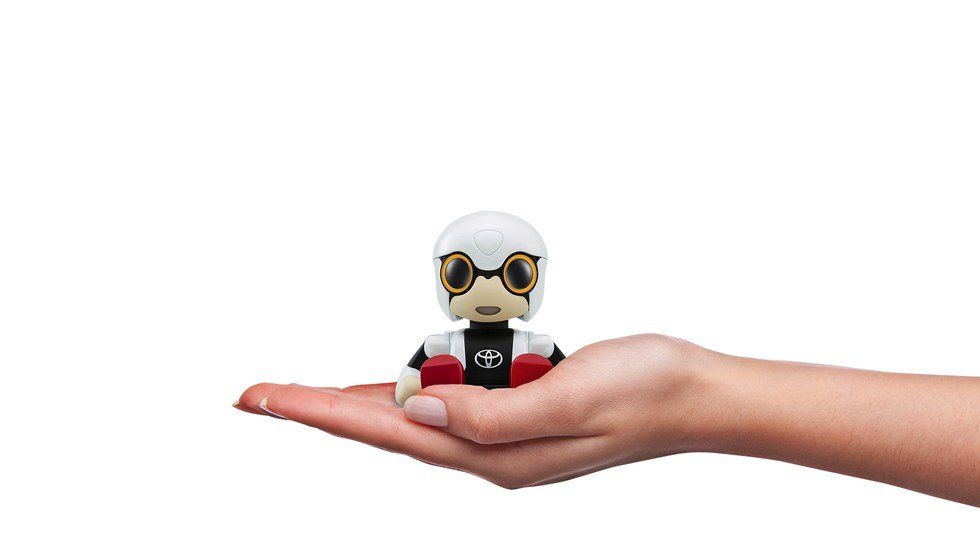
In a world where people turn to technology in order to have a decent conversation these days, it is not very surprising that certain companies are beginning to try and capitalize on that artificial aspect of human nature. Enter in Toyotas newest technological marvel, Kirobo Mini. The small robot is defined by Toyota as being a conversation companion, and due to its limited abilities in regards to facial recognition software, ability to only speak in preselected responses, and an AI intelligence that Toyota itself has said does not necessarily count as ‘real’ Artificial Intelligence, it is assumed to only do the bare minimum for conversations sake.
However, Toyota believes that the small humanoid is more of a stepping stone into the future of robotics than it is a revolutionary advancement in the world of technology and integrated AI systems. With the companies pushing drive towards robotics as a commonplace aspect of our expanding and expounding culture, it is no doubt that mechanical humanoid-like machines will be probably walking among us at one point in our near, our distant, future.
This simple fact brings up the question of mortality and how it relates to defining humanity. As we slowly stumble closer and closer to a world where computerized machines will possibly be making decisions for us and themselves, how to we accurately define what makes someone an individual. Is it in their ability to coherently create original ideas, concepts, and responses to specific stimuli? If so, then ‘robots’ could very easily be defined as a sub-species of artificial humanity at one point. Given the reality of that ideology, how far must we stray from the creationists concept of humanity before we ‘cease’ to be defined as such?
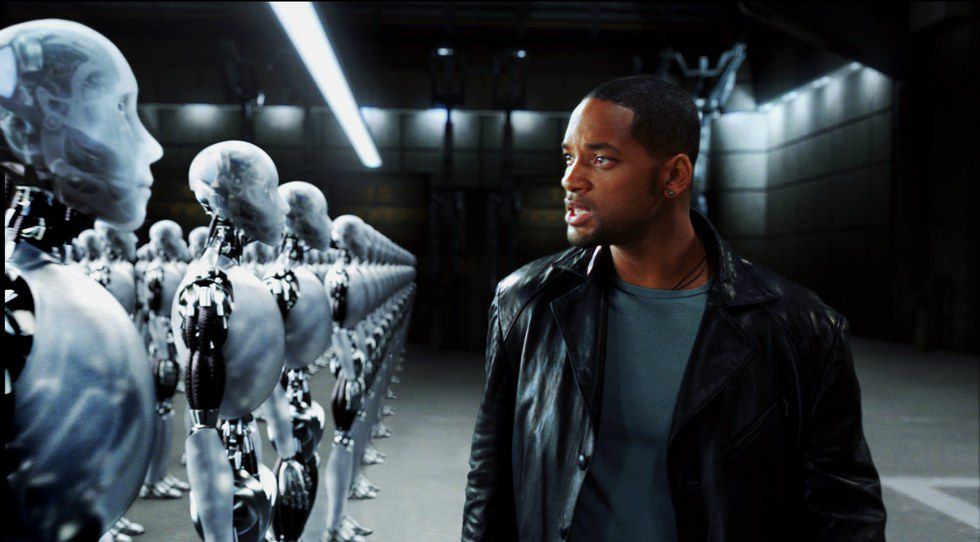
As depicted in the movie IRobot, which features actor Will Smith living in a world where Artificially -Intelligent robotic creatures are beginning to break from their original programming, they have begun to start thinking for themselves, both creatively and independently of any human interaction and involvement, and have become a violent cause against humanity. This is a possibly outcome to consider given the number of technological setbacks with each and every ‘new’ piece of machinery that rolls off of the assembly line. How much faith can humanity honestly put in itself and its ability to ‘not’ make human errors during the manufacturing process before we understand that making mistakes in a system that could one day kill us all is more of a probability than it is a possibility?
However, I am not suggesting that the future of robotics will have us all dying at the hands of ‘Sunny’, but the reality is that humanity is a plight upon its very own existence.
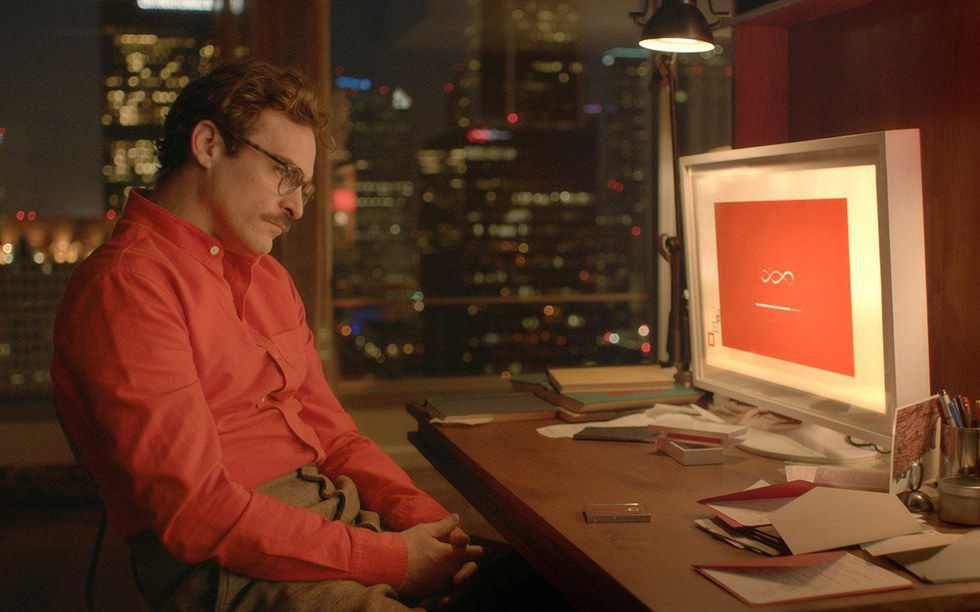
Even emotionally, we can very easily be blinded by things that appear to be human, regardless of their actual, physical embodiments. The movie Her, featuring Juaquin Phoenix, showcases this confusion between the idea of humanity and the imaginative relationship one can imprint upon given the right initiative and cognitive creativeness. The main character ends up purchasing a ‘quote-unquote, conversation companion’ to whom he can talk to, confess all of his problems to, use as a secretary to help him do his job and keep his life in an organized fashion, and enjoy a deep, emotional connection with. He eventually falls in love with this artificial creature and loses any and all basis of his own humanity and mortality.
The object of this idea that artificial intelligence is a way to make all of humanity's lives easier is probably a true and justified reason to create it. However, nuclear warfare came as a byproduct of creating weapons which had the very same aim. The true reality about humanity, whether the general public wishes to believe it or not, is that we destroy the very things that we’ve created and marvel at. History proves this time and time again. Robotics may be leading us to the future of many things; it may be leading us in-depth space exploration, terraforming and reconditioning planets so that we can colonize them and expand our race upon the universe, and becoming the type of species that invents and creates things that the best science fiction writers could never even begin to conceive, but it is also leading us towards death and an eventual unrecognizable type of humanity.
Albert Einstein once said that he did not know with what weapons World War 3 would be fought with, but that World War 4 would be fought with sticks and stones. If this is not a premonition of the destruction that humanity is capable of, then I do not know what is.






 man running in forestPhoto by