
A few days ago I got into an argument with a 20-year-old male, and in our last message to one another he sent the following:
- “Do you ever have a girlfriend? I doubt.”
- “...I felt bad for you dickless waiting around my neighborhood.”
- “Inconsiderable bitches.”
Now besides the obvious grammatical errors, there is a bigger issue at play here. When I first received this message I couldn’t believe how many times in a single paragraph he tried to demasculinize me.
Lucky for me, I am very much content with my gender expression and identity. However, I couldn’t shake the feeling that some people are not, and that men use this kind of language on a daily basis in order to tear each other down. He felt that because we were two men who were arguing, the best way to get under my skin was to attack my manhood. And why wouldn’t he think that since American culture puts so much value on it?
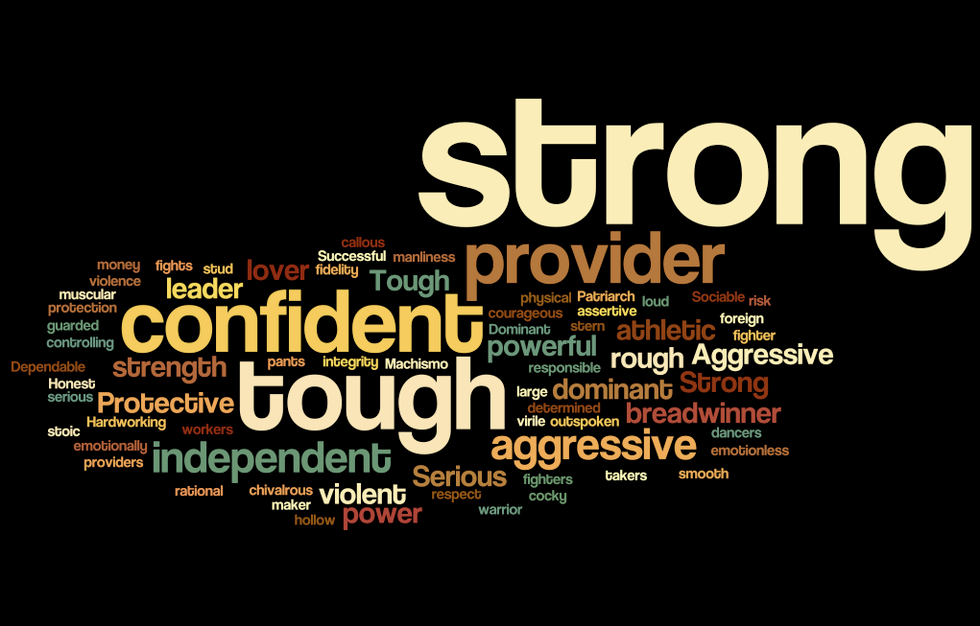
Masculinity is a social construction rooted in expectations of how men should behave, how they should speak, and even what they should look like. To be truly masculine in American society means to have power, to be wealthy and to have a lot of sex with a lot of women. We can talk about how these ideas came to be and how as young boys were fed lines like "man up" and "boys don’t cry" to ingrain in us this idea of what it means to be a man. However, what I want to address is not necessarily how these ideas of masculinity came to exist but how we reinforce them every day by constantly policing one another.
When men interact with each other, they often use language to demean the experiences of those who are too feminine or not masculine enough. Words like “bitch” and “pussy” are used in order to make other men feel less because they are words that are typically associated with women. Being a male in our society means getting laughed at for liking certain songs or movies, getting mocked for not being tall and in shape or daring to do anything else that bends the rules of gender we’ve been taught to live by. Men shame other men for not sleeping with enough women and at the same time associate the very same characteristic with being gay. The effects of such rhetoric are extremely harmful and can lead to dangerous acts of violence against women and hate crimes against gay men or men perceived to be gay.
I finally understand what they mean when they say that masculinity is so fragile. What they mean is that at any given time we can be stripped of our masculinity simply because our actions, our choices and our decisions to live our best lives fail to fit the mold. We create words like bromance so that we can have meaningful relationships with other men and not be thought of as gay or feminine; we are afraid to share our feelings because self-disclosure is not a trait typical of men; we even gender healthcare and beauty products so that we can feel more comfortable about taking care of and feeling good about ourselves.
In order for us to stop this from continuing, two things must happen. First, we have to start becoming more comfortable with defying gender norms. We as men need to be okay with not being the most “masculine” and not be ashamed when we are made to feel feminine. To be feminine does not mean to be weak. In fact, in today’s society, to be a man with stereotypical feminine qualities is to be brave. Second, we have to stop attacking each other's masculinity. No more shaming each other based on expectations of masculinity unreachable to most. We as a society need to do better. We as people need to do better. We as men need to do better.
When I first received the message above, I was livid. I couldn’t explain why it bothered me so much, all I knew was that it did. But through writing this article I discovered that the reason it bothered me so much was because it was supposed to. I was meant to be upset at his comments, and I was meant to feel weak; society was telling me that I should not be okay with feeling demasculinized. However, once I realized that I wasn’t angry at the specific comments towards me, but at the fact that this kind of language still persists among educated college students, I knew that a reply to him wasn’t worth my effort. Instead, I wanted to use it as a chance to fuel my fire and educate those who need it most. So if you are reading this right now, I hope that you learned something, and I hope that we as men can change our ways before it’s too late.