I remember the day the carpetbaggers came to my home. As defined by "The History Channel," "the term 'carpetbagger' refers to a traveler who arrives in a new region with only a satchel (or carpetbag) of possessions, and who attempts to profit from or gain control over his new surroundings, often against the will or consent of the original inhabitant", as was the case in the South after the Civil War. They arrived on bicycles wearing Ray Bans, androgynous clothing, and schemes in their pockets. No one thought much of it, at first, that is until they brought their tech companies (Google, Twitter, Weebly, etc.) with them. That was when we all knew our time was limited.
I am a fourth generation San Franciscan, which today is something to be especially proud of since it has become an increasingly rare statement in these parts. San Francisco, despite being the 13th largest city in the United States, is only 47 square miles and creates a limited amount of available housing. San Francisco, similar to other port towns, was once a beacon to people from all over the world, as a place of promise to immigrate to and add to the cultural mixing pot of the city. The San Francisco Bay's strategic location encouraged the growth of naval shipyards during World War II, bringing in working class families from all over the country still reeling from the effects of the Great Depression. San Francisco, once again, was in the spotlight as a central location during the hippie/counter-culture movement. San Francisco was a place where anyone of any socioeconomic background could come to live and have their differences celebrated.
I speak of my city in the past tense because this was all true until 2008. For those of you that may recall, 2008 brought about one of the largest economic recessions in recent history. This economic downturn meant that, like other parts of the country, many residents had been put out of work, creating an overall dangerous environment. It created a real estate market ready to be taken advantage of by the blossoming tech companies in Silicon valley. Low housing costs meant that anyone, particularly those under 30, now had the ability to jump on board to the tech work being done by companies such as Google or Apple with the added bonus of living in a hip city, because those companies were willing to bus their workers to and from work every day.
By 2011, we saw the election of a mayor (an outsider) working to push long-time residents out of their homes in exchange for the money that would be brought in by tech companies. This same mayor began to capitalize off the low economic state residents at the time felt as they recovered from the recession, and instead of helping his citizens struggling with their rent, began to give those tech companies tax breaks. These tax breaks brought in more techies, causing local landlords to respond by raising rents and enacting the Ellis Act in order to push out long time residents and bring in the higher paying techies that were now arriving in droves.
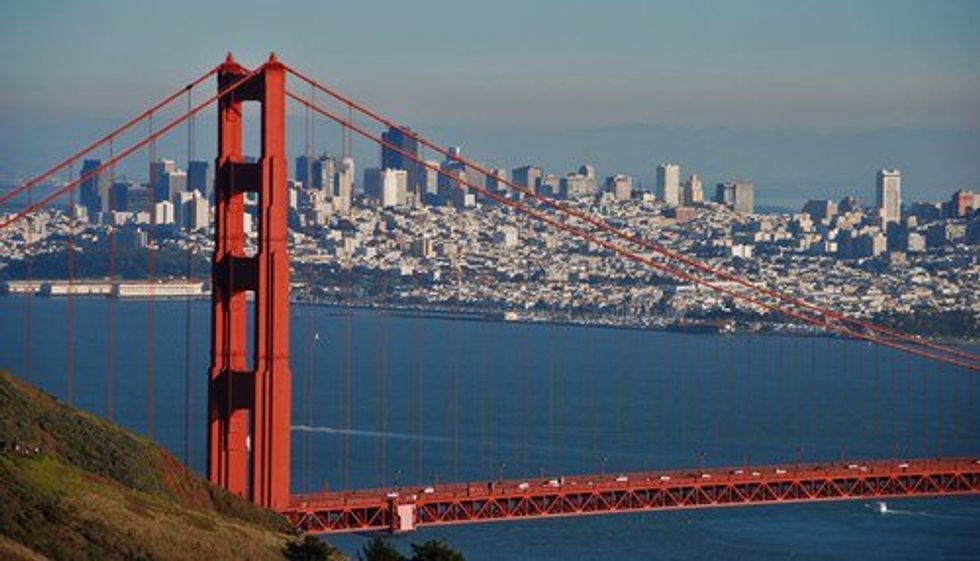
As we began to be pushed out of our homes by our landlords, we watched the neighborhoods, once filled with the vibrant culture created by our unique mixing pot of residents, fade away. As housing prices skyrocketed, the working class families that once inhabited the city, some for generations, were forced out to the outskirts of the Bay Area or even further. Our once diverse city, complete with a skyline admired around the world, has now been replaced by overpriced, sky-high condominiums shaped like lighters, and soulless residents making millions from the recent tech boom. We are now left with only the memory of what pre-tech boom San Francisco was, and the dream that we can one day return to our city by the bay.
"They destroyed our families, factories
And they took our homes
They left our bodies on the plains…
They brought death to my hometown”
-Bruce Springsteen