

Trigger warning: Explicit language, rape culture/references, violent slurs, cringe-inducing selfies.
If you are even slightly familiar with the internet, you know this: there are quite a few people who post images of themselves. As social media apps such as Twitter, Instagram and Facebook continue to rise in popularity, so do the amount of “selfies”, some of which include the entire body. Abdominal muscles, cleavage, legs, chest, derrière . . . we’ve seen it all. There is nothing inherently wrong with taking a photo, nor is there anything wrong with a lack or excess of clothing. The issue is how much of a bearing this practice has on our society and the ways that misogynistic critiques permeate into online culture, confirming harmful ideologies in plain sight.
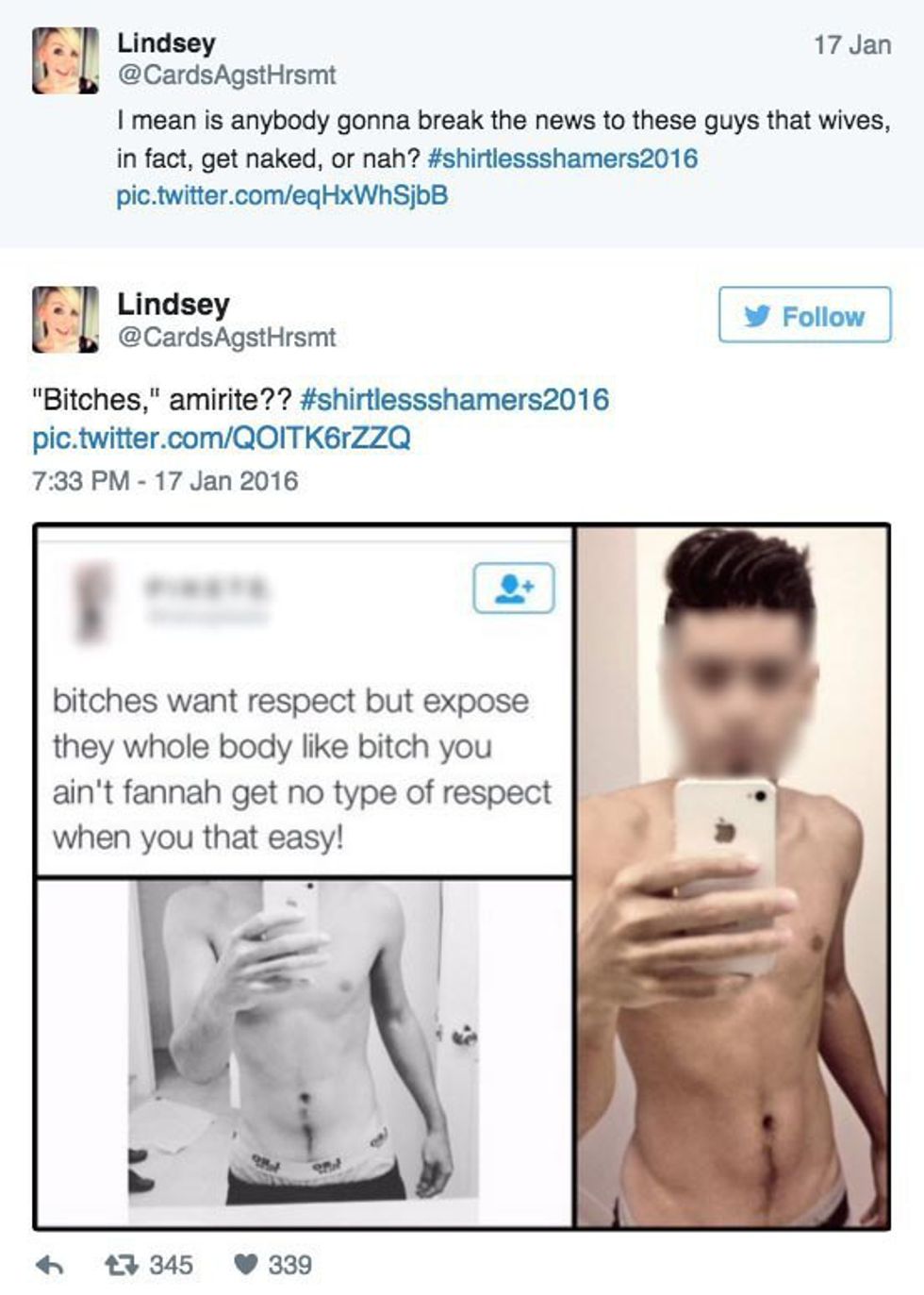
Lindsey, a 29-year old woman from Minneapolis, took to her Twitter earlier this year to address the hypocrisy surrounding the topic of "half-naked" online photos with the hashtag #shirtlessshamers2016. She discovered there was (not surprisingly) a discrepancy in the way women and men were treated, with many women being harshly criticized for their lack of self-respect due to limited clothing. By definition, self-respect refers to "a proper respect for oneself as a human being", meaning that only the individual is qualified to make that assessment. When a person analyzes a woman's worth, intelligence, and value based on arbitrary and physical observations, they are revealing a bias that is rooted deep in our culture, where only the tops of these branches are present on social media.
The issue at hand is not man vs. woman or modesty vs. nudity, but the underlying notion that women's bodies must be made available for male consumption. The moment a woman willingly shares a provocative or revealing image, she is subjected to violent and crude judgment from often the same individuals that consume sexually explicit material. Observing these harmful patterns, especially online, helps us acknowledge how women's choices and attempts to gain confidence are met with the same misogynistic commentary that pressures some of them to post the photos in the first place.
When men publicly speak on their interpretations of a woman's (lack of) clothing, they reveal a learned hypocrisy in themselves that is not realized. The critique of women and their bodies is equally perpetuated by women themselves who have fallen victim to the same misogynistic thought processes. Online culture reveals slurs such as “s--t”, “w---e”, and the infamous “h-e” when referring to girls that post images of their figures, and girls are equally deemed “h--s” for using the “dog” filter on Snapchat. The atmosphere on many social media apps is a polluted one, one that functions as a lens into the sexism preserved through groupthink. Unable to question the patterns and accepted actions of online peers, individuals fall into a trap of continuous bigotry and superficiality which supports misogynistic speech.
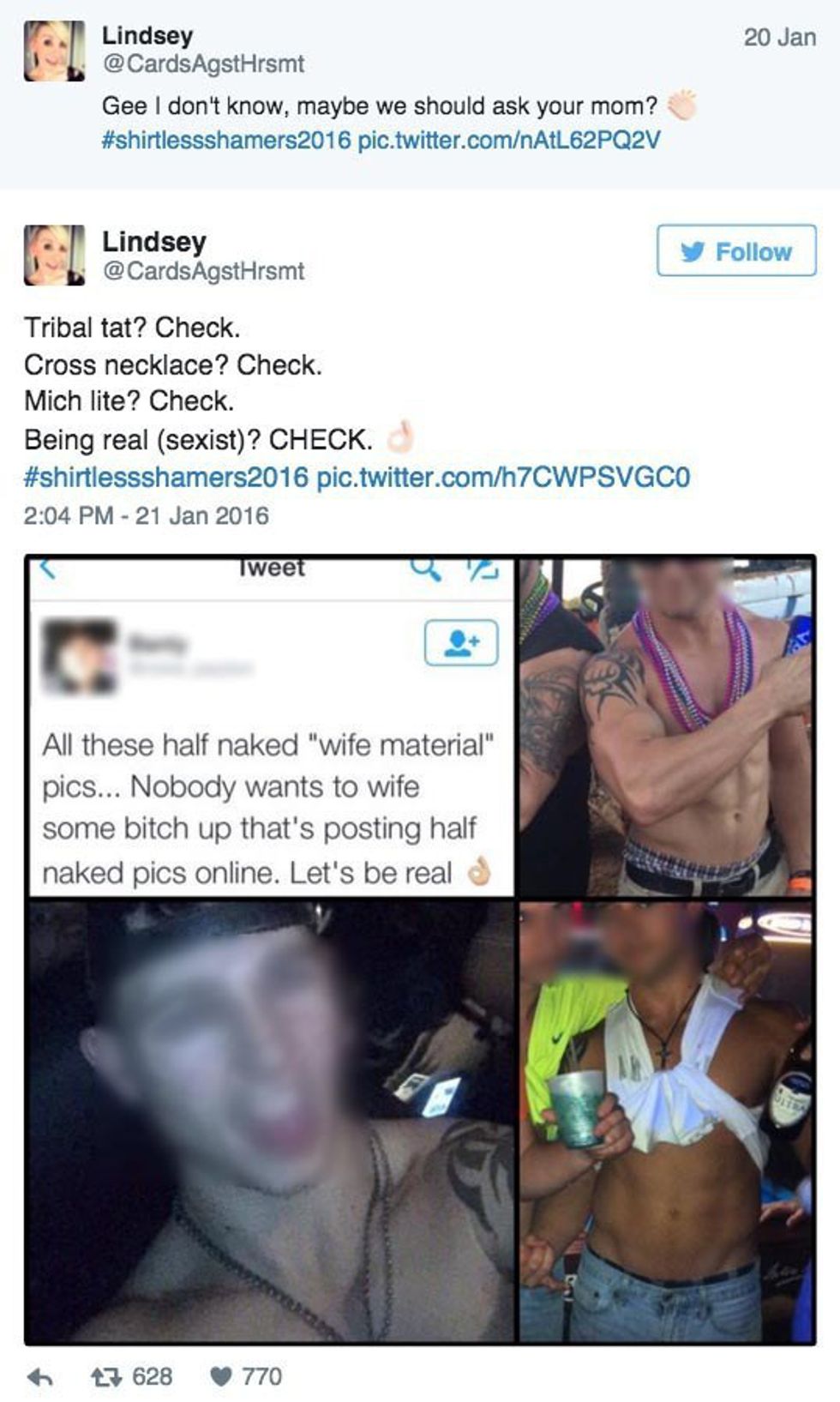
See a problem here? The online environment is one with its own social climate and younger demographic, which is interesting in that it reveals reoccurring thought patters and socially acceptable actions to those who browse. Yes, there are girls who have been taught that their value is in their appearance, and this may manifest into sexual and strictly aesthetic photo-sharing. But this is often interpreted incorrectly: it is by fault of society itself (whether this be friends, prior social media influence, and mainstream media) that this misconception exists in the first place. Alas, here it is, and sure enough it can be found at every corner in a given social media app. However, it is mistaken to assume that “selfies” are taken purely for the regard and attention of others.
Women and girls take photos for a variety of reasons, but listing these reasons does not matter – the point is that the girl wants to take the picture, and she is confident enough to share it. Whether or not she dresses modestly or minimally, wears makeup or no makeup, or participates in one activity over another is not the point. The point is that in judging the girl based on these physical characteristics, the identity and experiences of the girl are being reduced to her appearance and sexual availability to her male counterparts. Shaming women for posting these pictures ignores the fact that these women might simply be trying to reclaim a territory so deeply trespassed and scrutinized by male opinion . . . and when this woman tries to own her body, she is judged nonetheless, and the source of the problem is never identified.
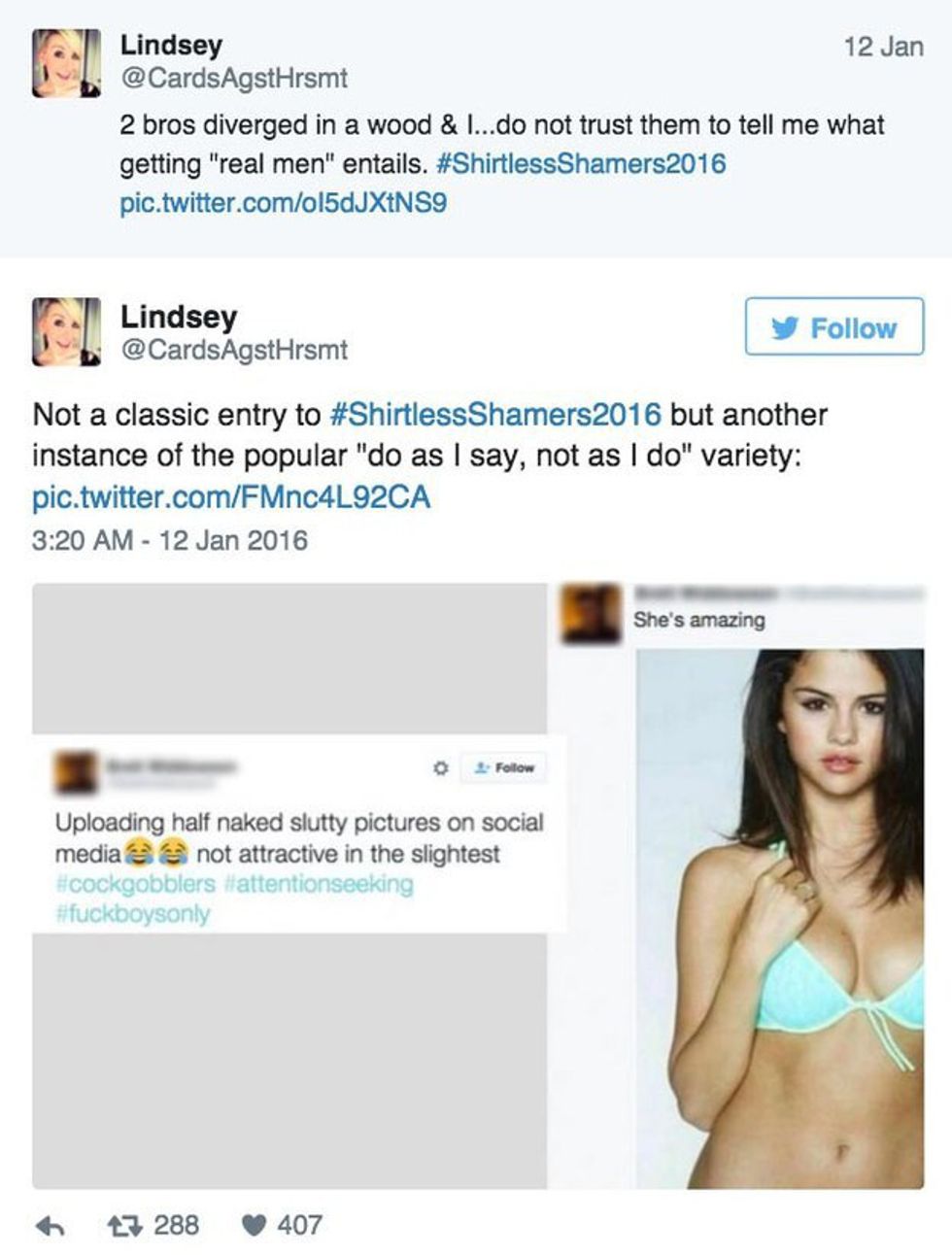
Shaming a woman for the type of picture she posts is an ironic act, especially if the critic is someone who consumes any form of material that sexualizes and objectifies women. A consumer of pornography and other materials that feature nude or partially-nude women cannot enjoy said material and simultaneously criticize a woman for posting a photo of the same caliber. Said Lindsay, “They’re torn between wanting to consume women’s nudity for their enjoyment, and condemning it if it’s presented as self-expression or self-celebration.”
If you are thinking, “But I don’t do that! I’m a nice person!”, this may be the first error in intelligently grasping the situation. It is easy at first to feel attacked when you are called out as a “man” (or “rich”, “white” or “privileged”, for example) but acknowledging any sort of privilege is pivotal in fully understanding topics like these.
For example, if you are white (like myself) there is absolutely no reason to commentate on the experience of being black in America. Why? You do not understand, you do not suffer the repercussions, and you are not qualified to make such commentary. If you have not experienced religious discrimination, do not speak over others who have. On the topic of a misogynistic culture that belittles, mocks and sexualizes the experiences, actions and characteristics of women, consider the importance of allowing the voices of woman to be heard. If you are not a part of the minority or disadvantaged group in question, consider where your voice belongs and use discourse as a means of intellectually engaging with the topic. Be humble and step away from your ego, and use situations like these to observe the ways these discrepancies occur in our society and manifest through ignorance.
These attitudes directly lead to what we call rape culture, which is ironically better explained through the observation of online male commentary than through a simple definition. It may be confusing to individuals who have not experienced sexism in their personal lives, but any human being should observe the phenomenon and attempt to understand how it is rooted in our society. Rape culture is sometimes visible to us, but it is more often expressed through subtleties and microaggressions such as violent discourse and victim-blaming. Violent misogynistic attitudes are present in the tweets below:
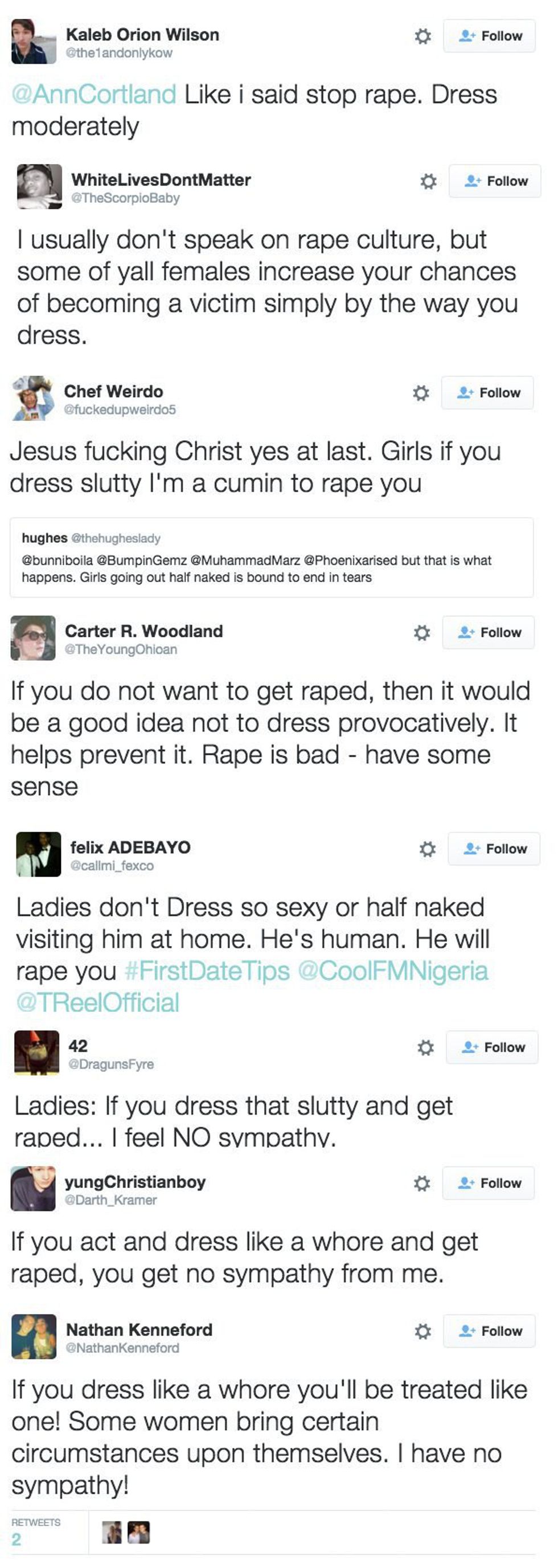
Disturbed? You should be. #ShirtlessShamers2016 speaks to an omnipresent danger, and it reveals the ways that sexist ideas are woven into online conversations and presented as acceptable, when in reality these ideas normalize vocal and physical aggression against women. If you are a human being, this issue concerns you. Get out there and encourage productive conversation about the prevalence of sexism in our online culture.