

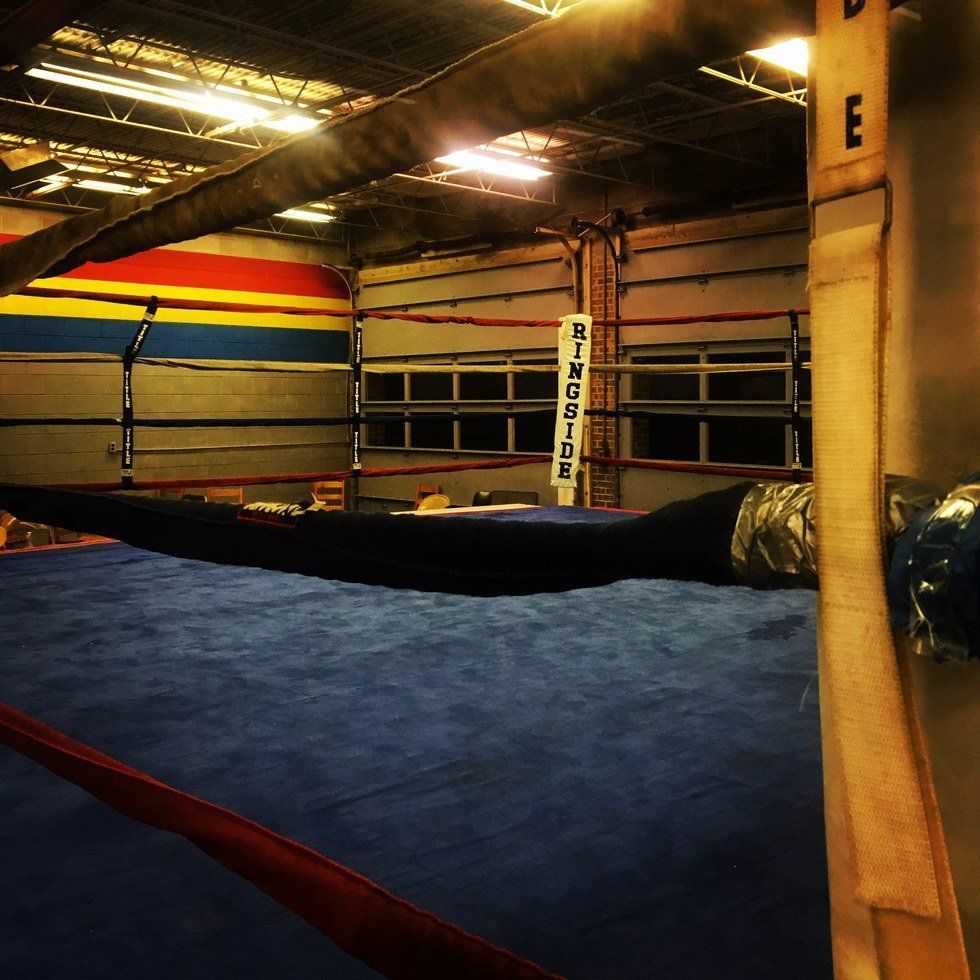
TUSCALOOSA, Ala. – At the sound of a bell, they pound speed bags, test their strength with sandbags, push themselves to produce as many crunches they can or spar in the ring with a coach. After two and a half minutes at the sound of another bell, cringing in pain, sweating into their clothes and gasping for breath, they yield every amount of available strength to their workout for a final 30 seconds.
The bell sounds a third time, signaling the fighters to rest. During this rest, fighters might begin to wonder why they’re spending their afternoon in a hot gym in the middle of nowhere, pushing their body past its limit to the point of exhaustion.
It’d be easy to throw in the towel and walk out. But these fighters are hungry and desperate for a chance at a better life.
In the boxing arena, American boxers – more specifically African-American boxers – have a reputation for being “slick,” or smooth and elusive fighters due to the stereotype that they’re from the streets and grew up fighting. Although this is merely a stereotype, it rings true for several fighters at Skyy Boxing Gym.
Rooted in Tuscaloosa, Alabama, Skyy Boxing Gym, home to World Boxing Council’s Heavyweight Champion, has a reputation for inviting children and teenagers off the street in hopes of showing them a positive way to deal with the problems they are likely facing. Coaches at the gym aim to instill a desire in the young and underprivileged for something better out of life.
Skyy Boxing Gym is home to fighters from different walks of life. Yet there is a group whose lives have a similar theme – redemption.
“The gym changed my life completely,” said Ke’Eric Hinton, an amateur boxer. “It saved my life.”
Hinton grew up in an underprivileged community and became involved in crime at a young age. There were many times when Hinton was scared for his life.
“If it weren’t for boxing, I’d be dead or in prison,” Hinton said. “And with the stuff I was involved in, I’d probably be dead.”
Looking for a way out, Hinton became interested in boxing and joined Skyy Boxing Gym. Since then, his life completely changed.
“I went from doing crime to doing crunches,” Hinton said. “I owe my coach to death.”
When fighters are asked about the relationship they have with their coaches, many mention the similarities between their pasts and their coaches' pasts. These fighters can easily respect and identify with coaches who grew up in the same situations.
Willie Lowe, an assistant coach at Skyy Boxing Gym, said that boxing helps fighters coming from these situations because fighters use the gym to stay busy and focused.
“This keeps people from exploding in the street,” Lowe said. “It’s a way to escape the negative stuff and keep everything positive in the gym.”
Daylon Whitt, a member of the gym for only three months, has faced five years in prison from ages 19 – 24. Whitt saw boxing as an opportunity to turn his life around.
In high school, Whitt was offered scholarships to play football for several colleges. He hopes to attend college one day, however, he said he has no idea where to start and wants to focus more on boxing.
“I feel like, for me, [boxing] is the only thing I can do right now,” Whitt said.
Knowing what’s waiting for them back on the street has helped motivate these fighters to train harder. They each grew up with struggles and have had their share of misfortune; many of the fighters at the gym have shared that boxing helps them cope.
“When I’m in the ring, that’s when I release my anger,” Whitt said. “I treat my opponent like he’s trying to send me back to prison.”
When the third bell sounds and the fighters rest, their minds might wander to a place they used to be, the place that gives them the motivation to keep going. Redemption echoes through the sounds of the bells at Skyy Boxing Gym.